
An 18th-century hand-coloured French chronological chart of the Empires and Republics of the world, dated 1774
An 18th-century hand-coloured French chronological chart of the Empires and Republics of the world, dated 1774
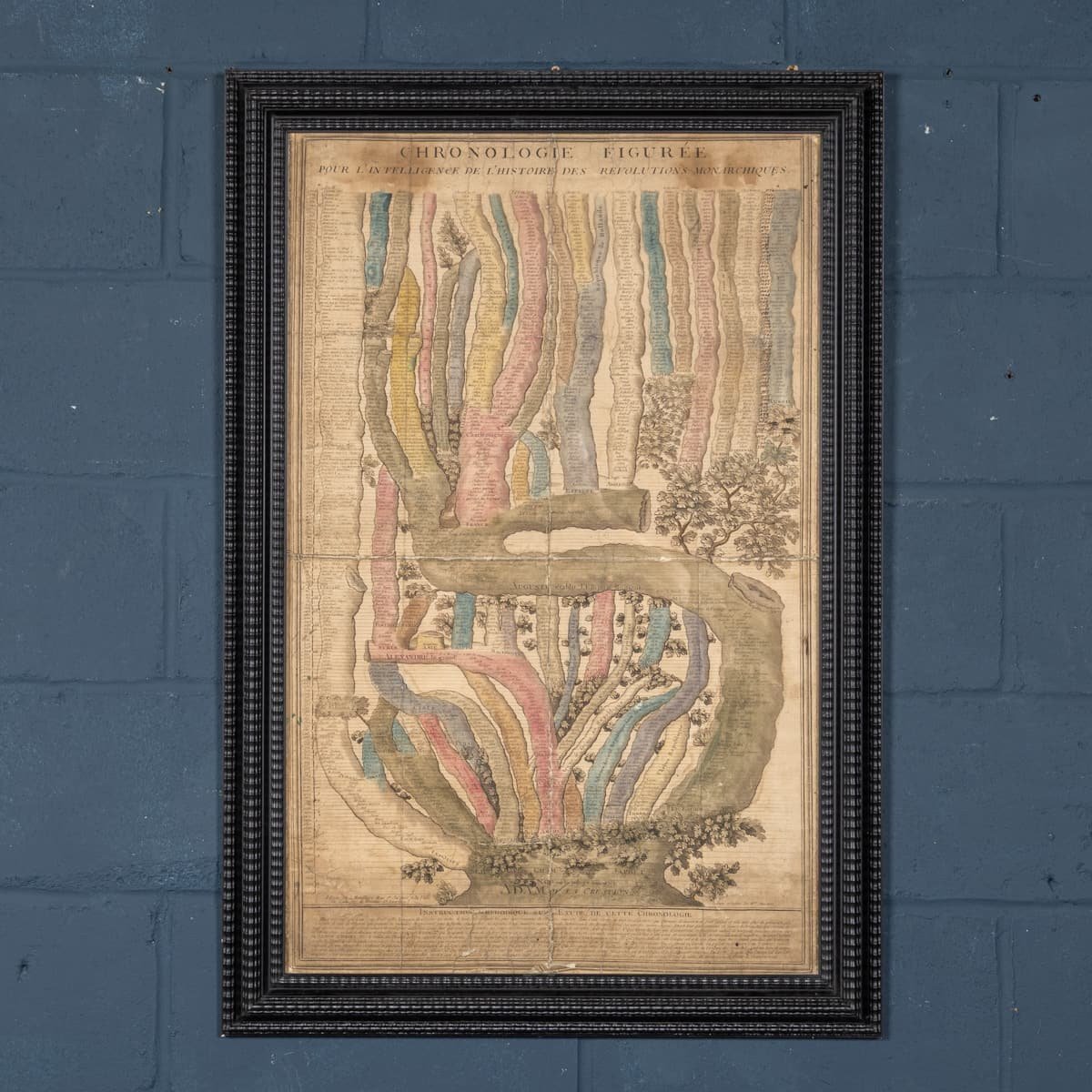
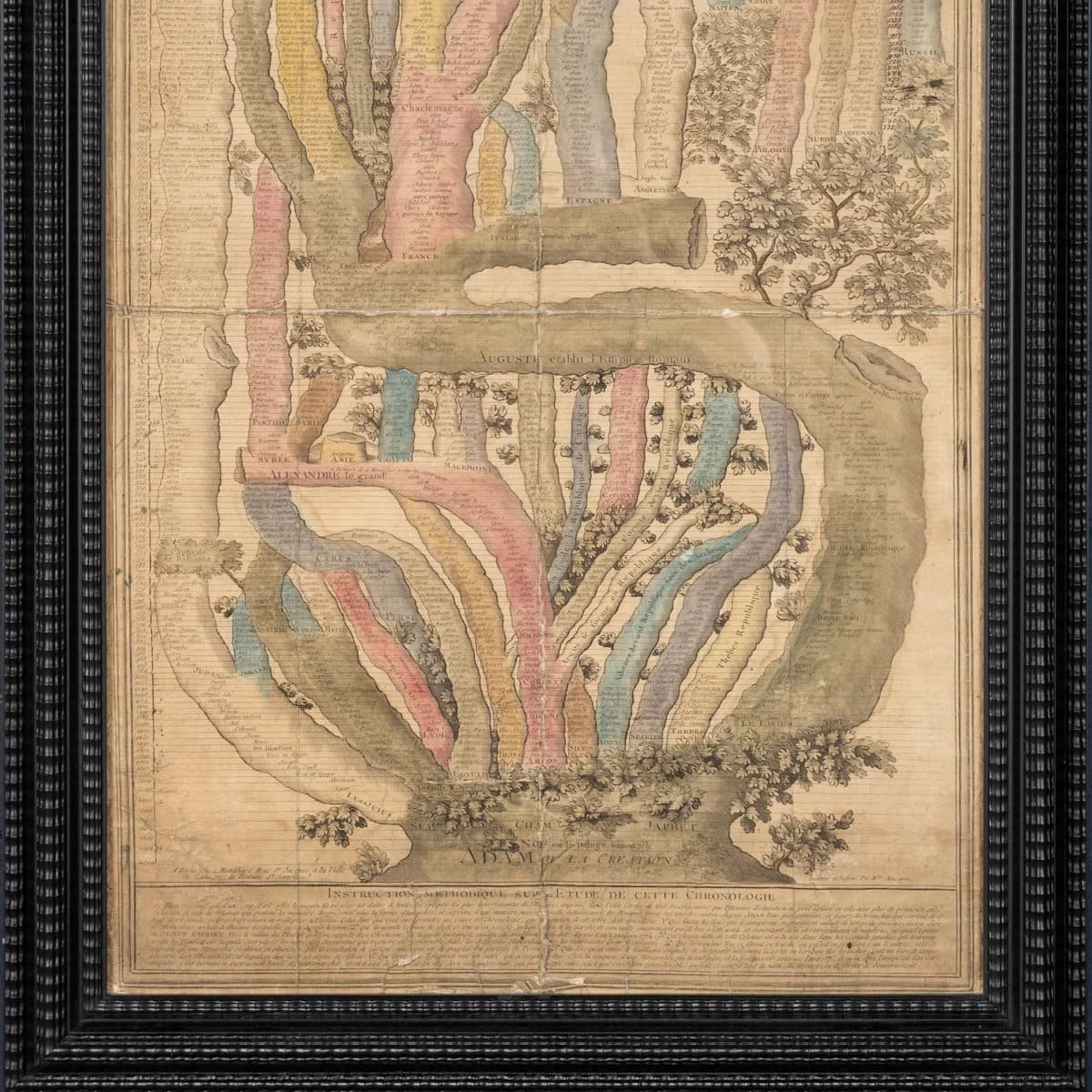
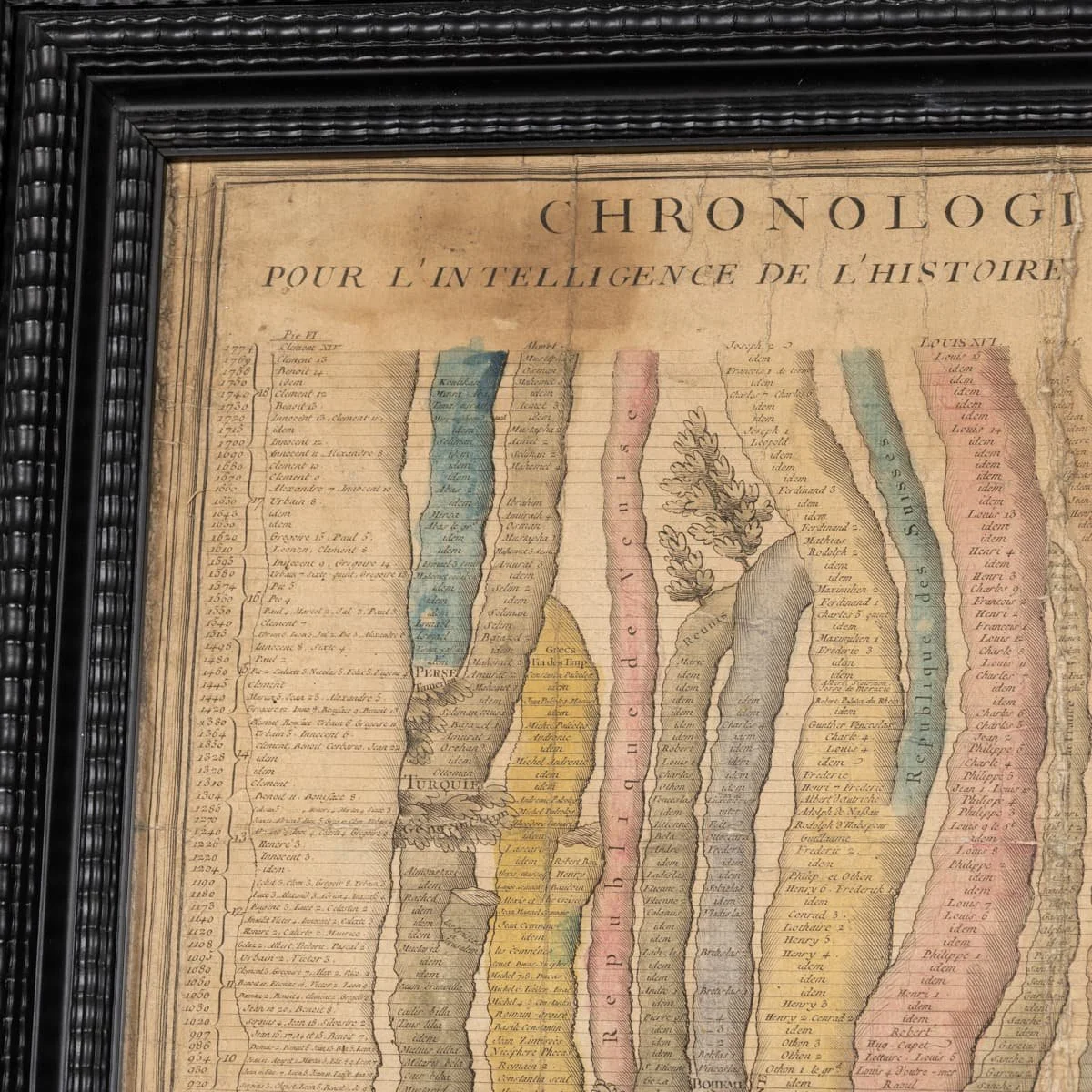
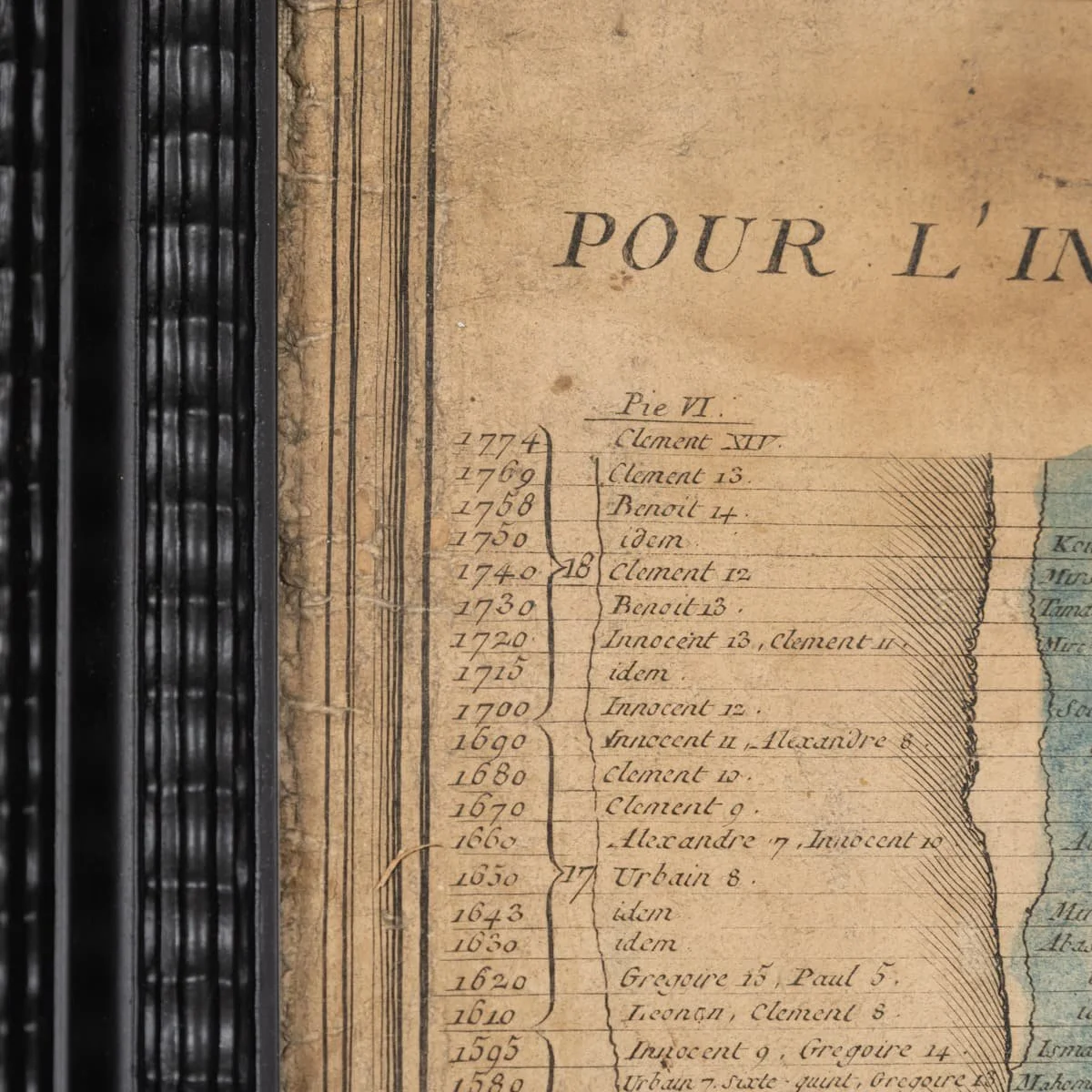
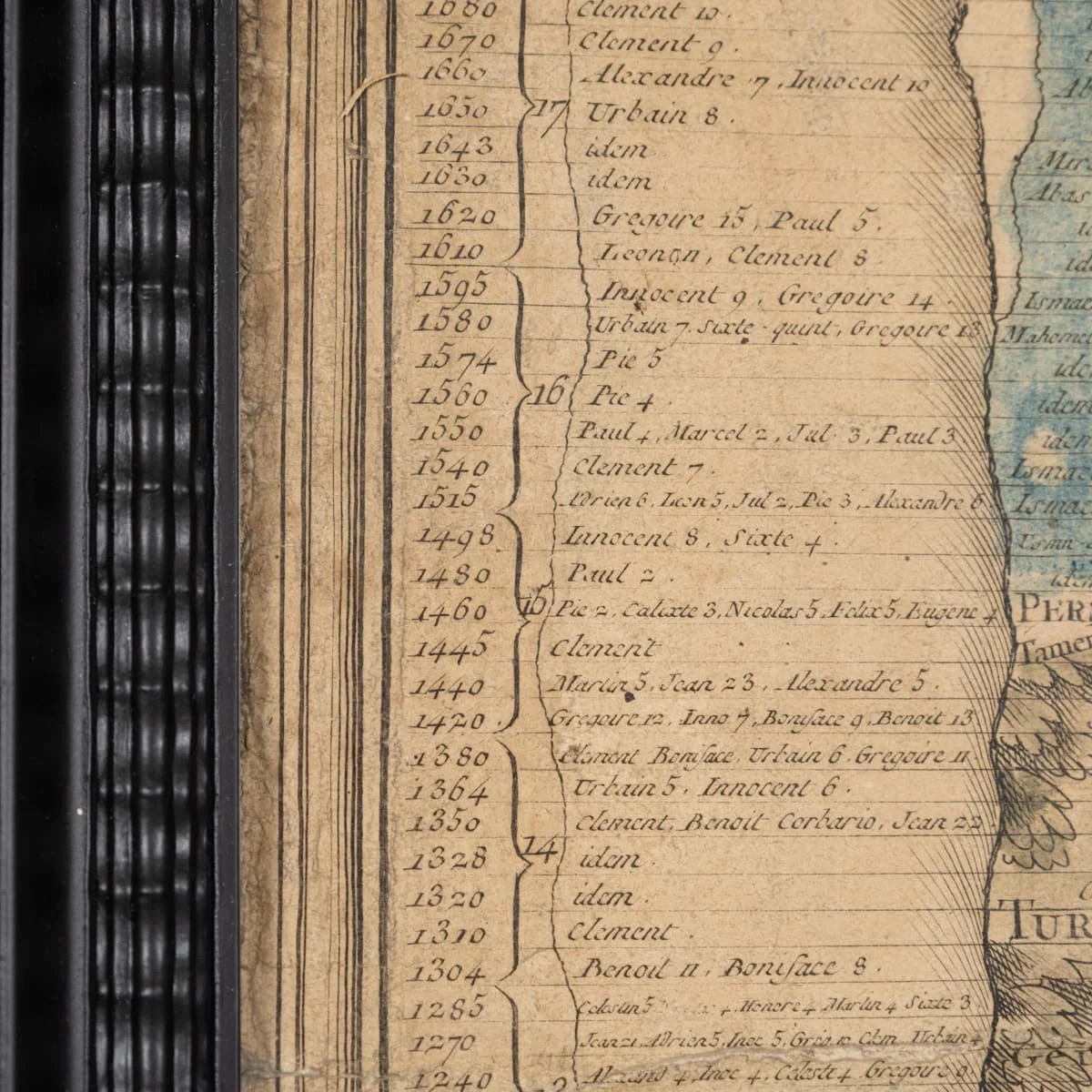
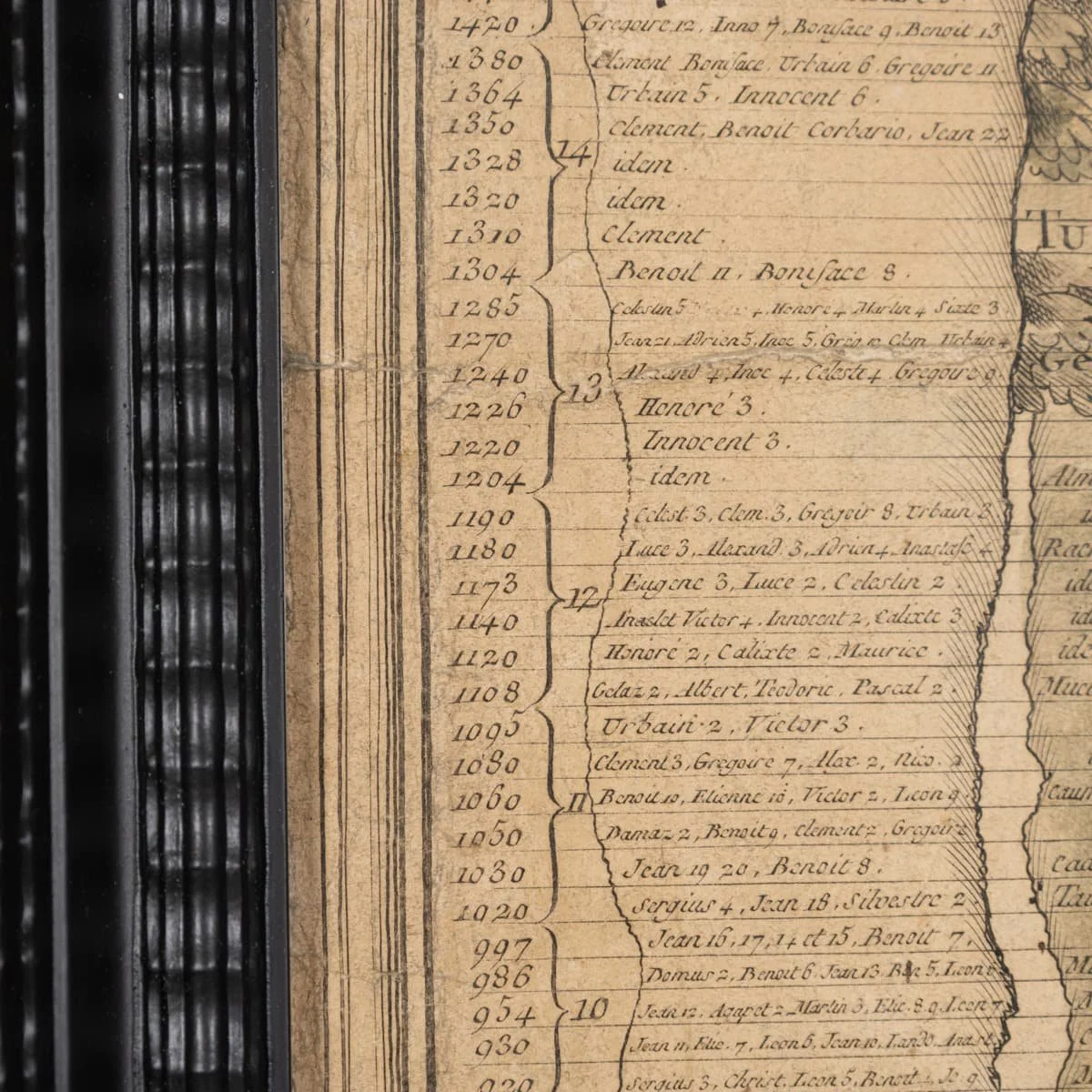
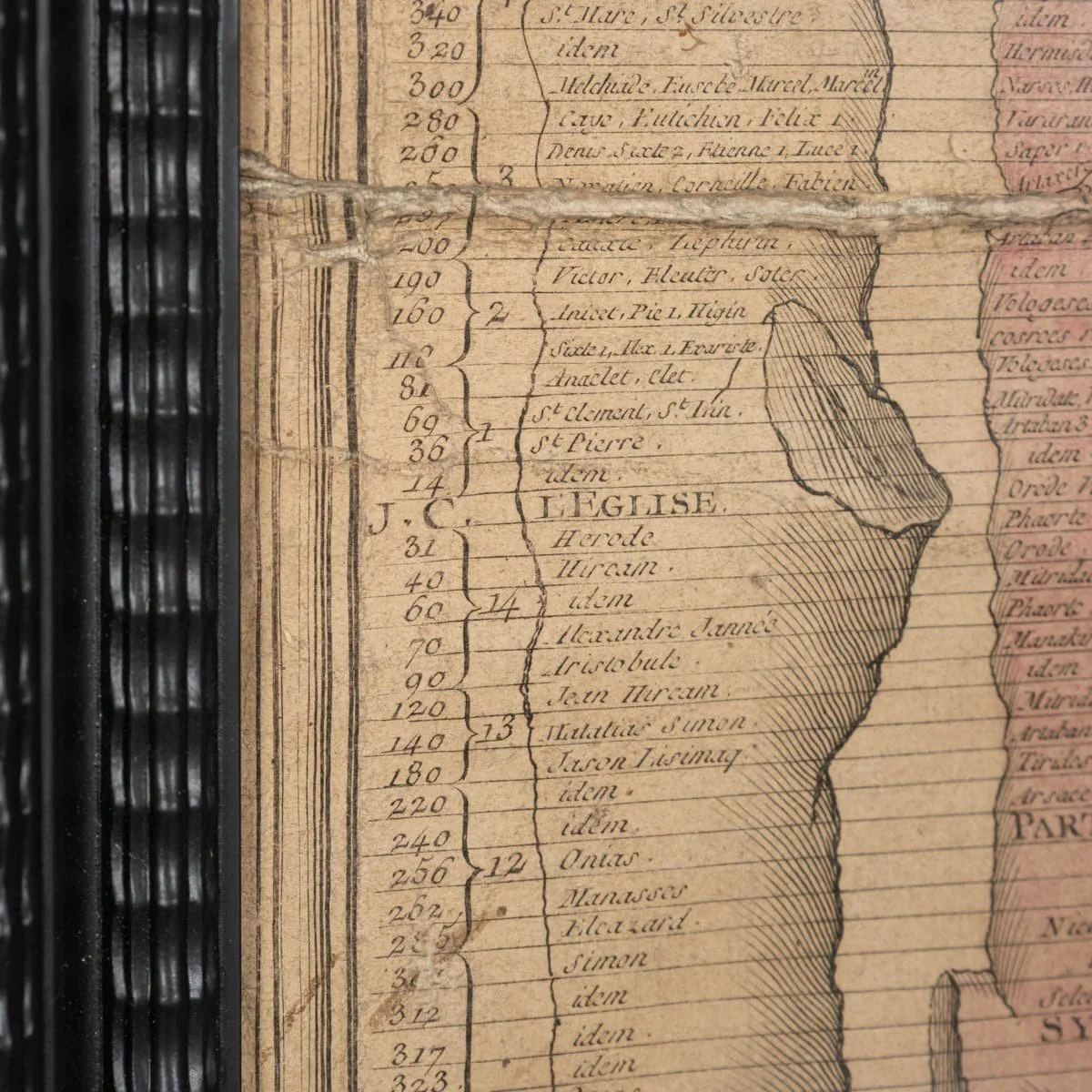
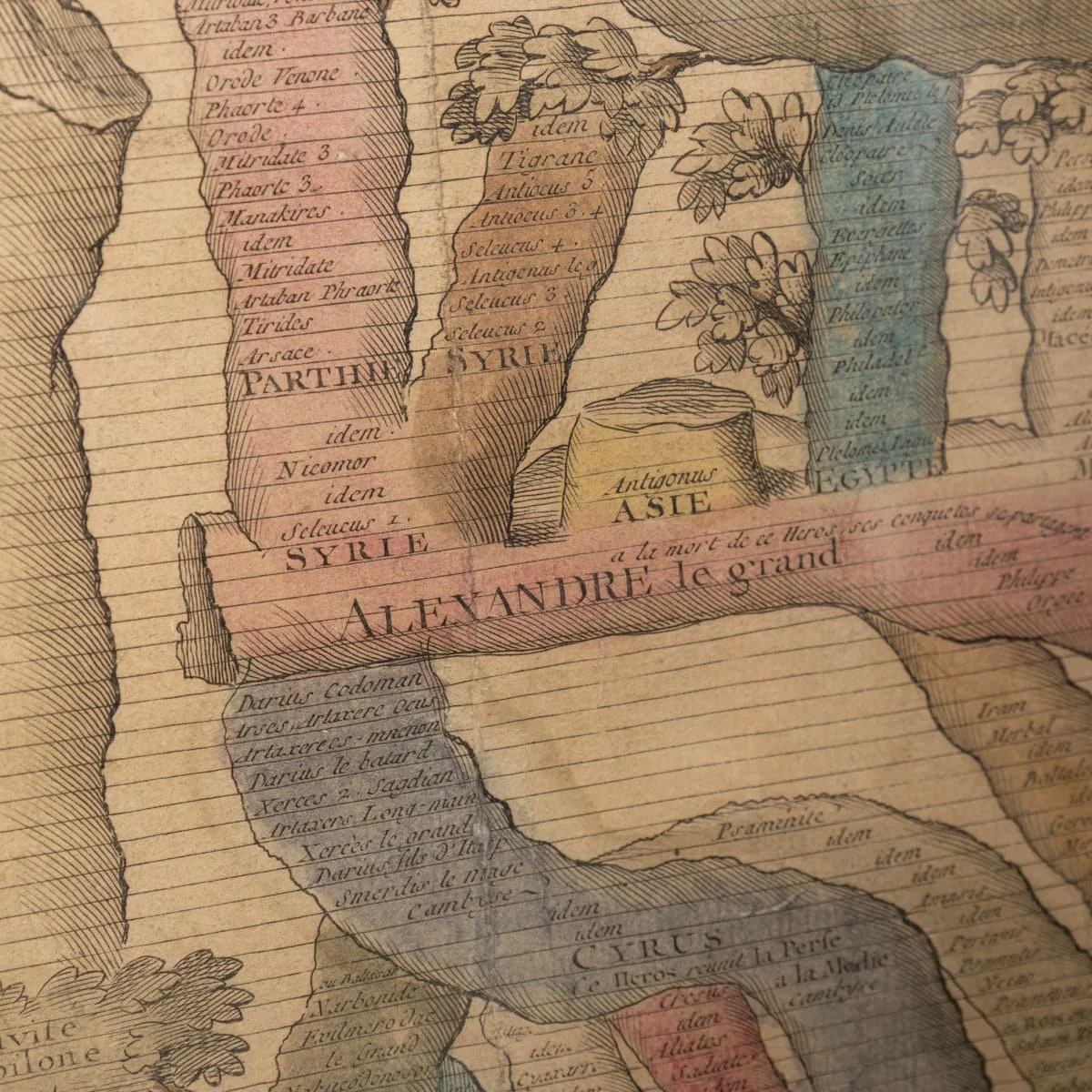
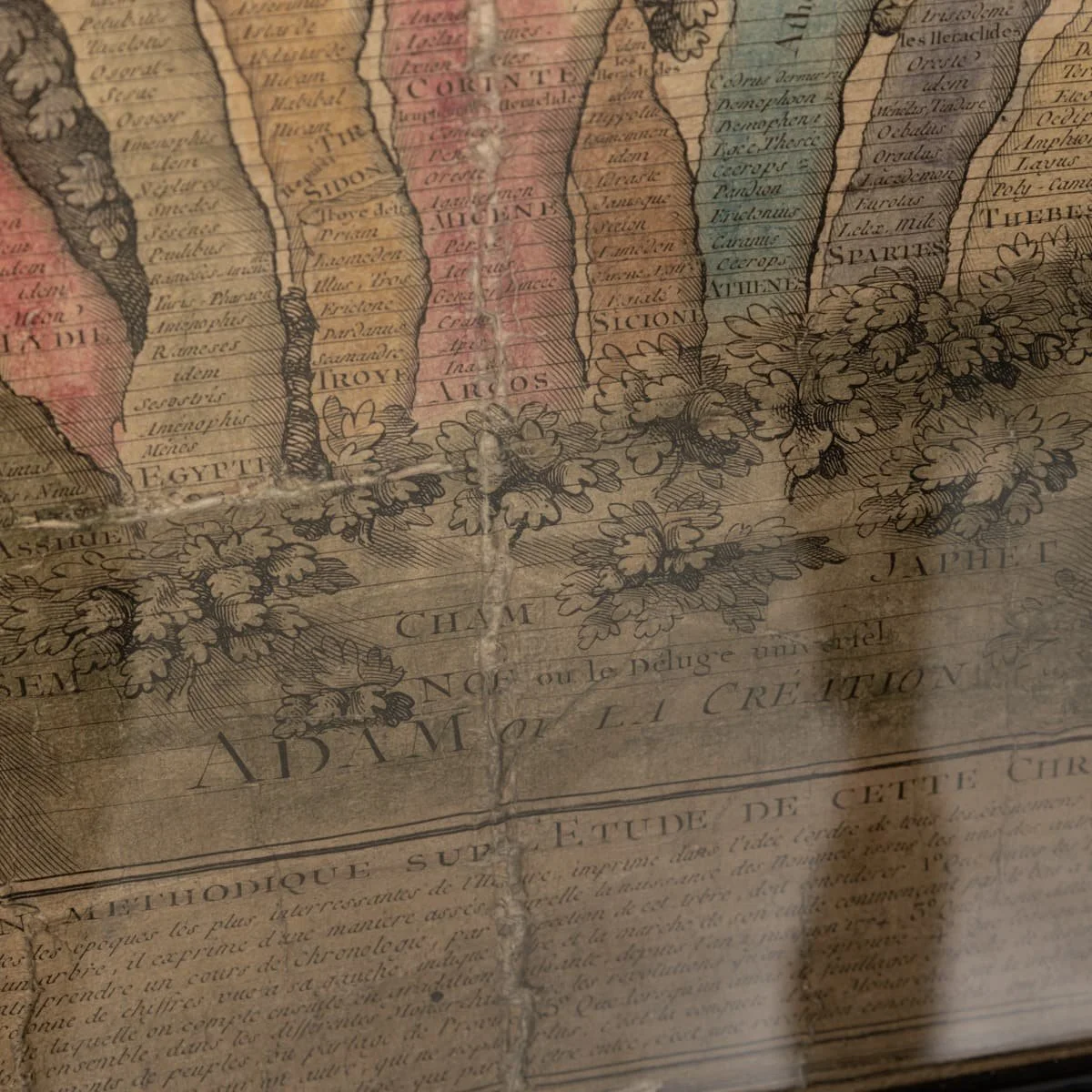
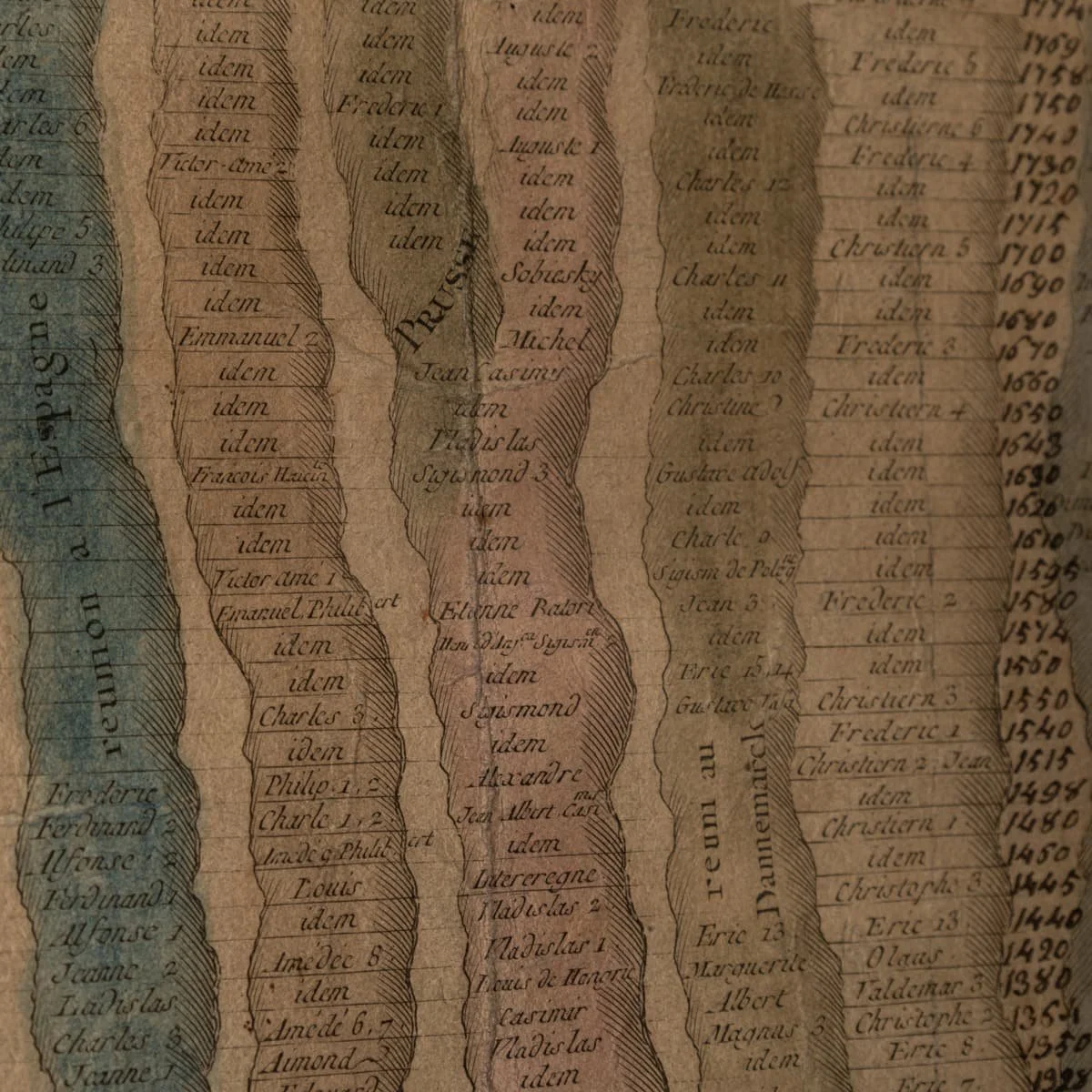
A rare and intellectually fascinating eighteenth-century French hand-coloured chronological chart titled “Chronologie Figurée pour l'Intelligence de l'Histoire des Révolutions des Empires et Républiques”, dated 1774. Combining cartographic, historical, and artistic elements within a single composition, this remarkable engraving represents an Enlightenment-era attempt to visualise the rise, development, and decline of the world's great civilisations through an innovative and highly decorative graphical format.
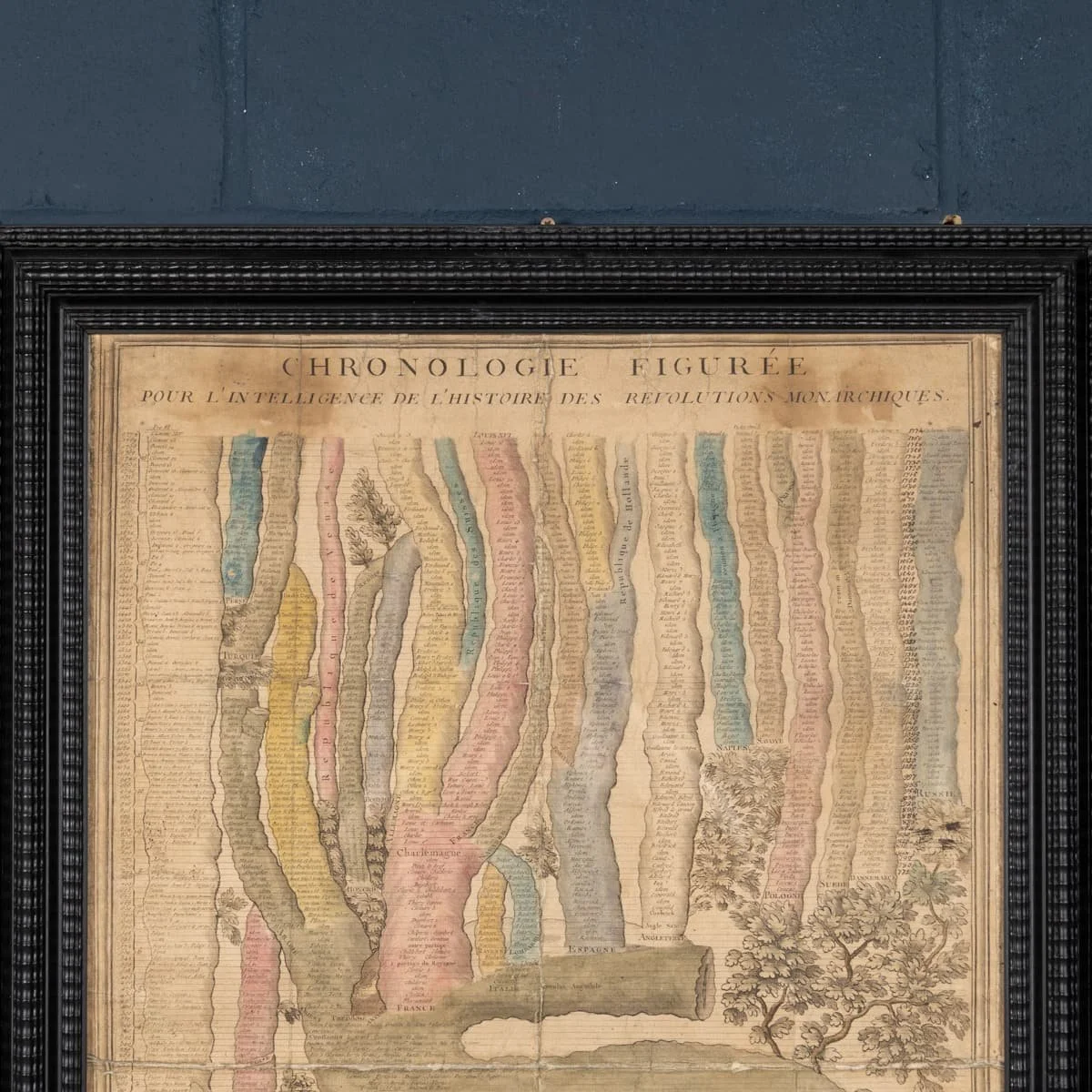
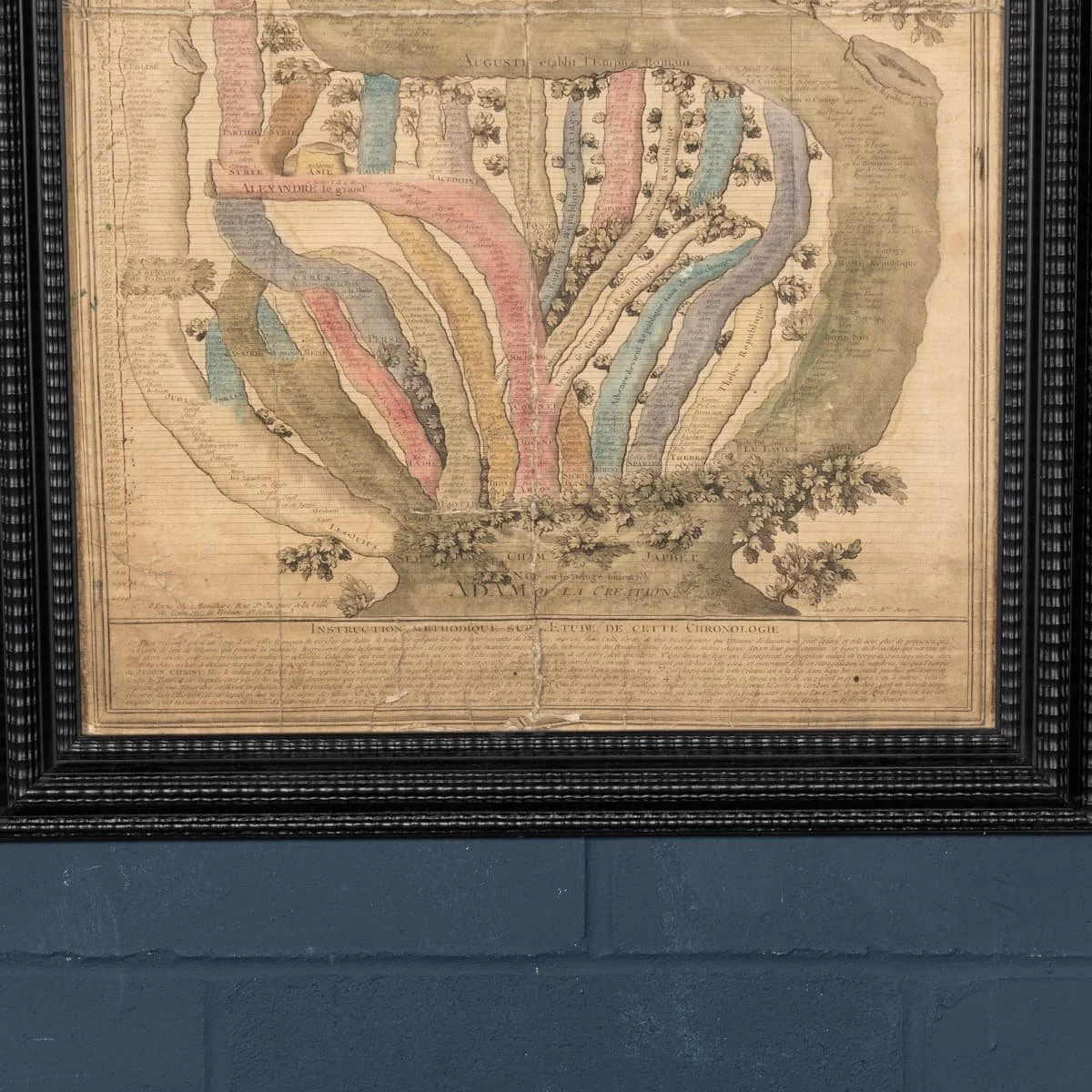
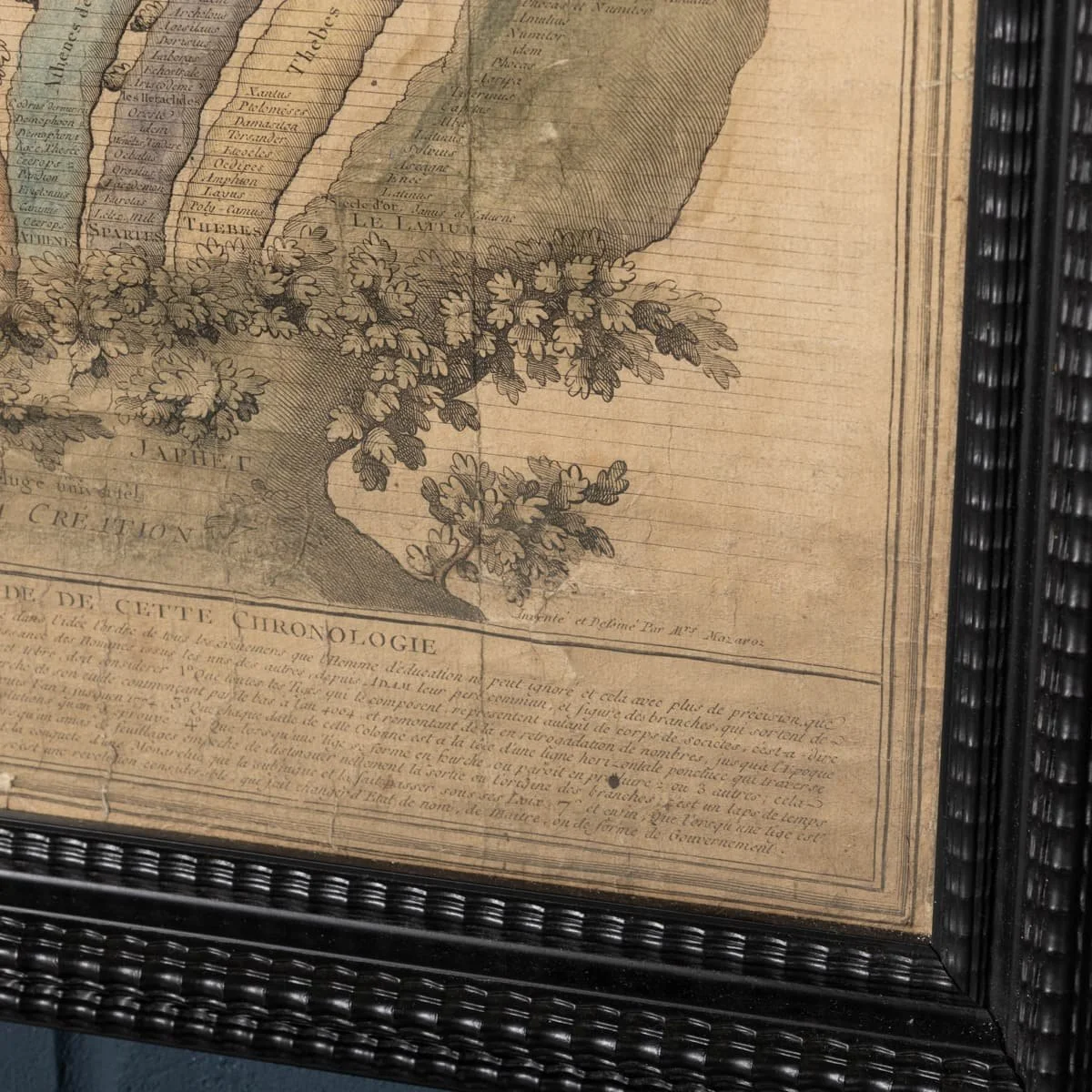
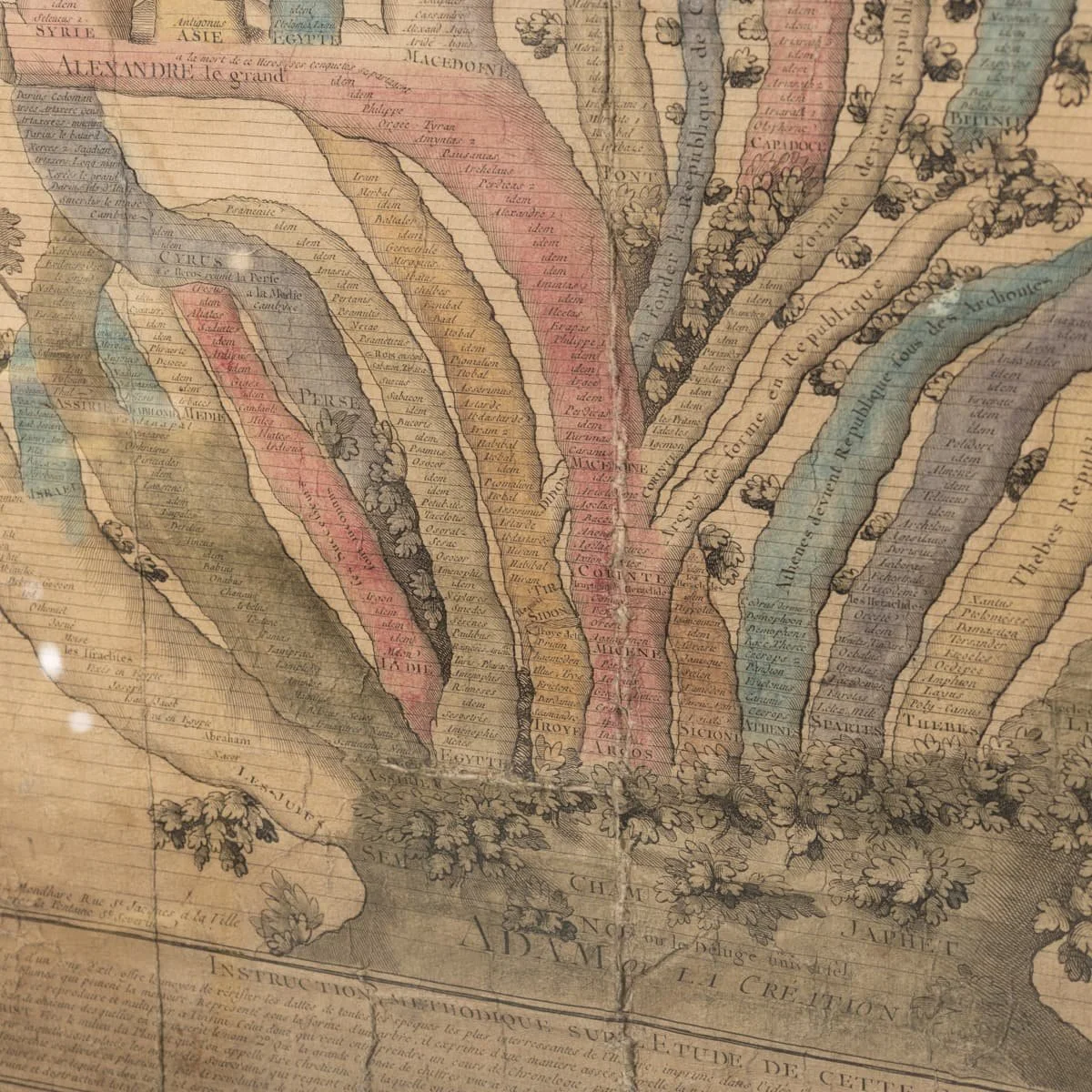
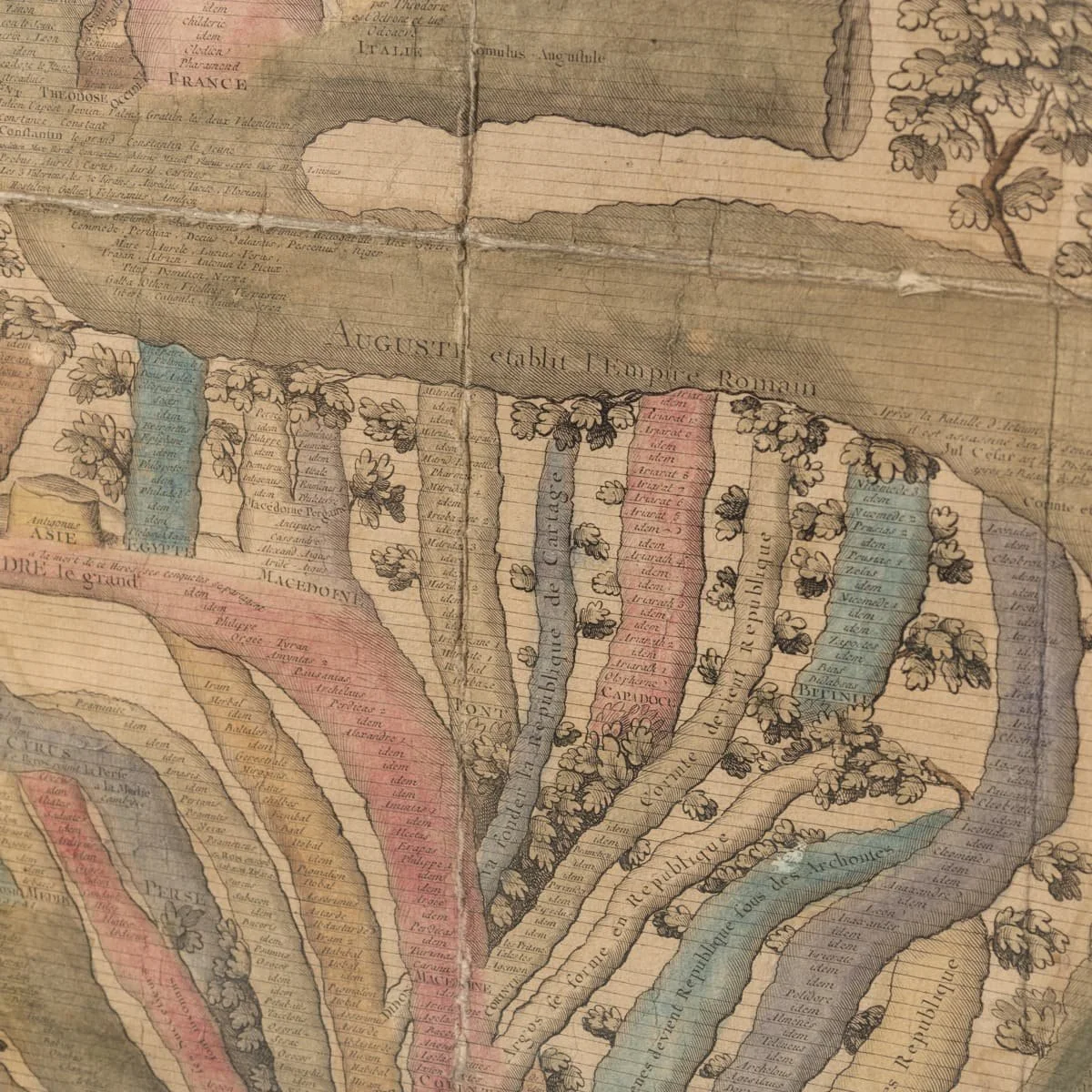
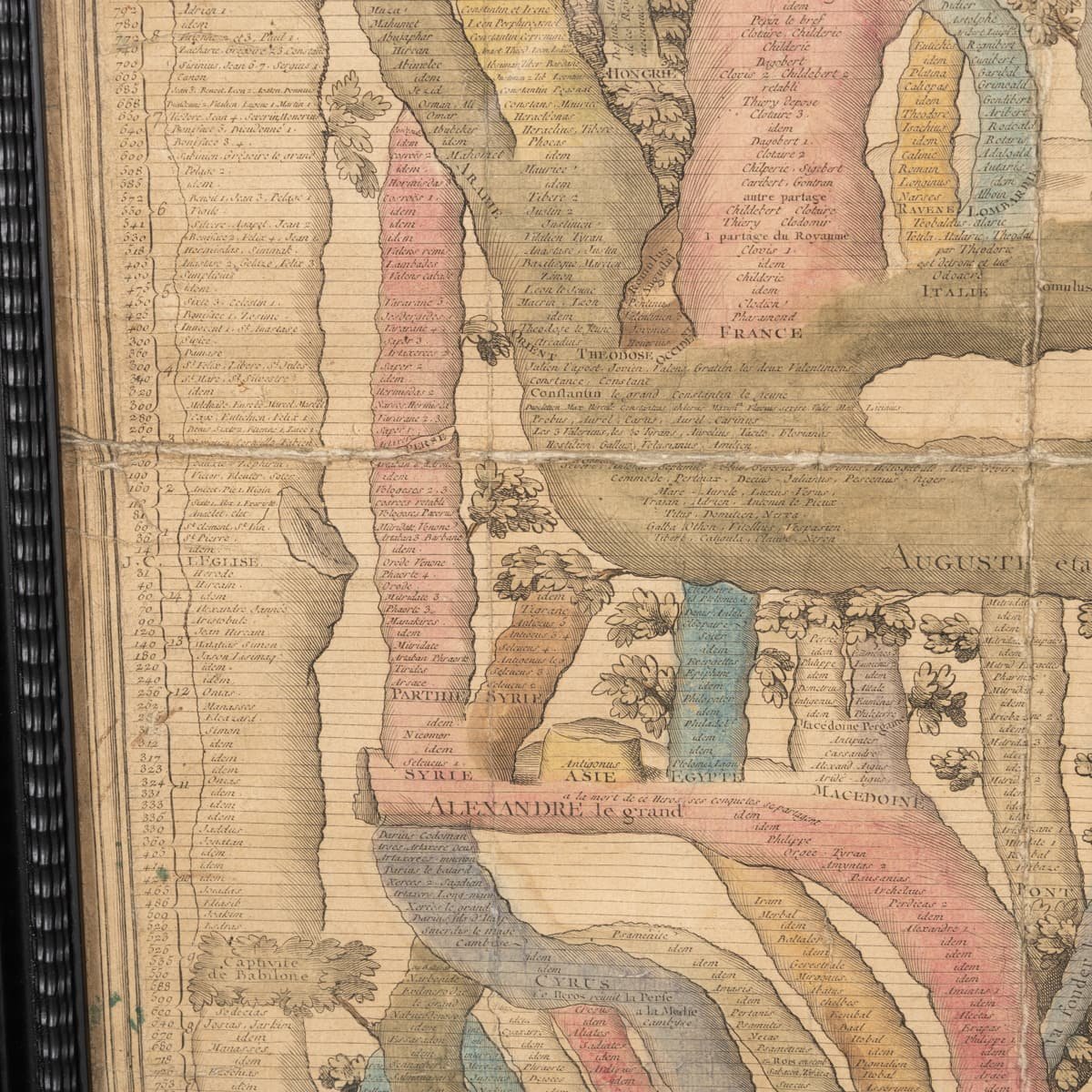
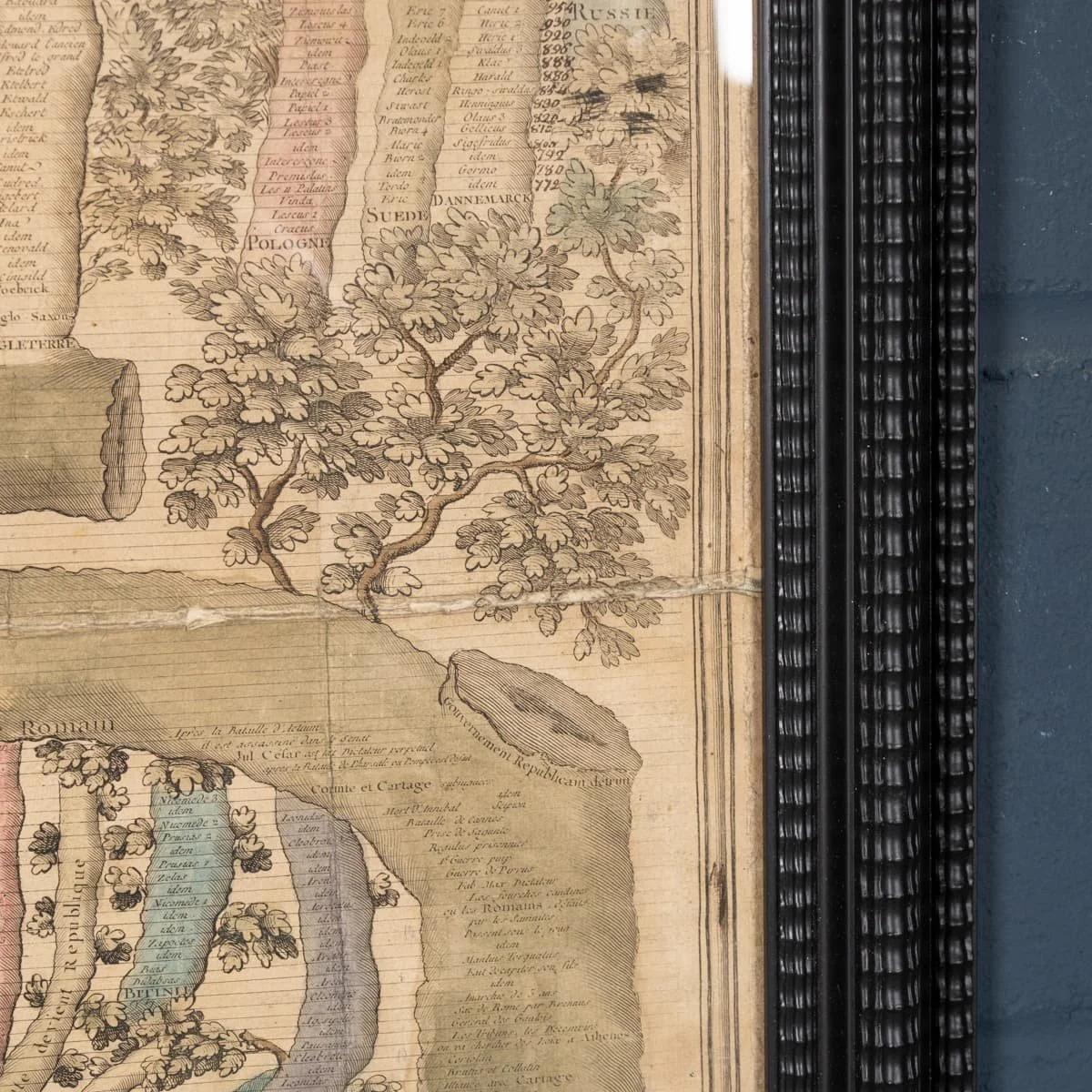
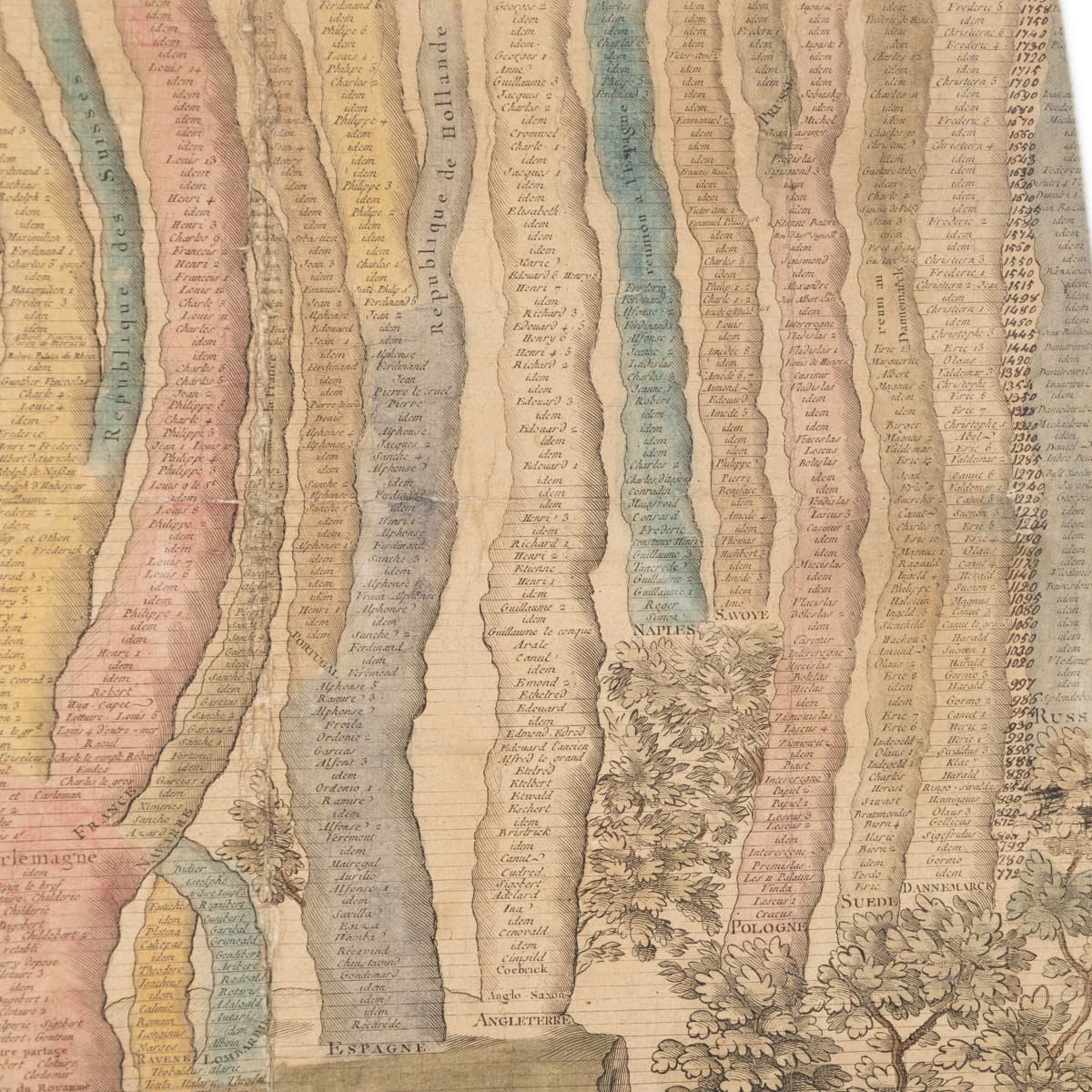
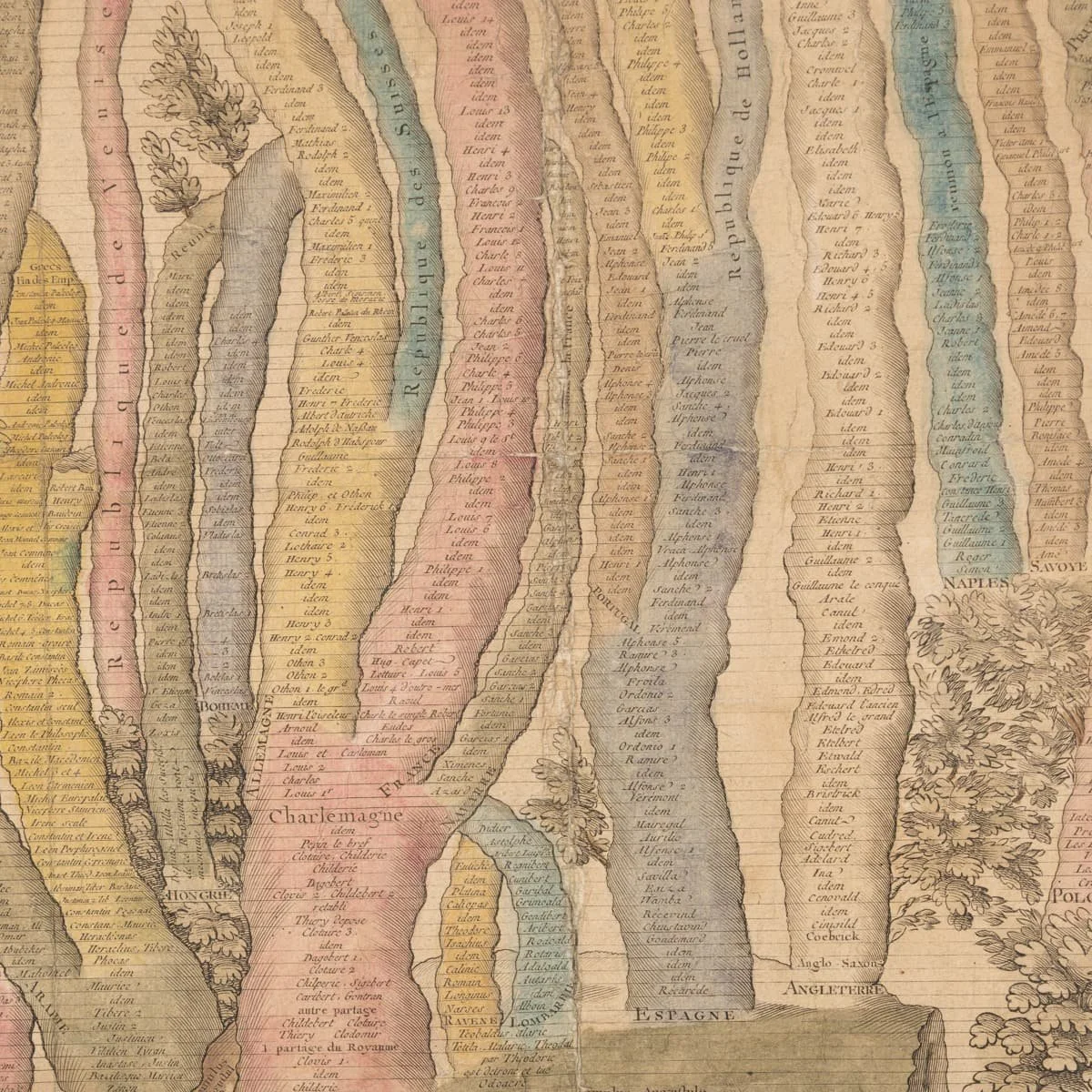
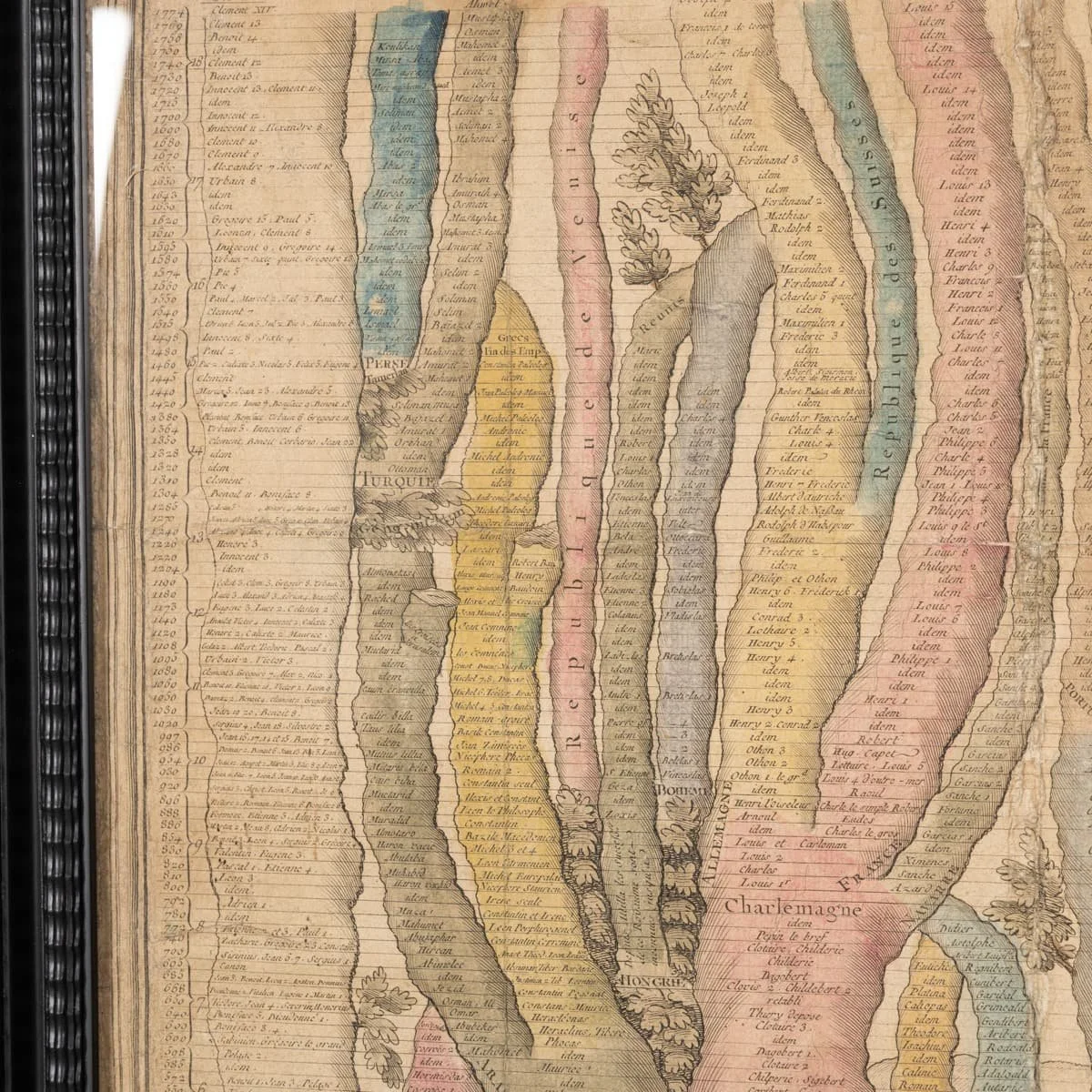
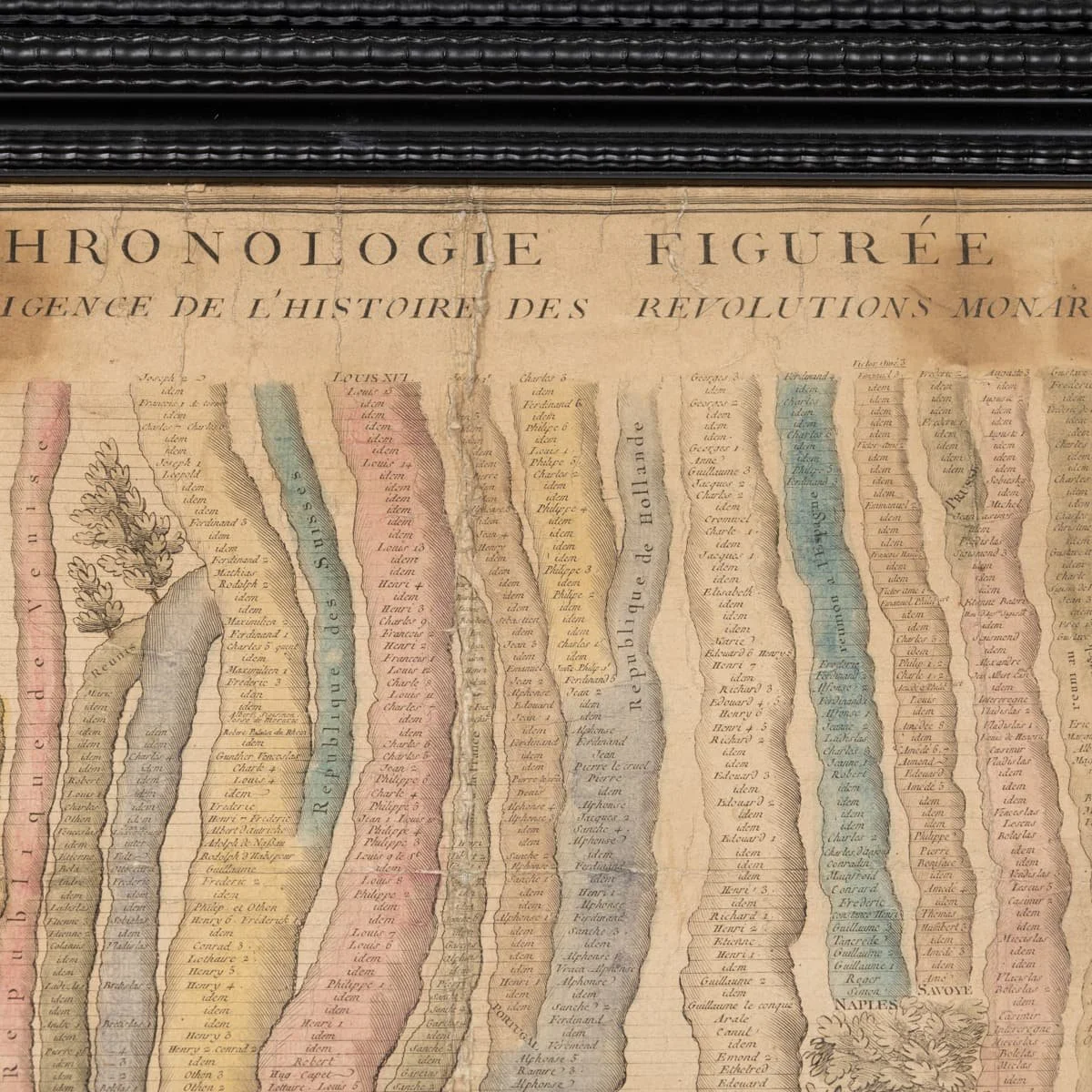
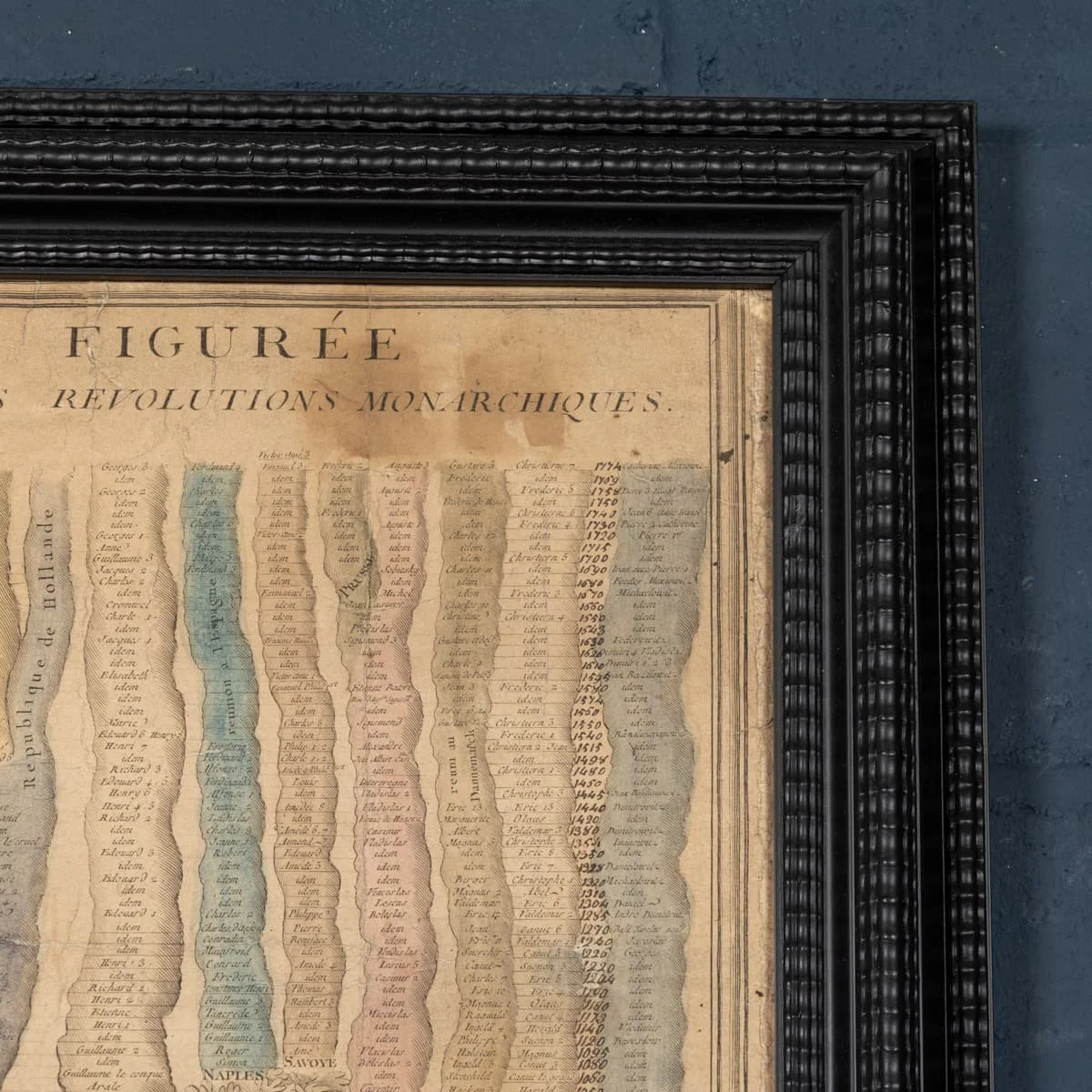
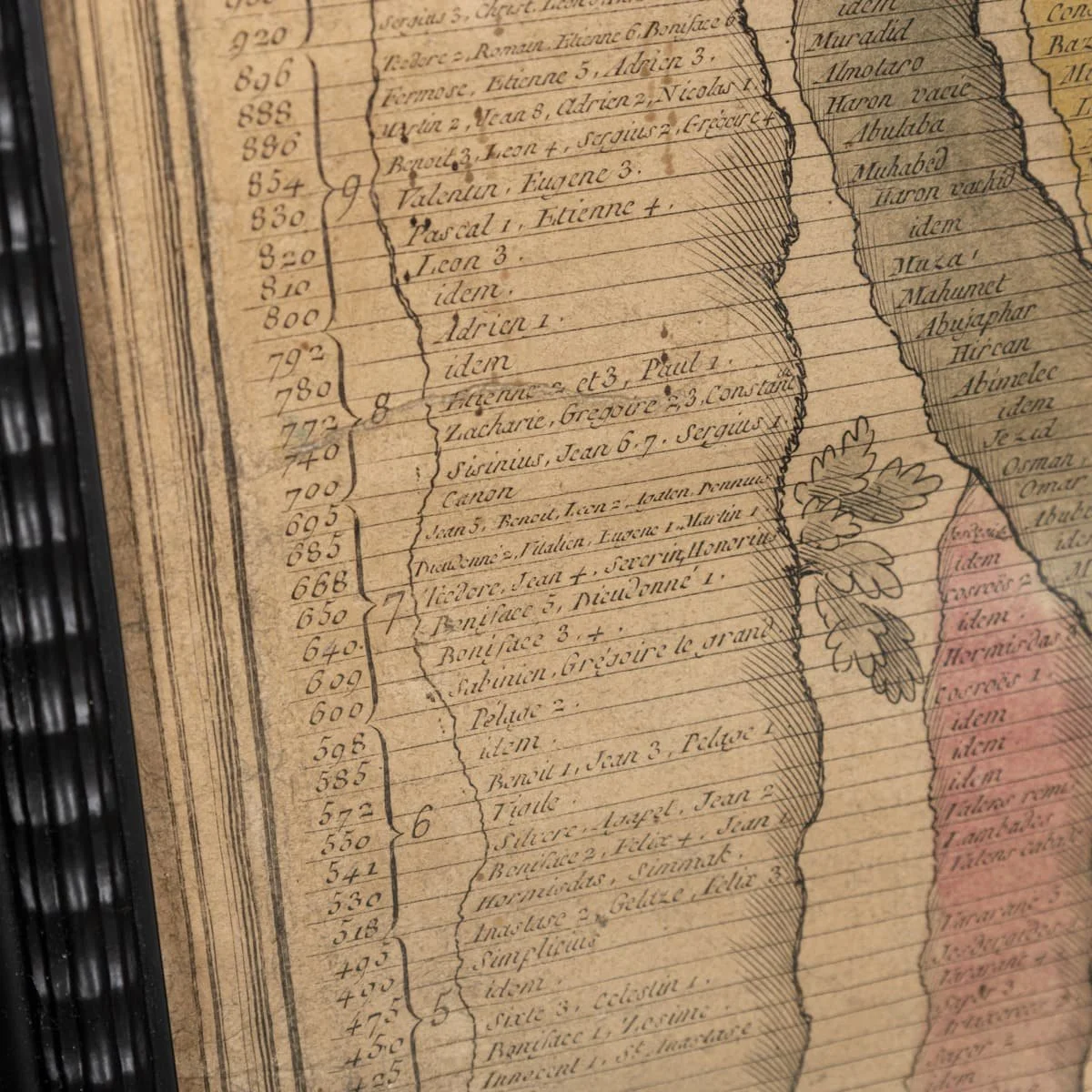
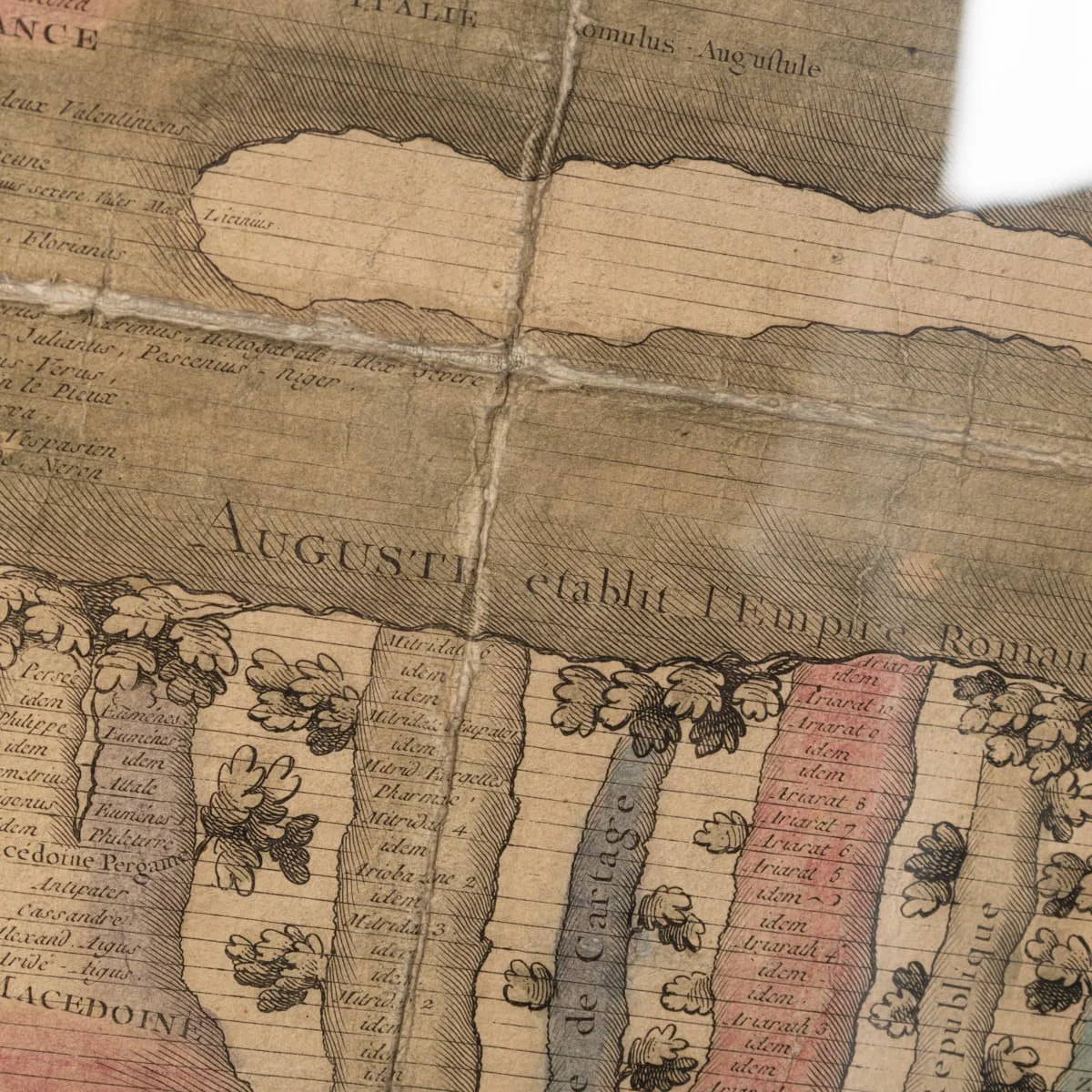
Executed in France during the reign of Louis XVI, the chart reflects the eighteenth century's growing fascination with the classification and organisation of knowledge. Rather than presenting history as a conventional written chronology, the designer employs a complex system of flowing, hand-coloured bands that resemble rivers, streams, or the branches of a great tree. Each coloured channel represents a distinct empire, kingdom, republic, or civilisation, allowing the viewer to follow the development, interaction, expansion, fragmentation, and eventual disappearance of political entities across the centuries.
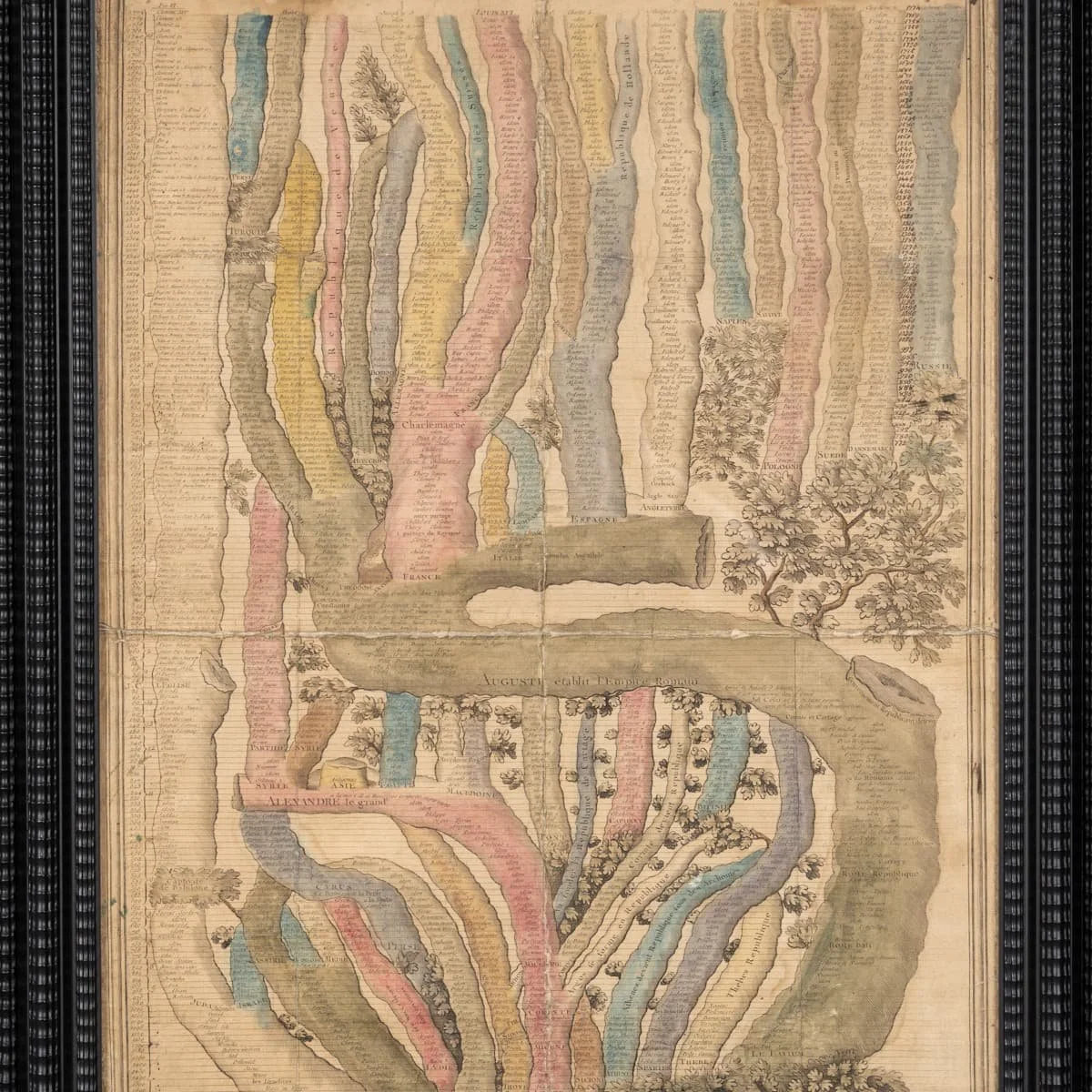
The composition is dominated by an elaborate arboreal structure, a visual metaphor for the growth of human civilisation. Emerging from a common origin, the coloured streams divide, merge, and intersect as successive cultures and states emerge throughout recorded history. This highly original format transforms historical chronology into a dynamic visual narrative, making complex historical relationships immediately understandable in a manner that was considered both educational and aesthetically engaging.
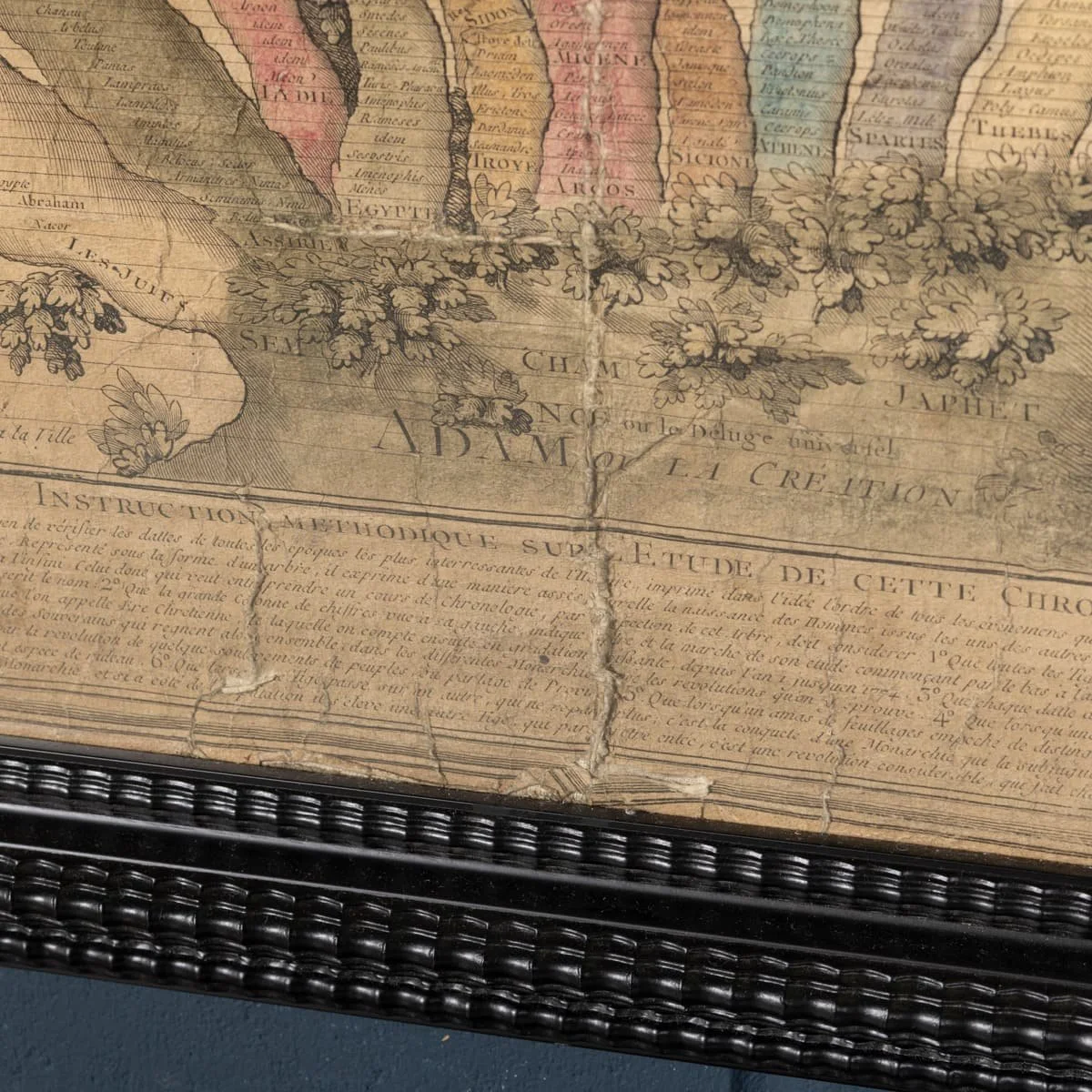
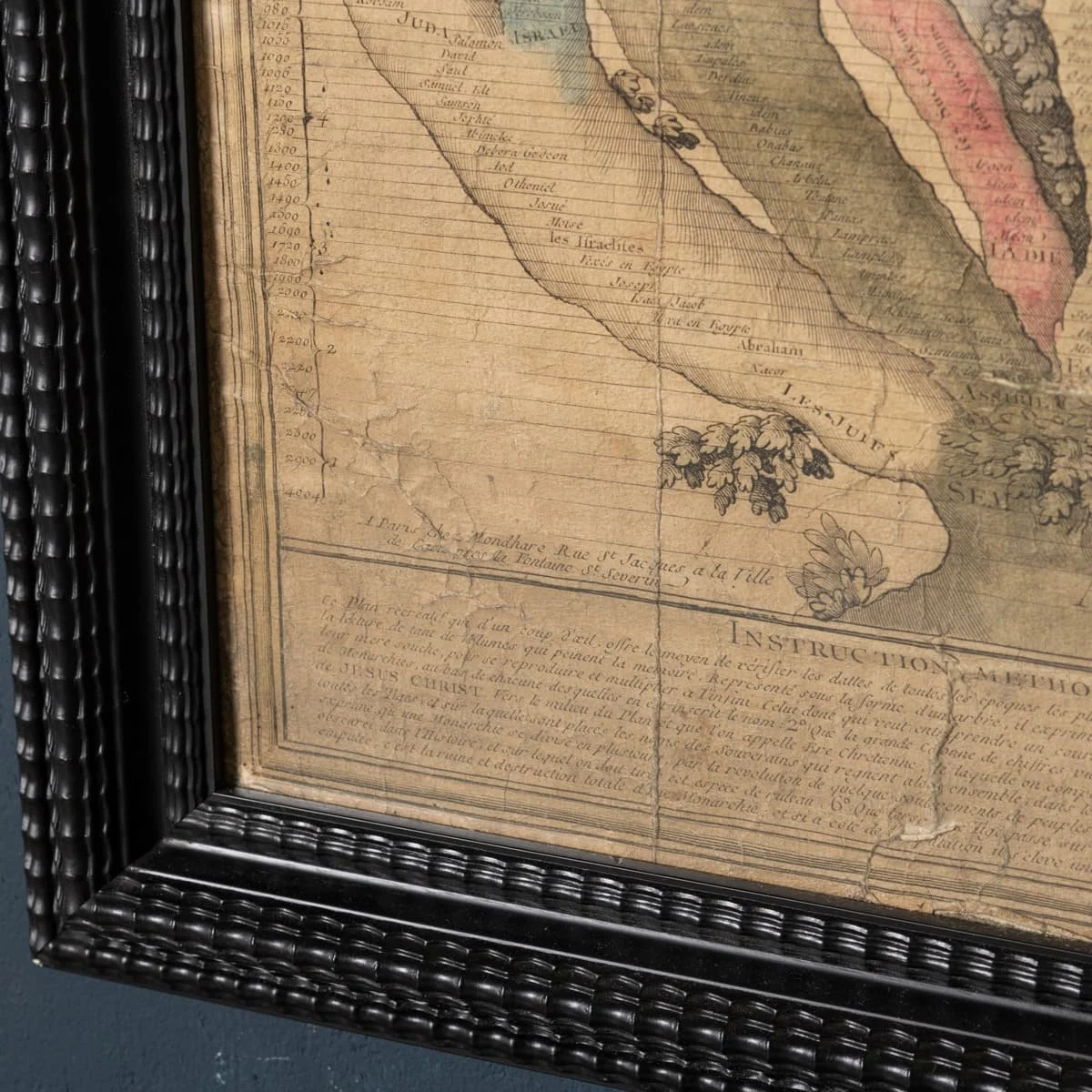
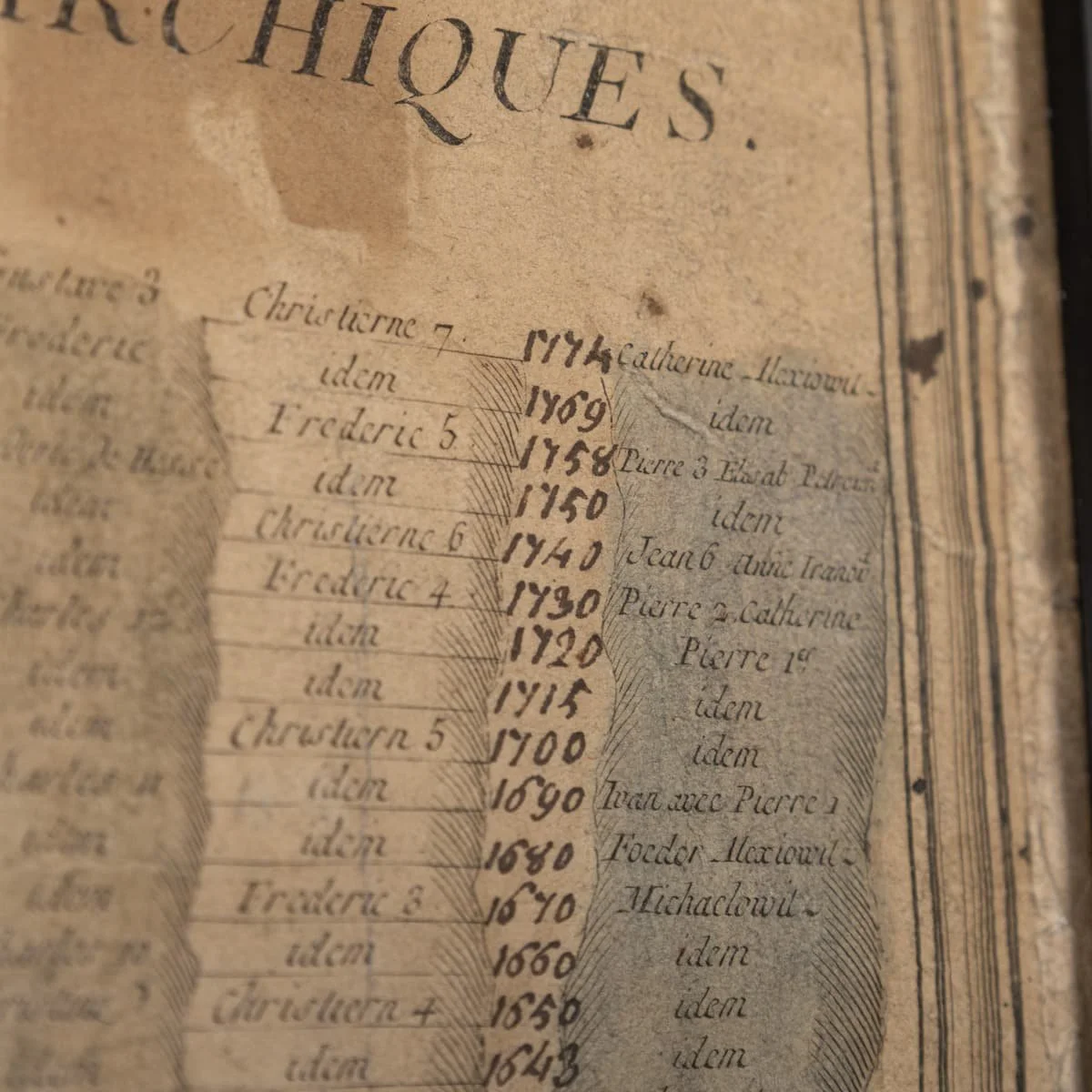
The chart incorporates extensive engraved text identifying the principal civilisations, kingdoms, dynasties, empires, and republics that shaped world history according to eighteenth-century scholarship. Ancient Near Eastern kingdoms, the classical civilisations of Greece and Rome, the great European monarchies, and numerous other political entities are all integrated into the design. The work reflects contemporary historical understanding while simultaneously providing insight into the worldview and educational priorities of Enlightenment France.
Particularly appealing is the original hand-colouring, which distinguishes the various historical streams and enhances both readability and decorative impact. The soft palette of pinks, blues, greens, ochres, and greys remains remarkably harmonious, lending the chart a refined visual quality that elevates it beyond a purely academic document. The subtle colouring transforms the engraving into a work of decorative art while preserving its educational purpose.
Works of this nature were produced during a period when scholars sought increasingly sophisticated methods of presenting information. The eighteenth century witnessed the publication of numerous historical atlases, genealogical charts, encyclopaedias, and visual systems designed to organise knowledge according to rational principles. This chart stands firmly within that intellectual tradition and may be viewed as an early precursor to modern infographics, demonstrating an innovative approach to communicating complex historical data through visual means.
Beyond its educational significance, the chart offers a valuable insight into eighteenth-century historiography and perceptions of world history. It illustrates how scholars of the period understood the succession of empires and the interconnected development of civilisations, making it not only a decorative object but also an important historical document in its own right.
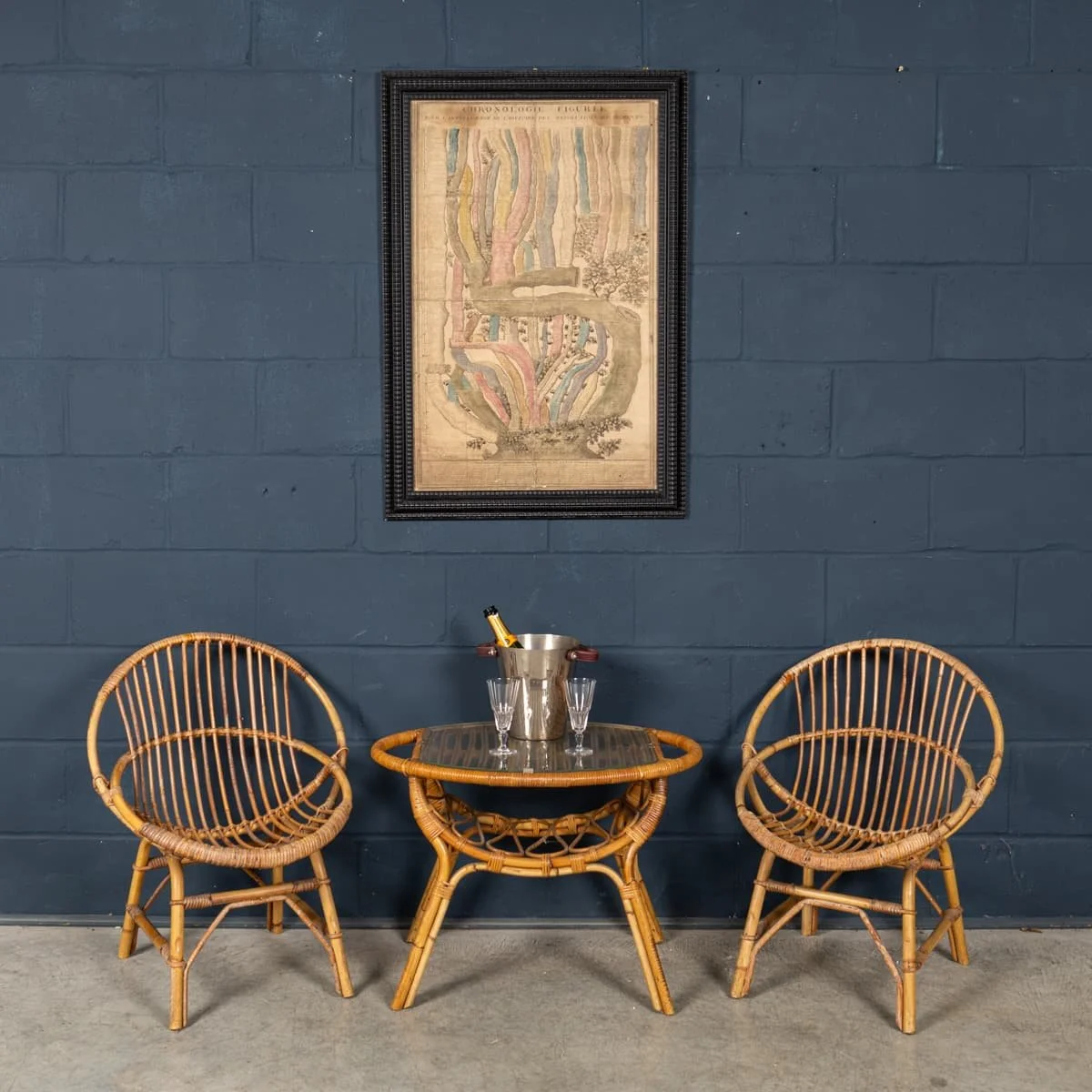
The engraving is presented in an attractive frame which complements the age and character of the work while providing an impressive display format. Equally suited to collectors of maps, prints, historical documents, and Enlightenment-era material, the chart possesses considerable decorative appeal while remaining a highly engaging scholarly object.
Condition is commensurate with age and medium. The sheet displays expected toning, age-related discolouration, creasing, and minor wear consistent with an eighteenth-century paper engraving. The hand-colouring remains attractive and well preserved, while the engraved detail remains clear and legible throughout. The work is framed and displays particularly well. Please refer to the photographs.
Dimensions: 103cm high, 71cm wide, 4cm deep
For additional information please contact us:
Email: info@alessiolorenzi.com
Phone: +44 7701 088 288
REFERENCE: F26234