
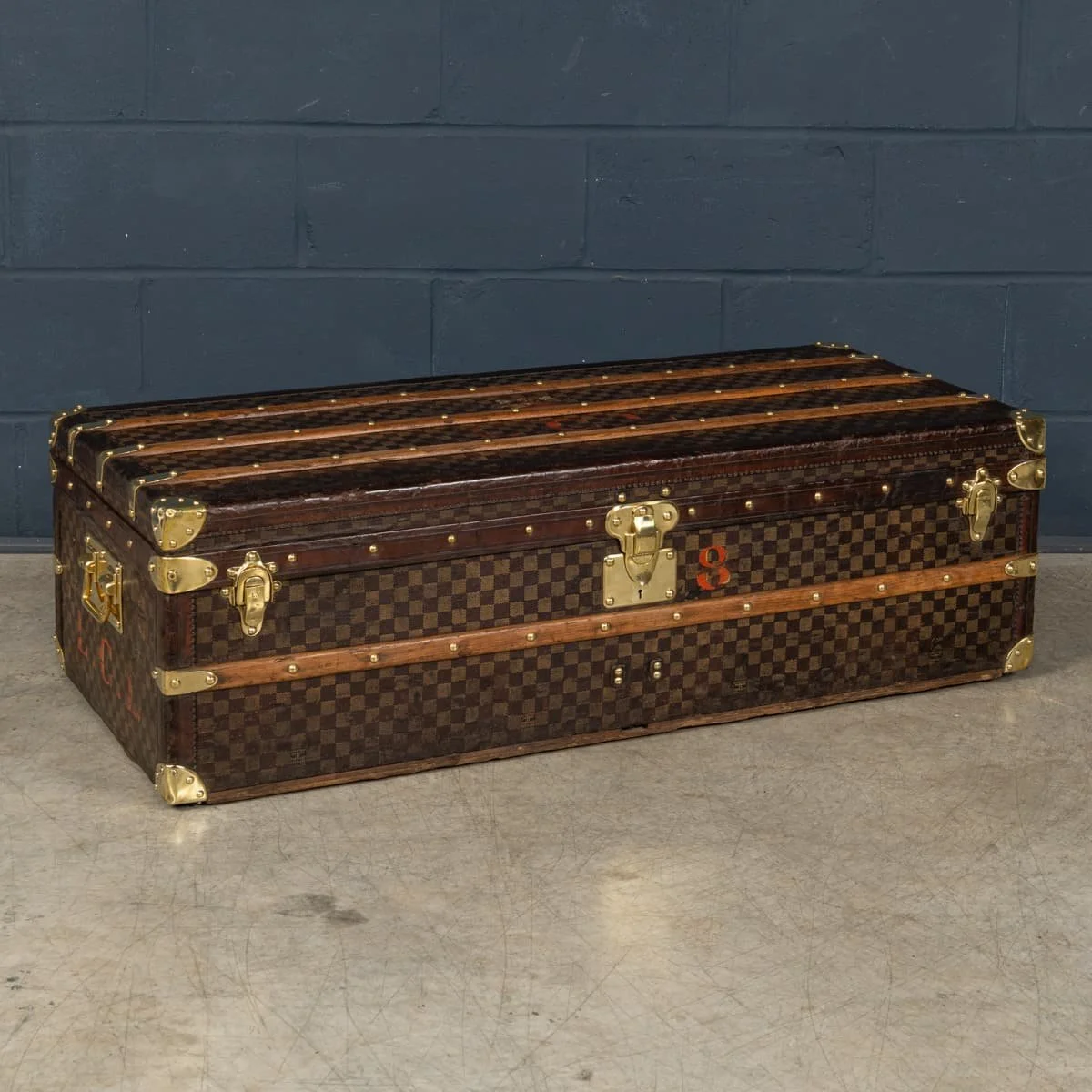
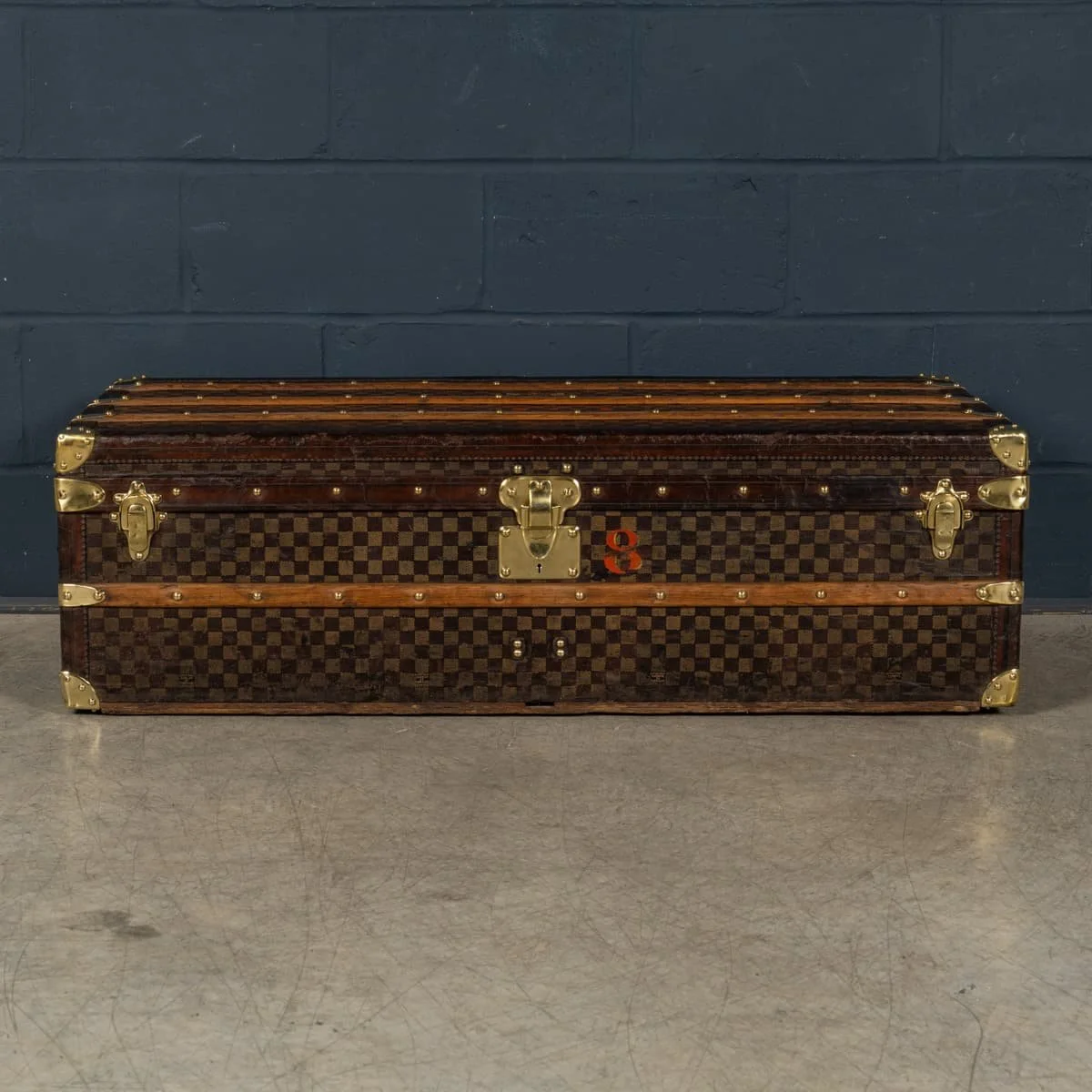
A special-order Louis Vuitton damier trunk, with crowned initials "LCL", attributed to the Marquis de Chasseloup-Laubat family, France, circa 1900
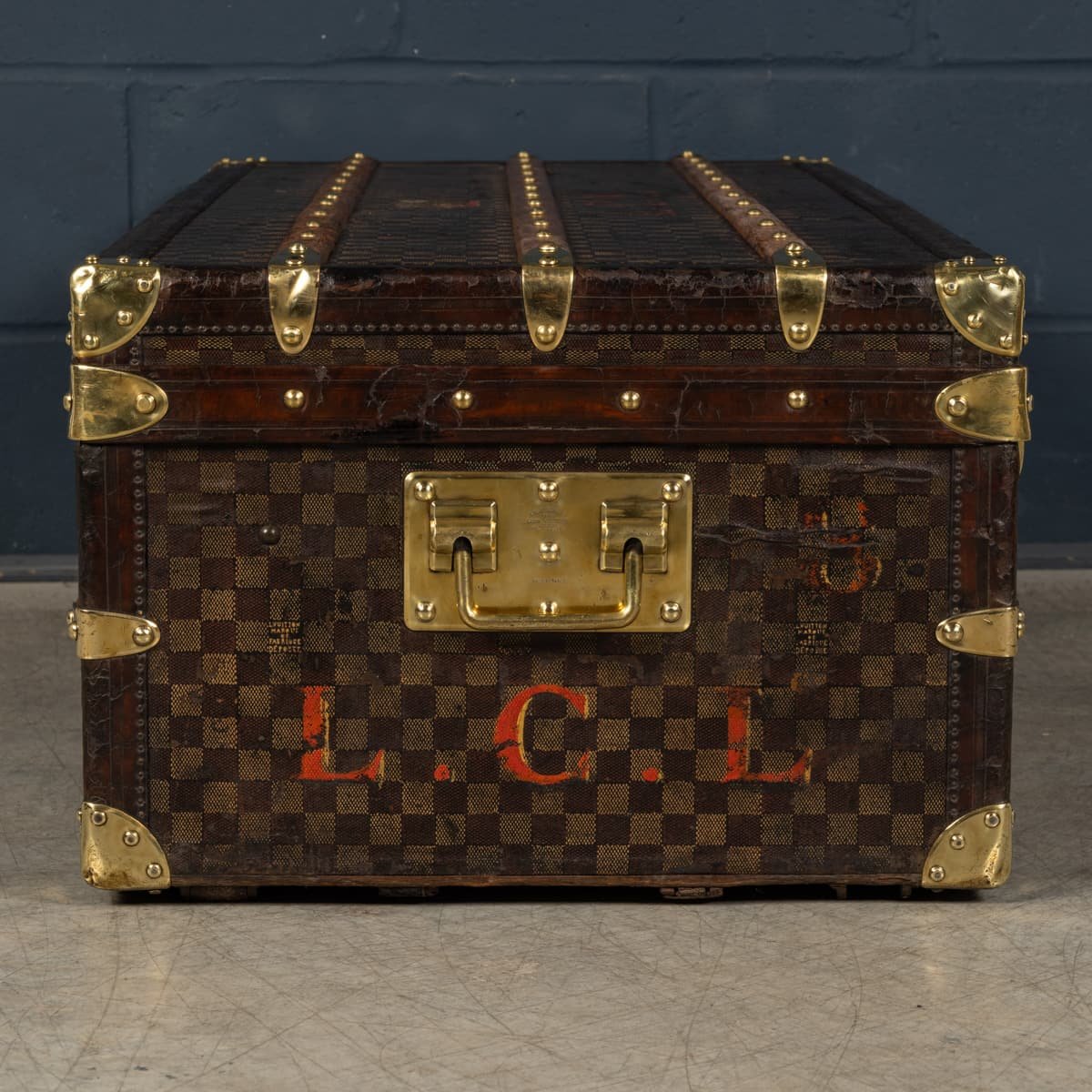
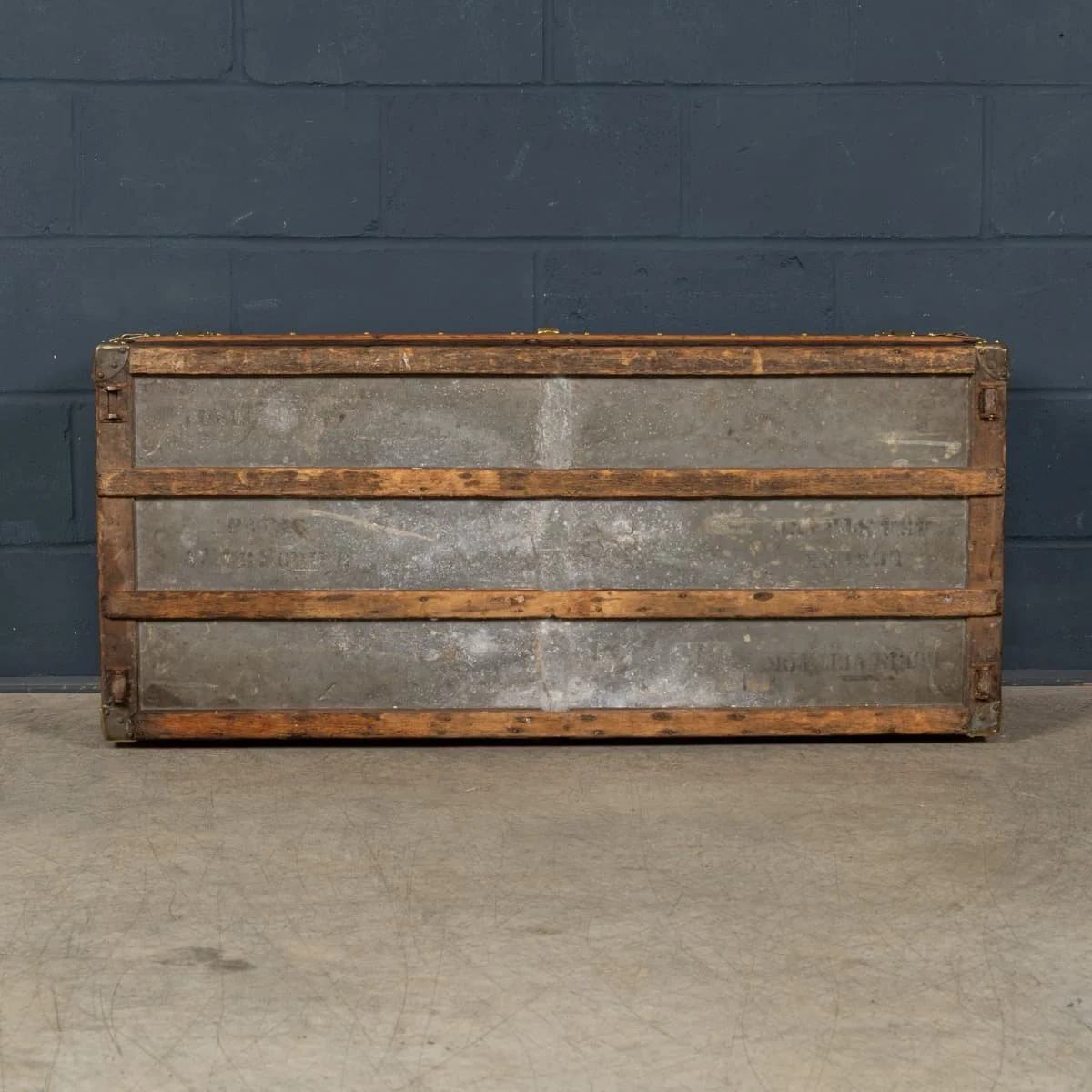
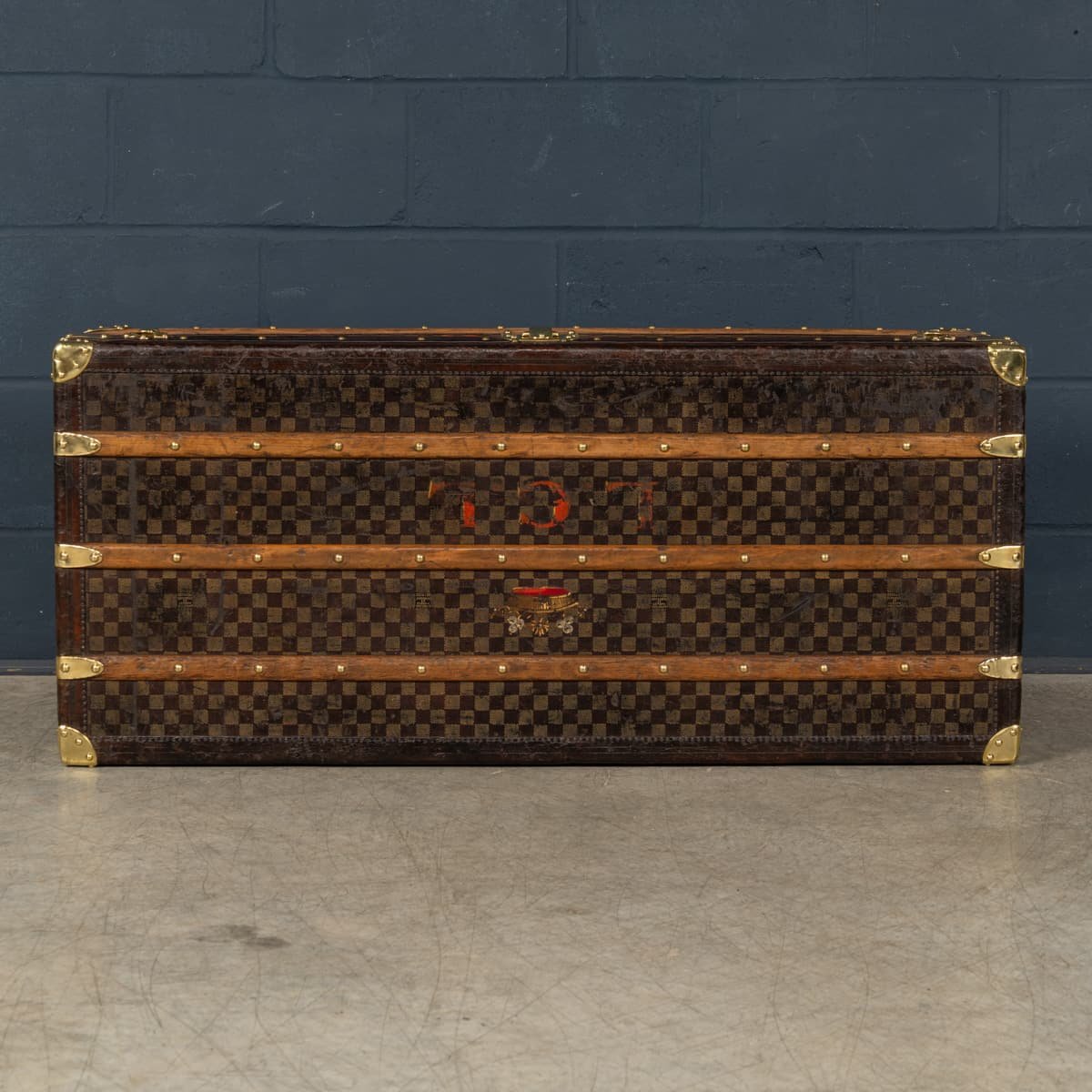
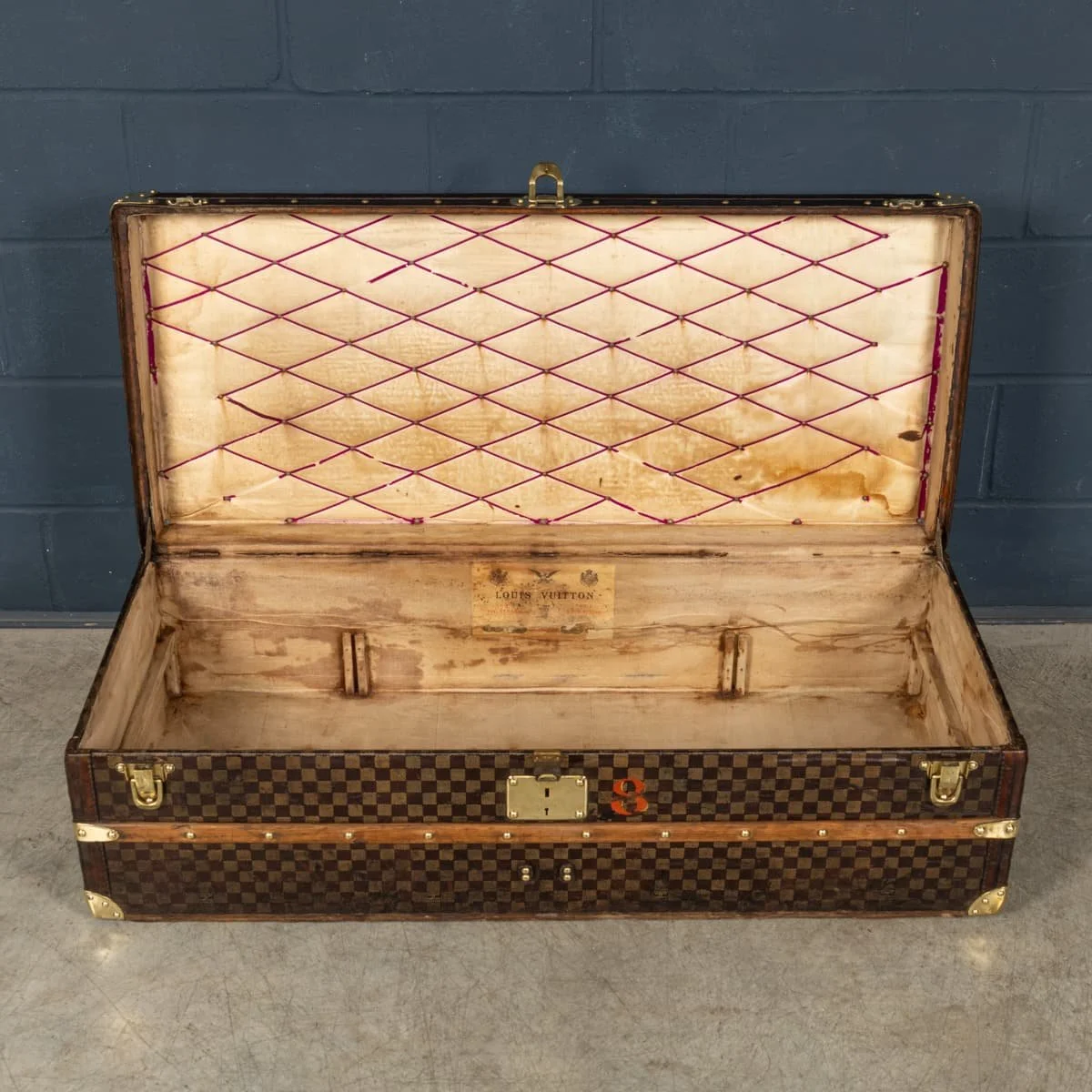
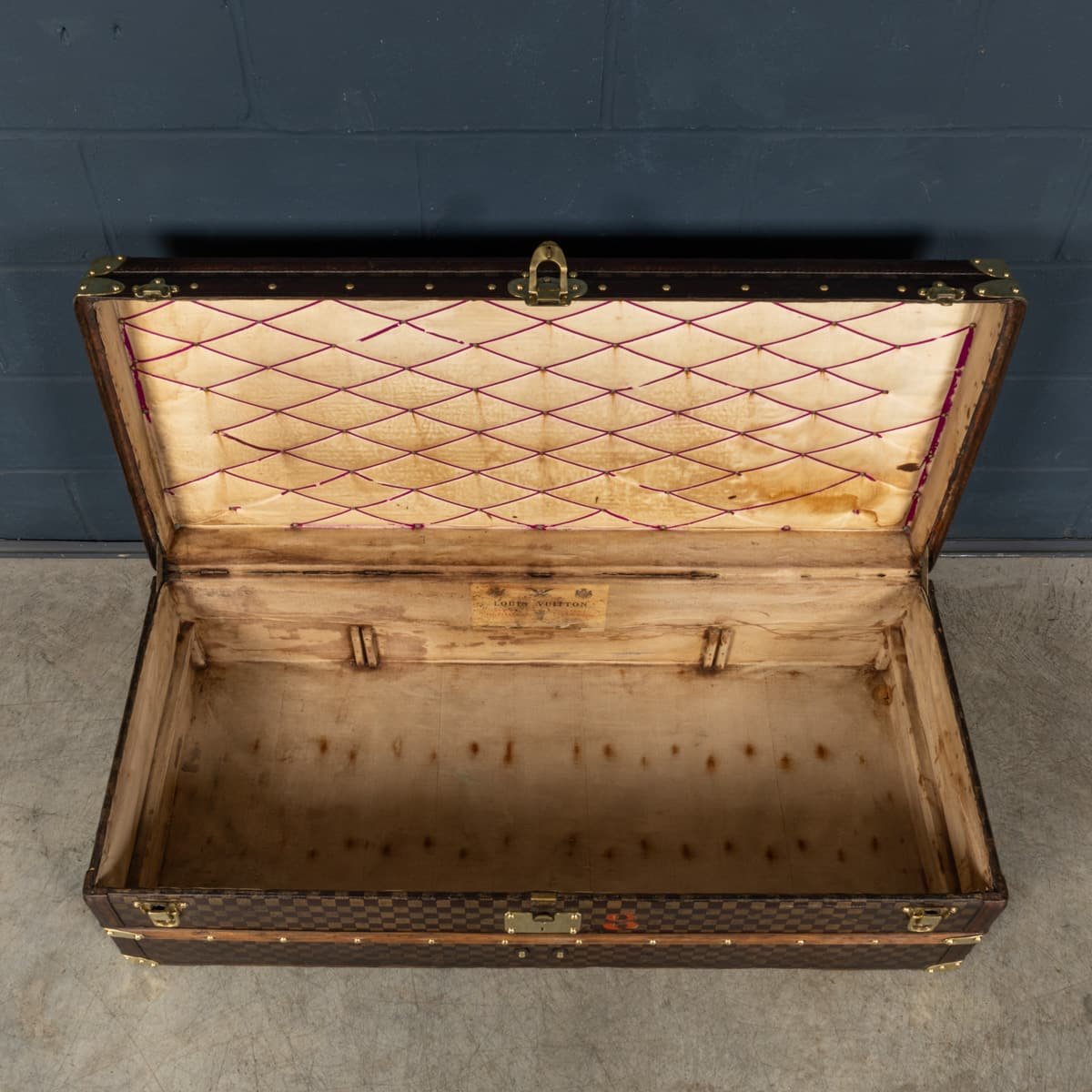
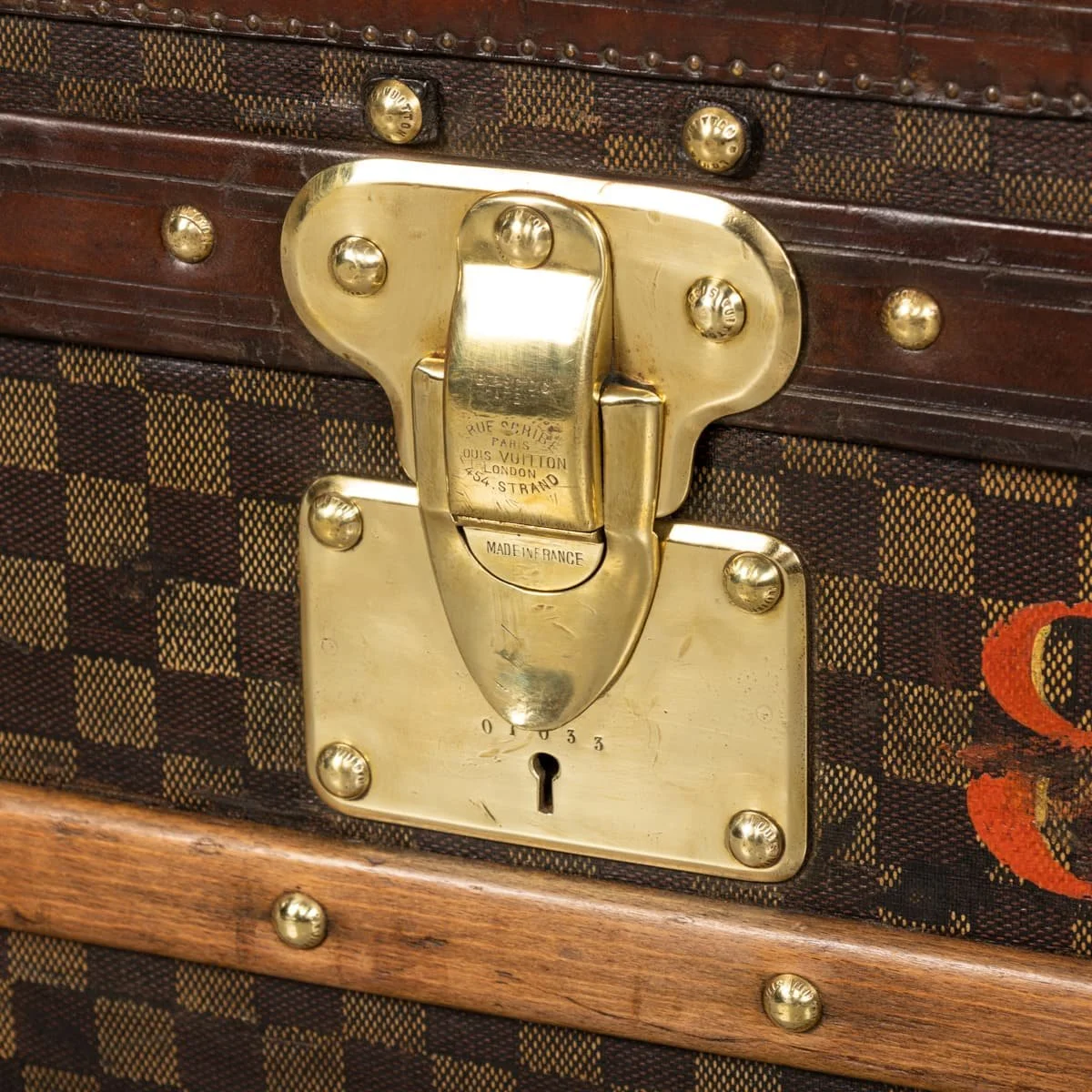
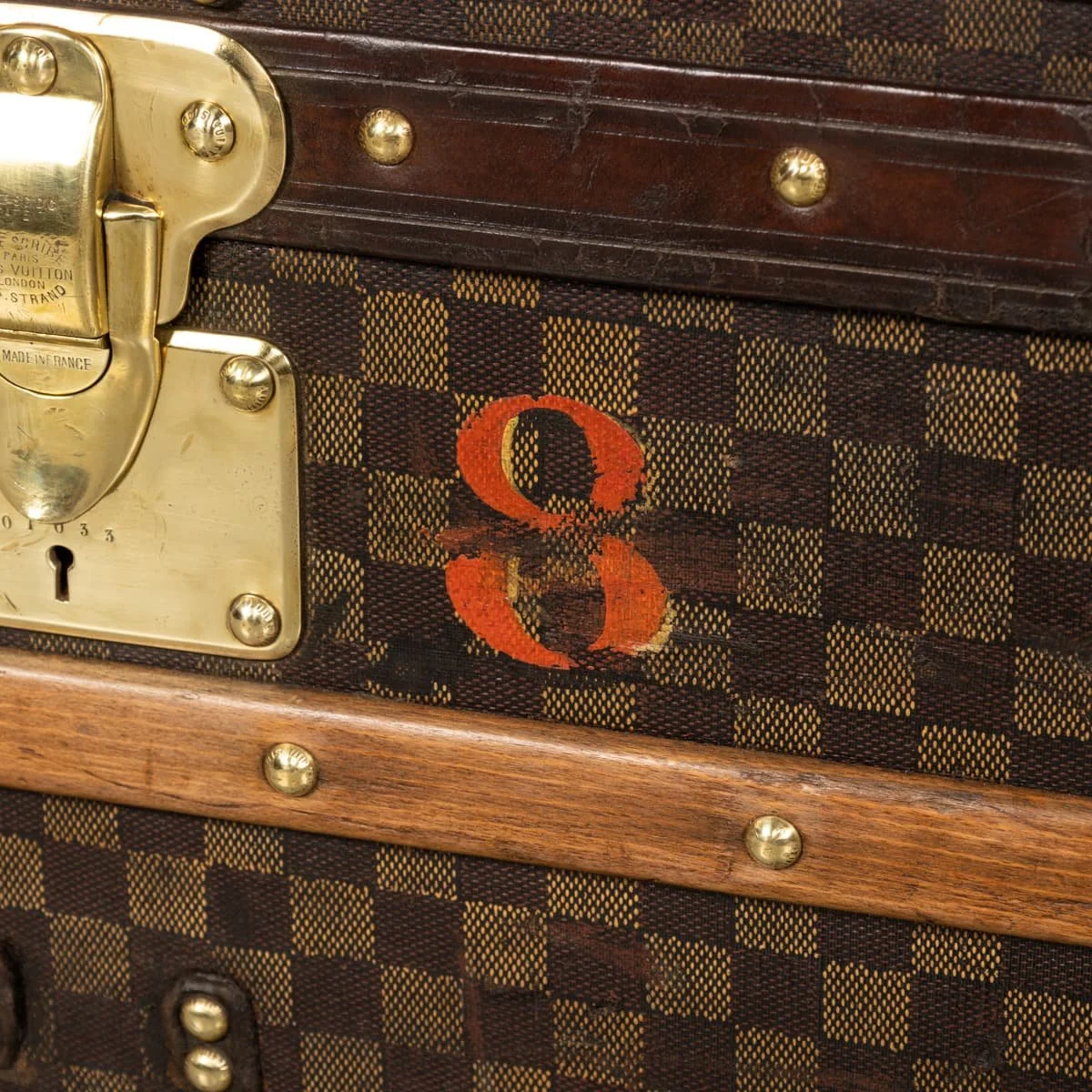
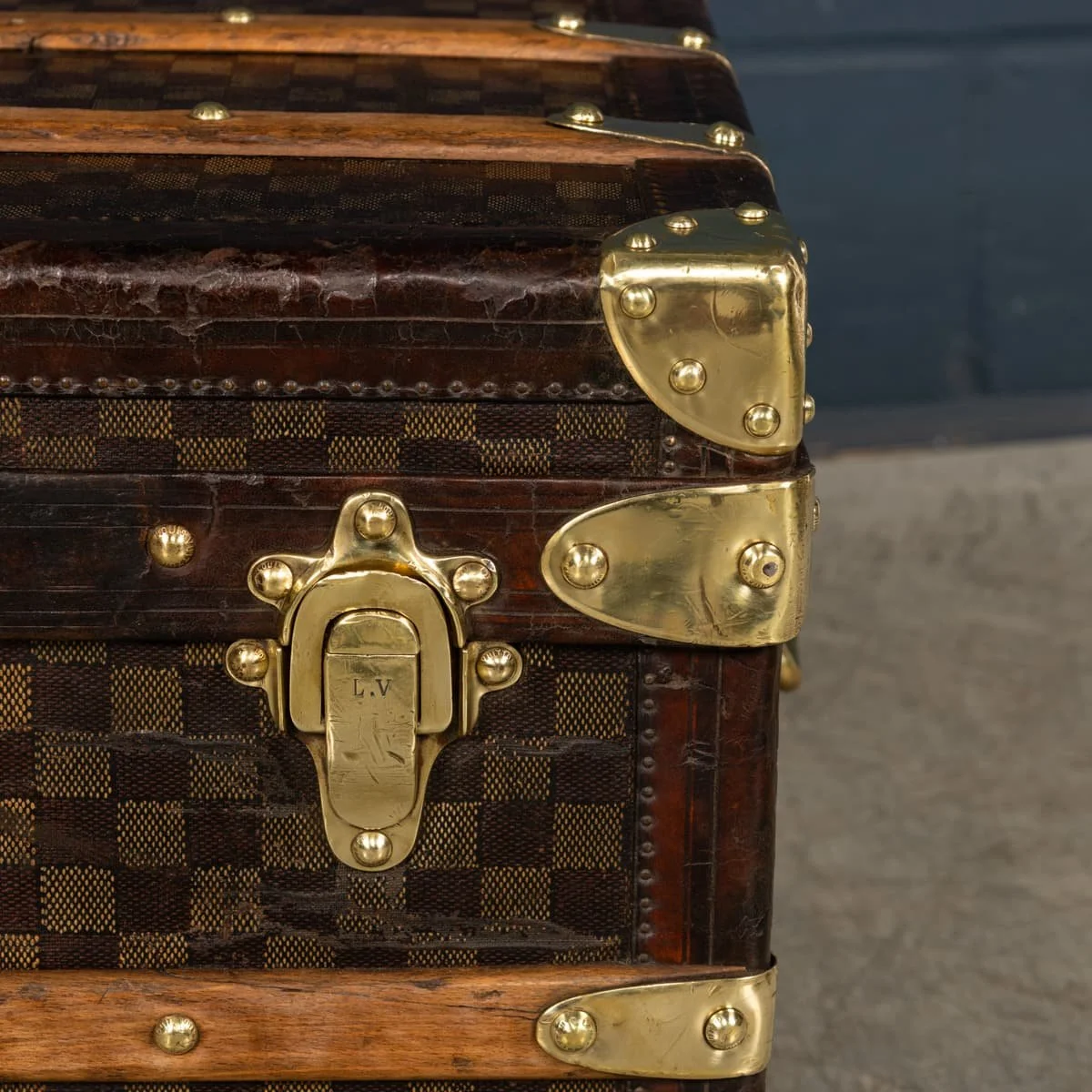
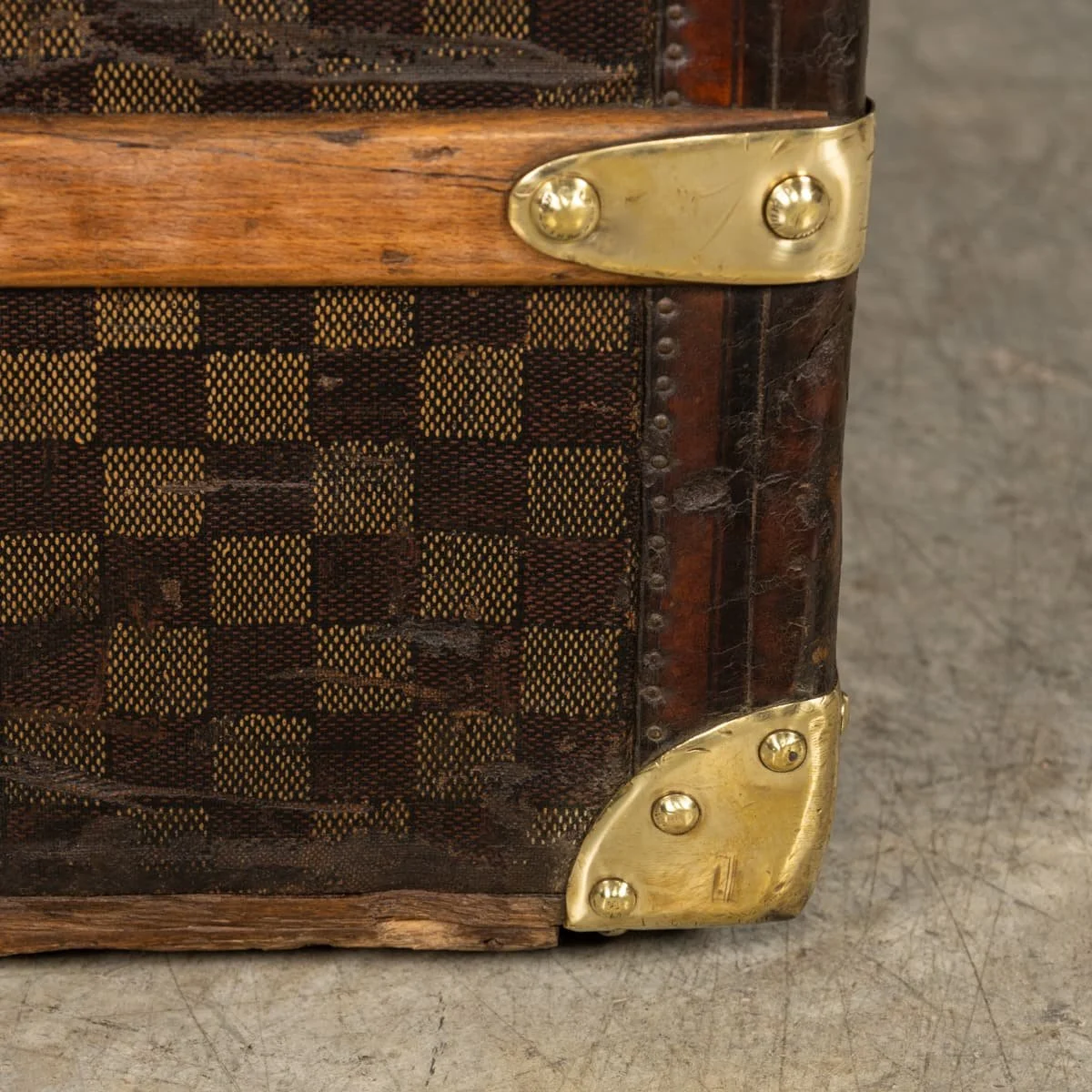
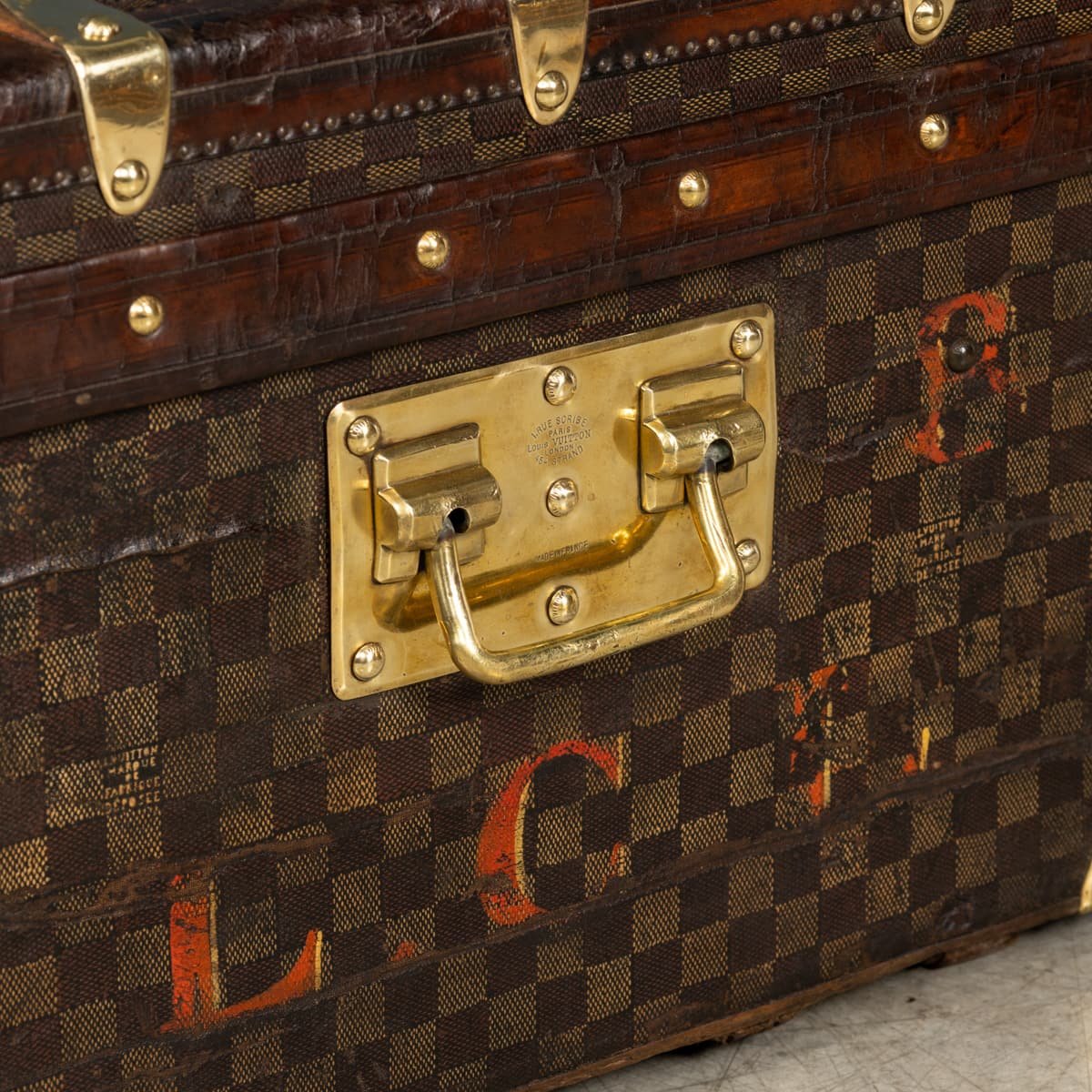
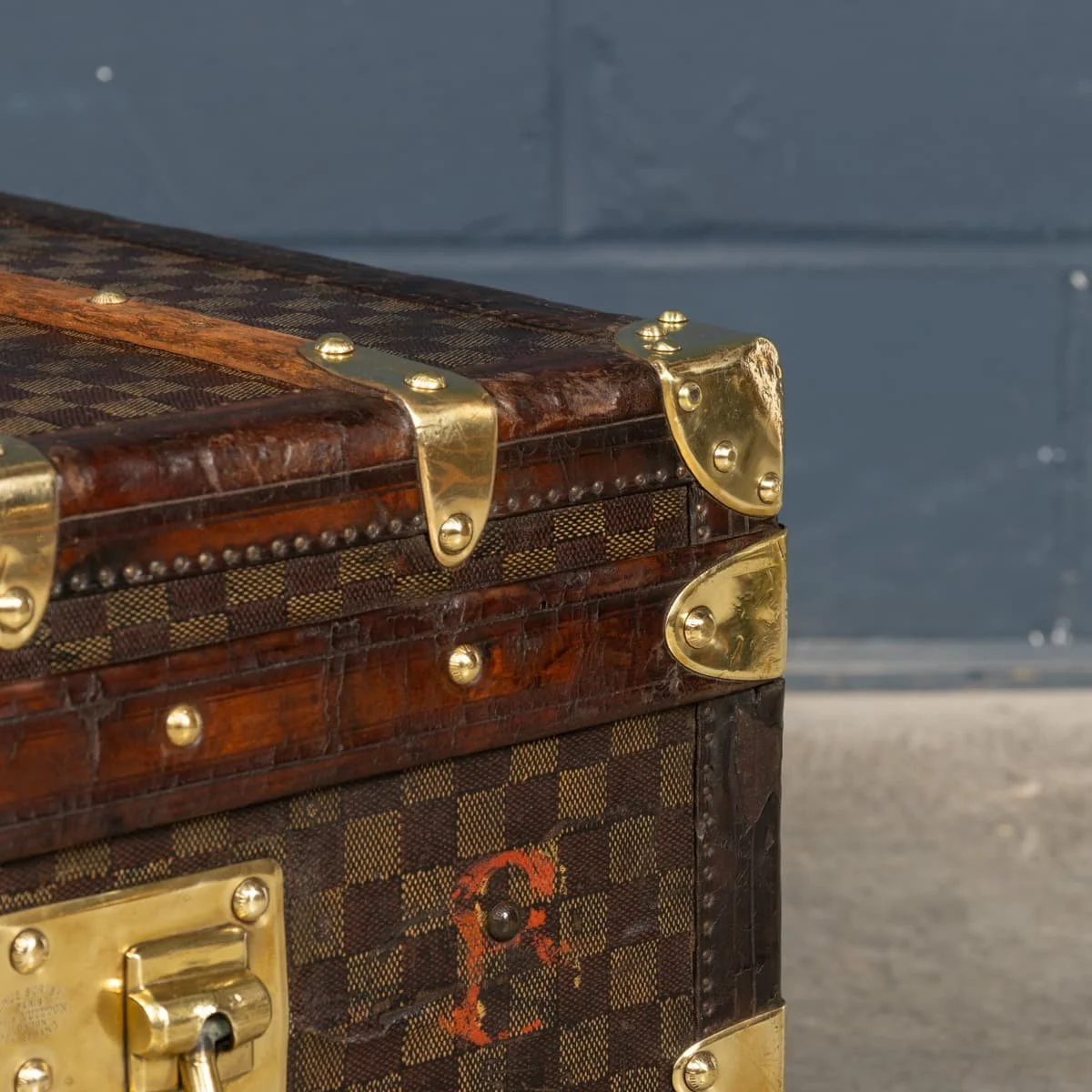
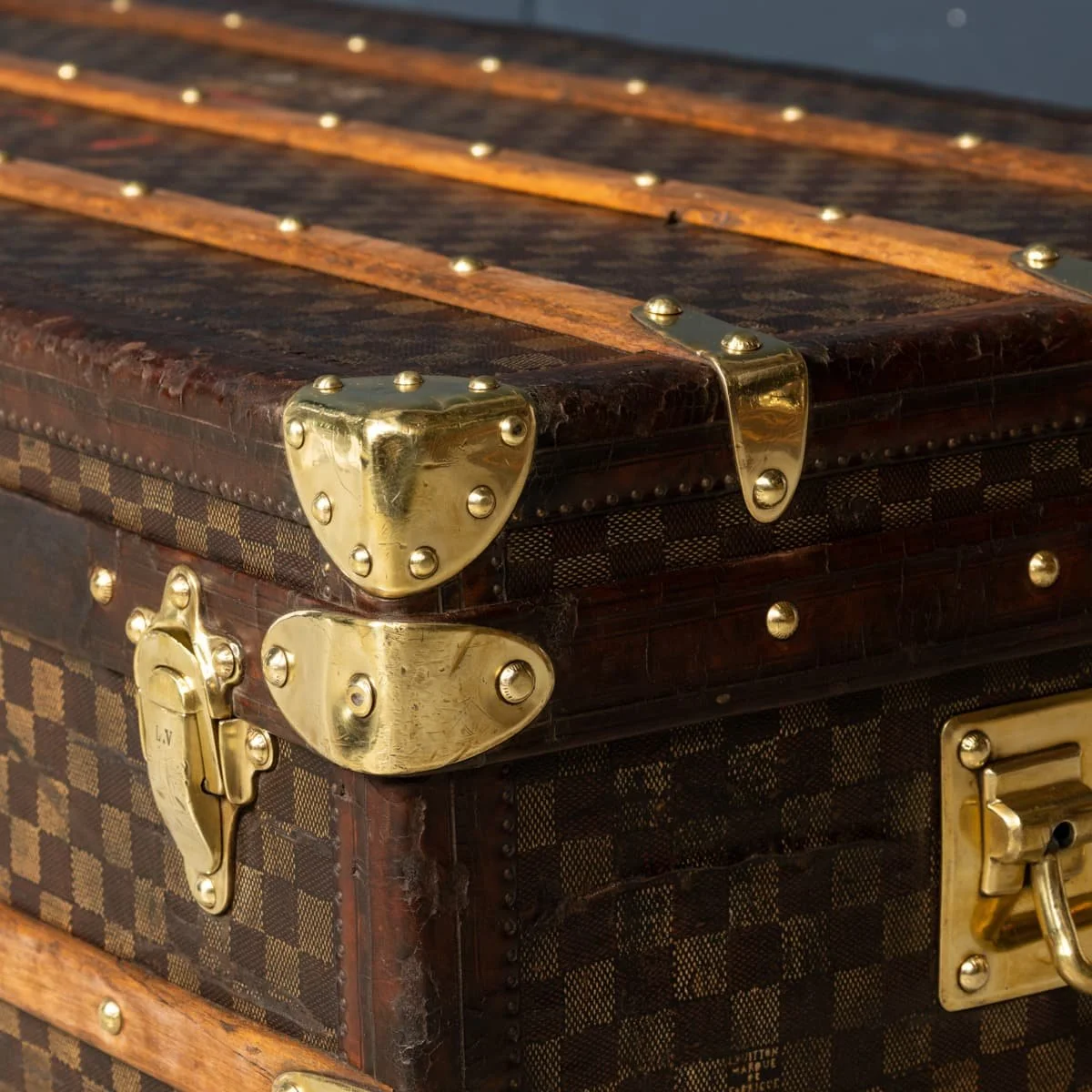
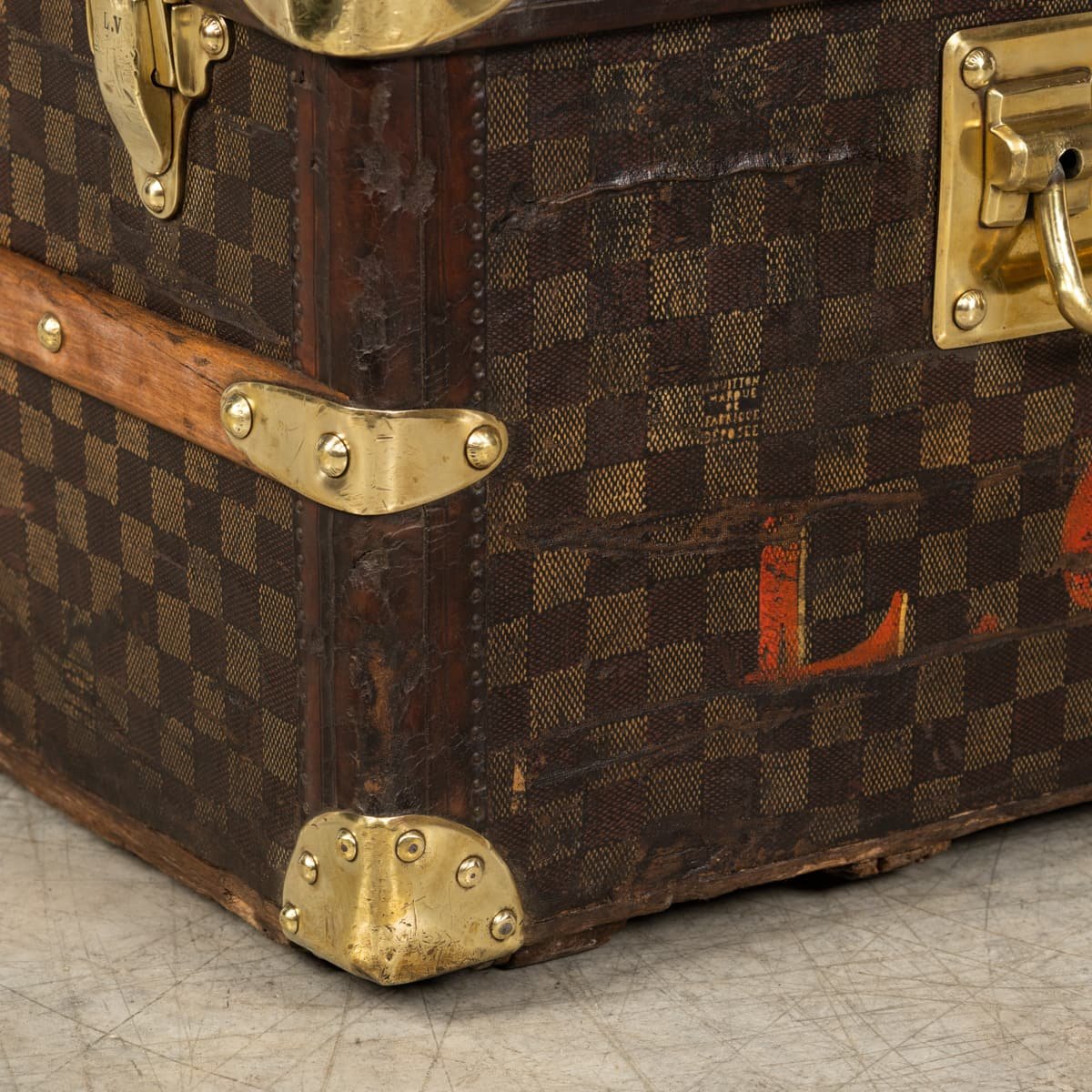
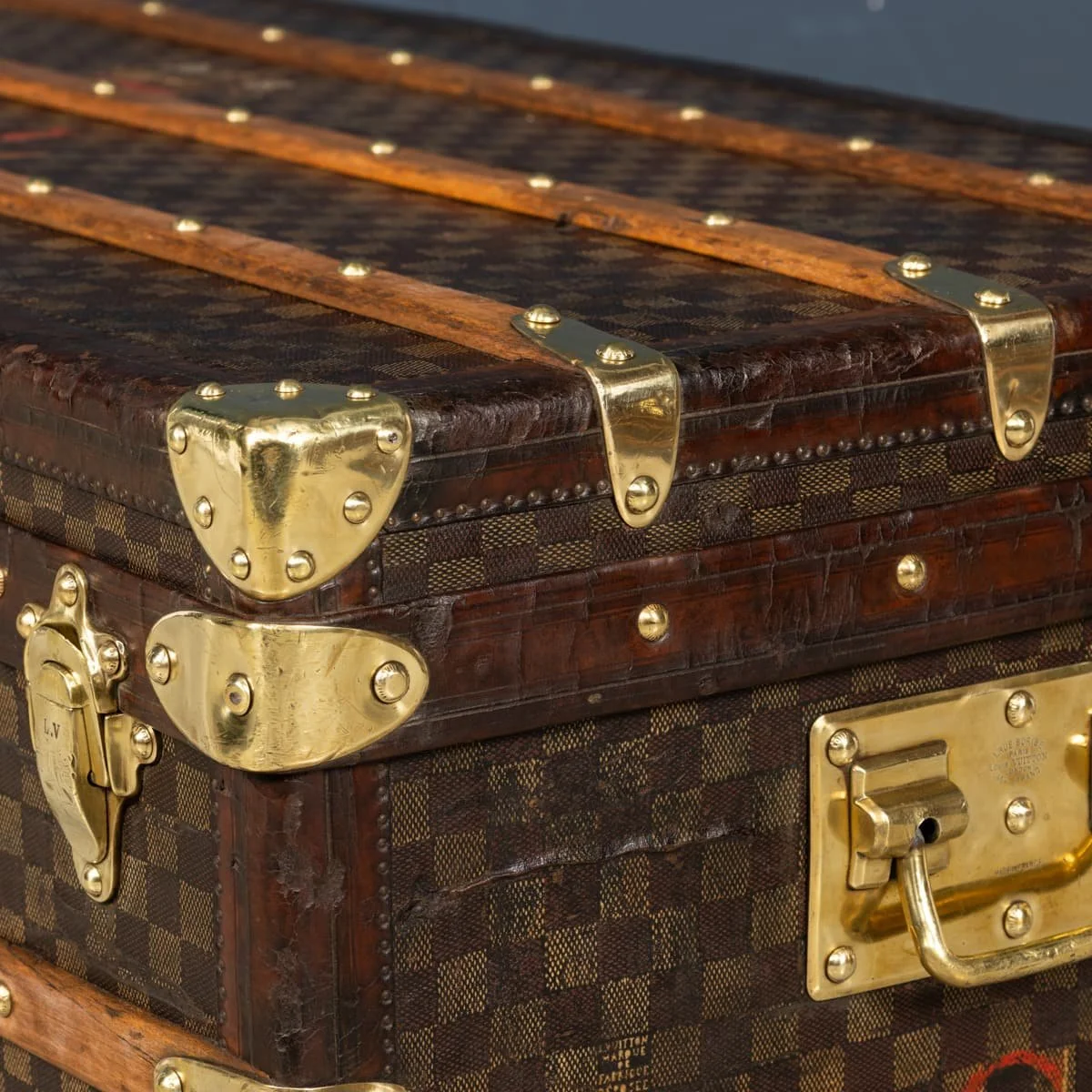
A special-order Louis Vuitton damier trunk, with crowned initials "LCL", attributed to the Marquis de Chasseloup-Laubat family, France, circa 1900
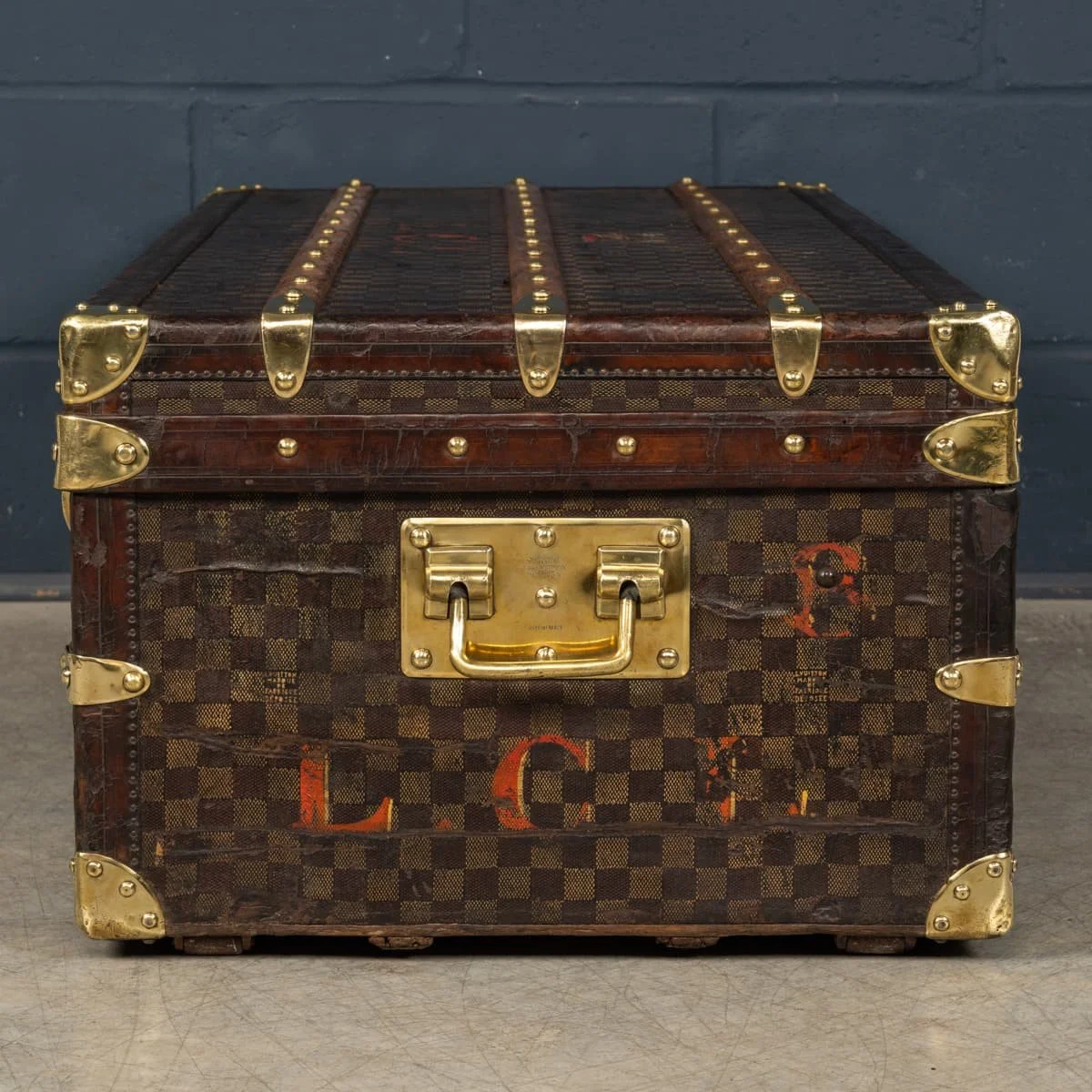
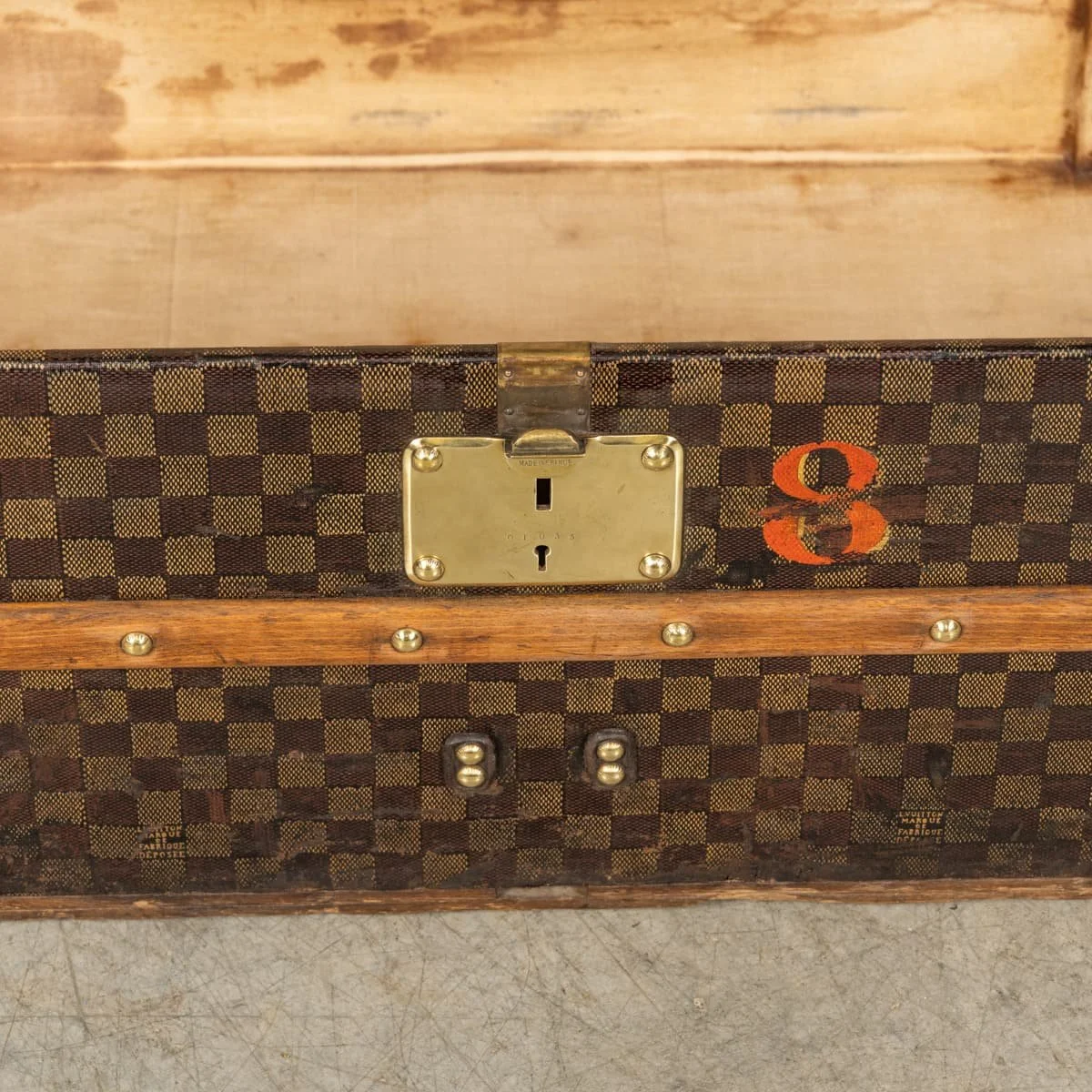
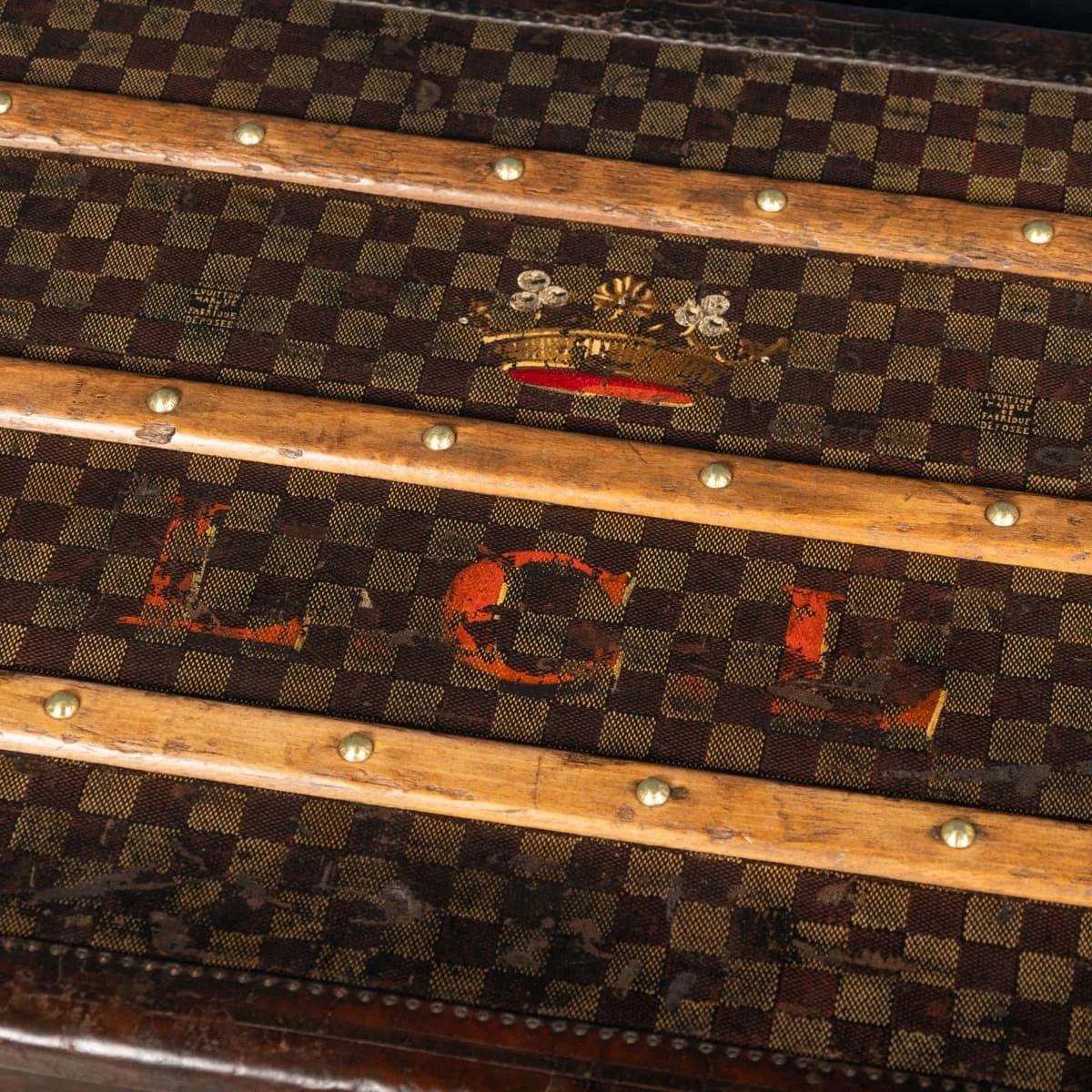
A rare and highly desirable special-order Louis Vuitton Damier trunk, dating to the early 20th century and retaining its original painted monogram comprising the initials "LCL" surmounted by an aristocratic coronet. The trunk is further accompanied by a related Louis Vuitton leather travelling case engraved "Marquis de Chasseloup-Laubat – Paris – London – Jockey Club – To French Embassy", strongly suggesting an association with the distinguished French noble family of Chasseloup-Laubat.
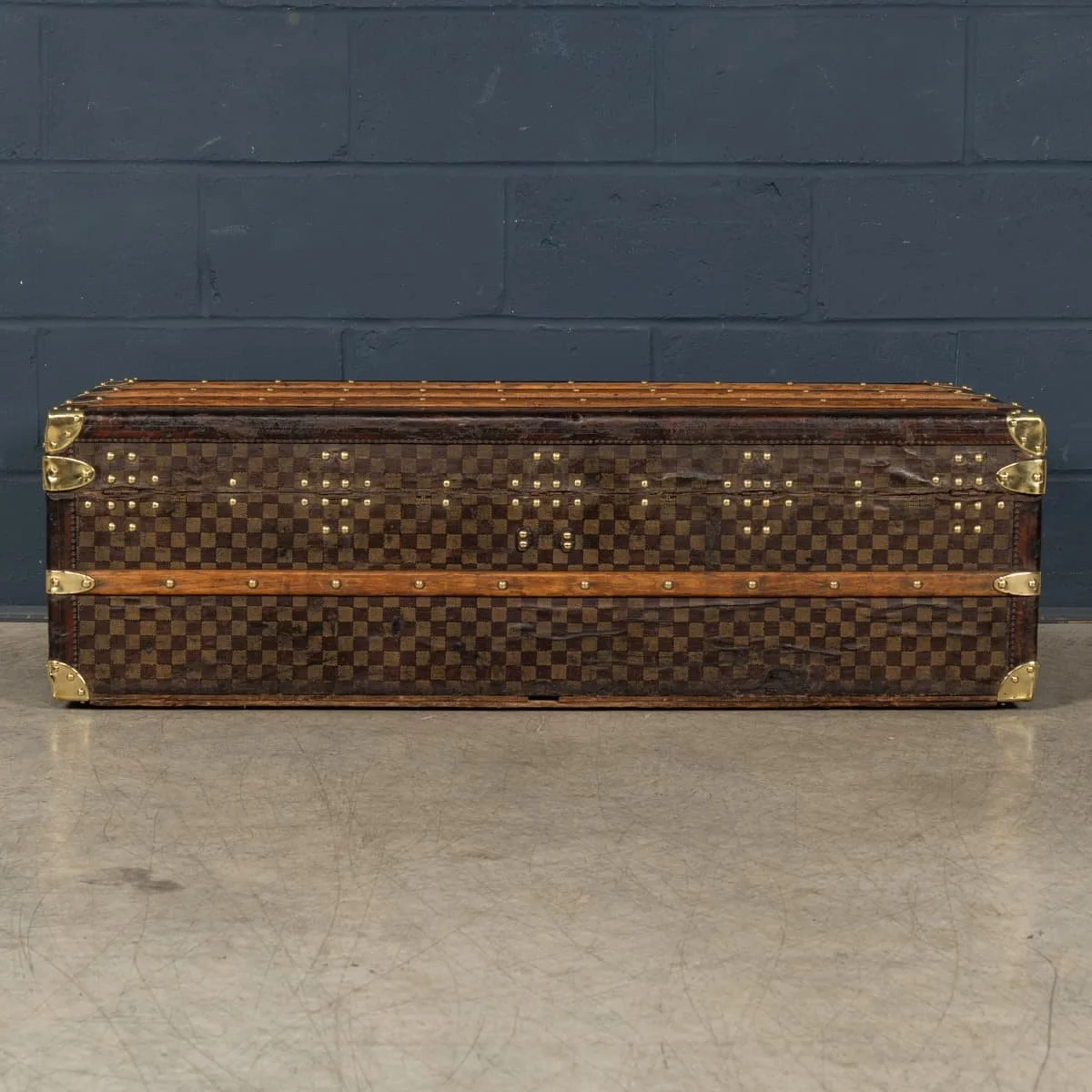
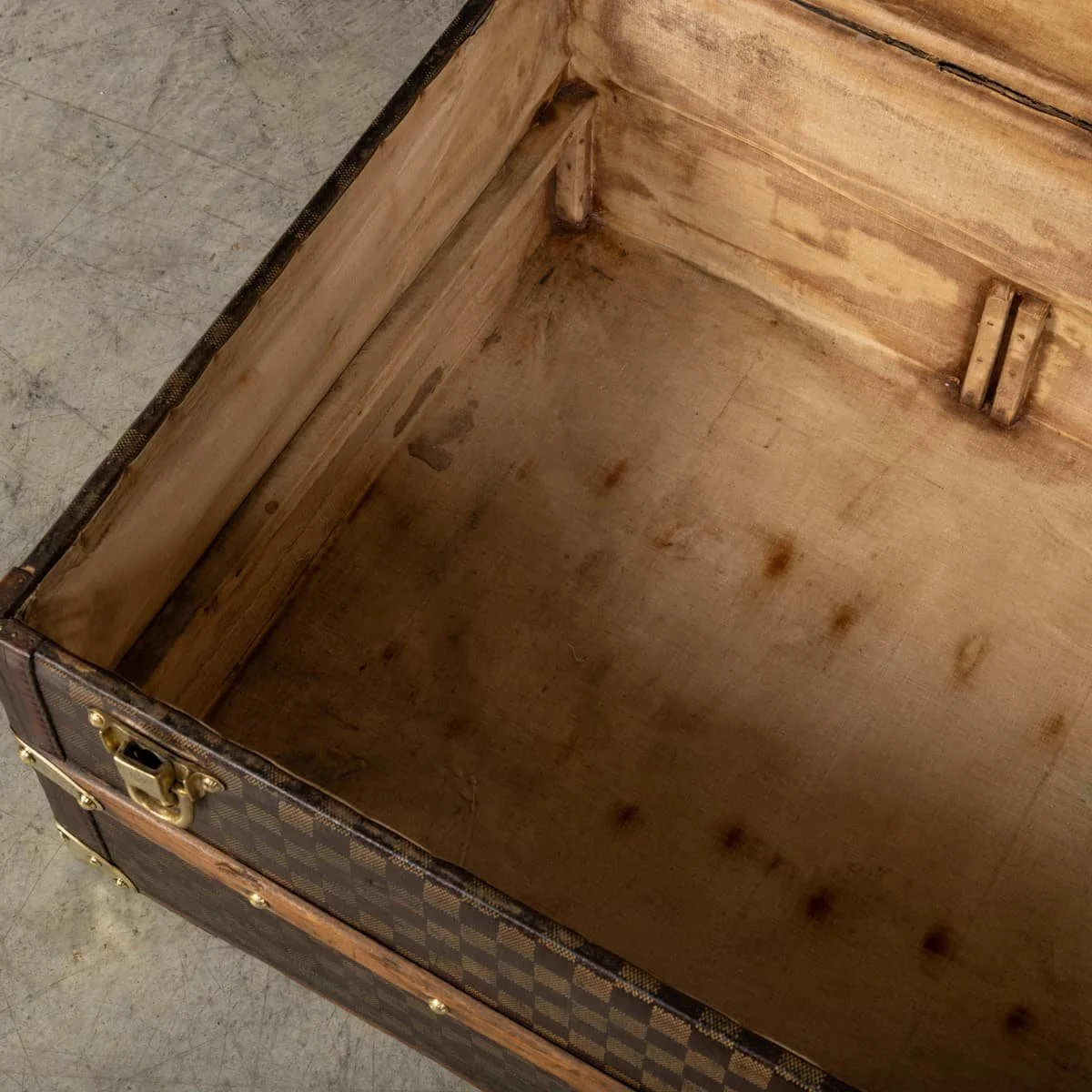
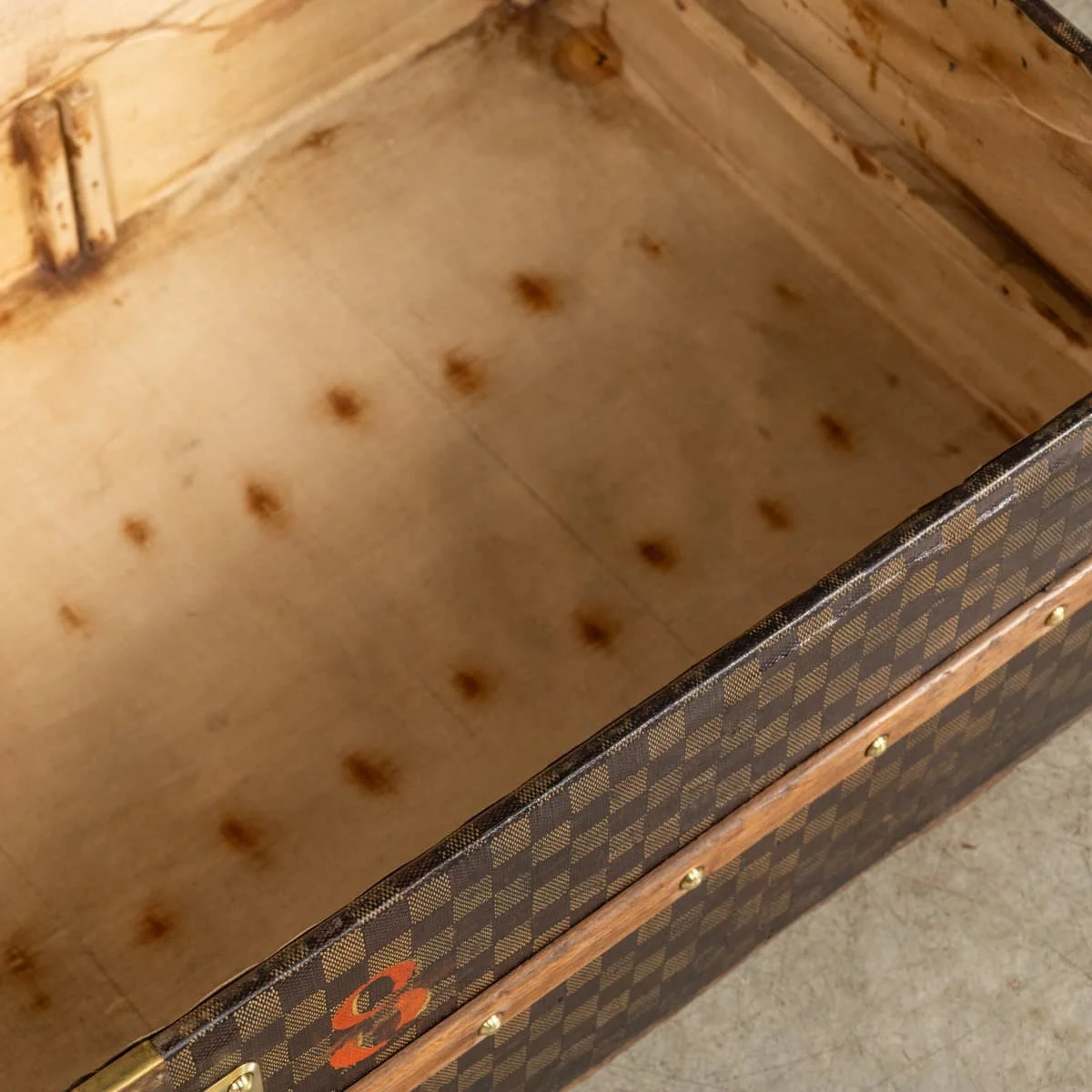
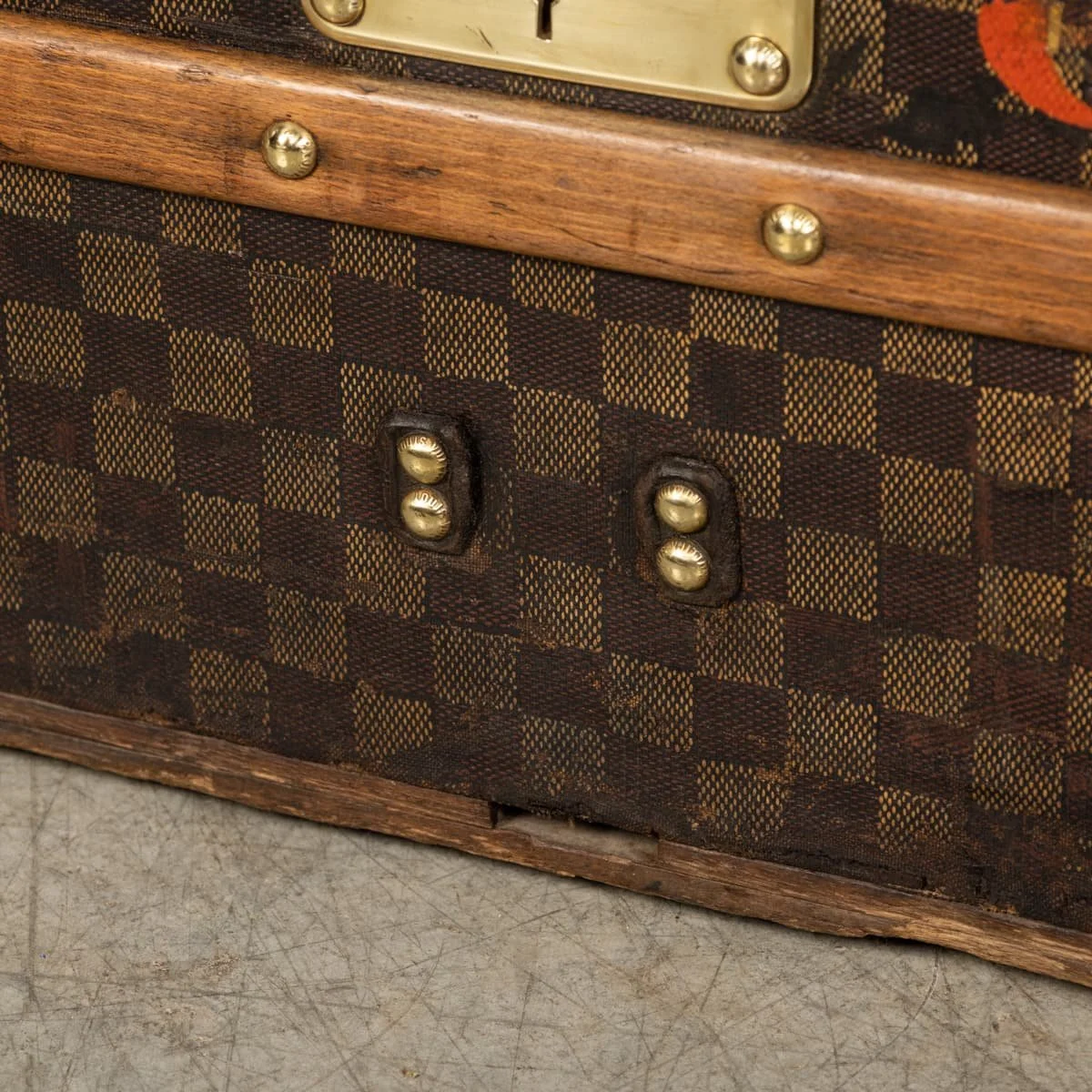
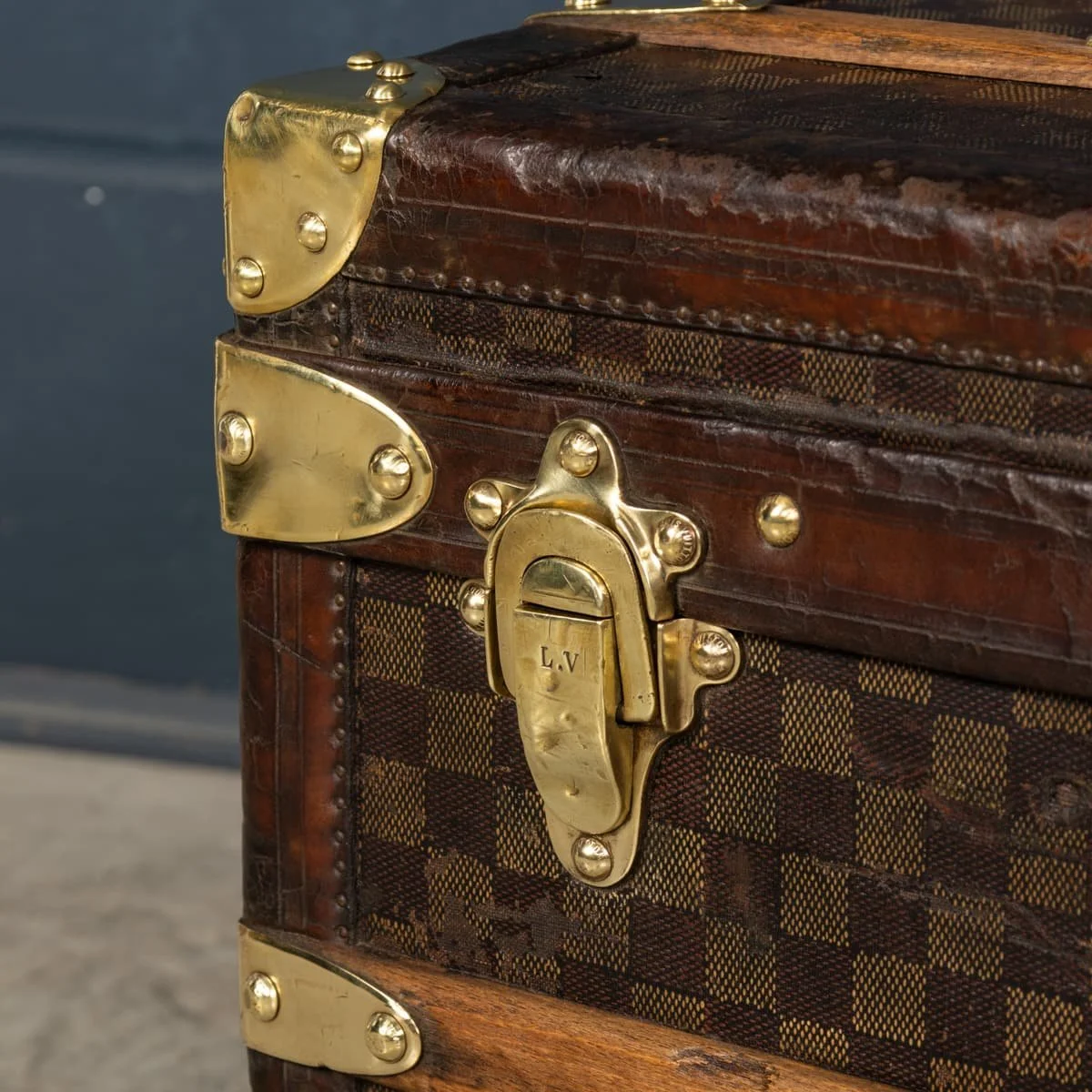
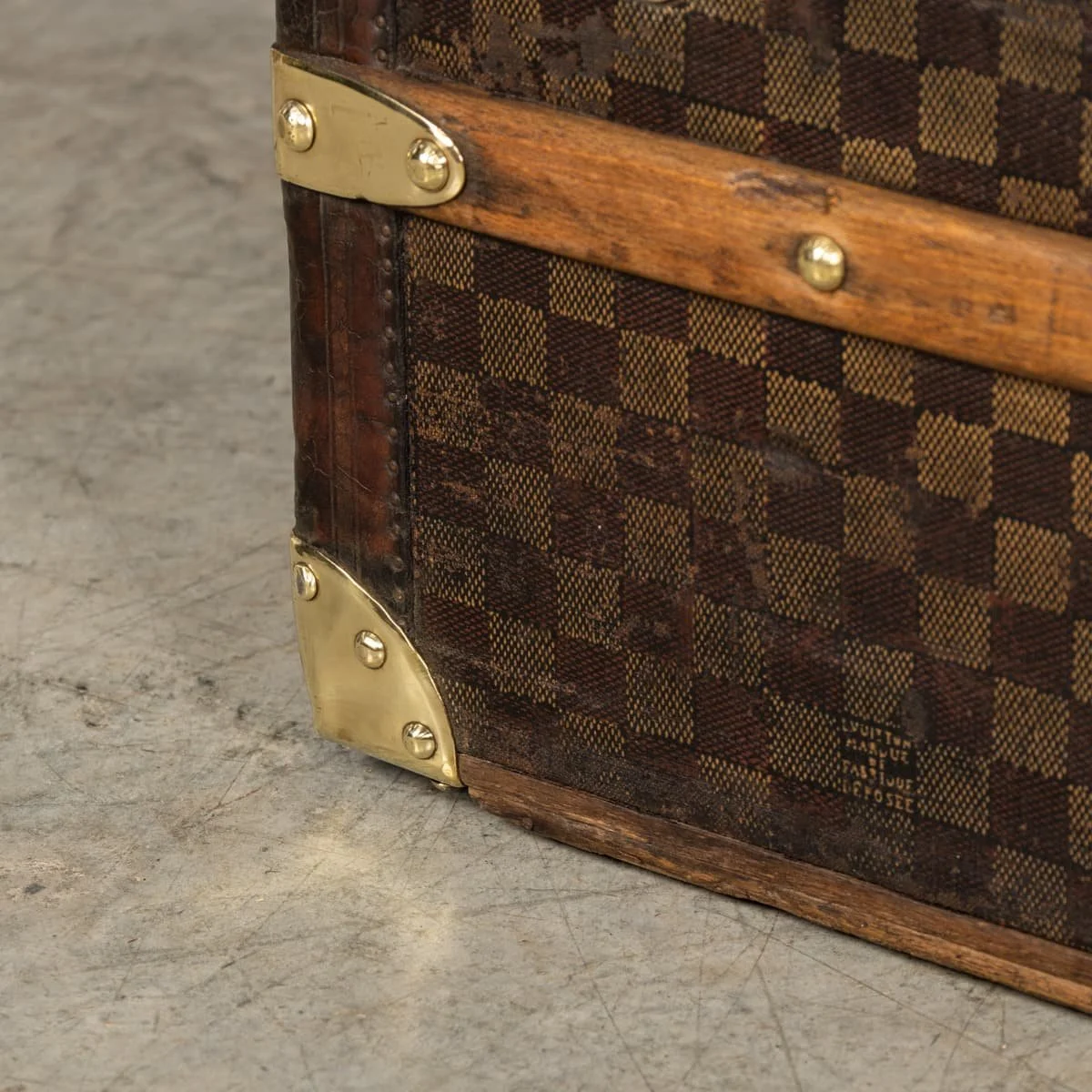
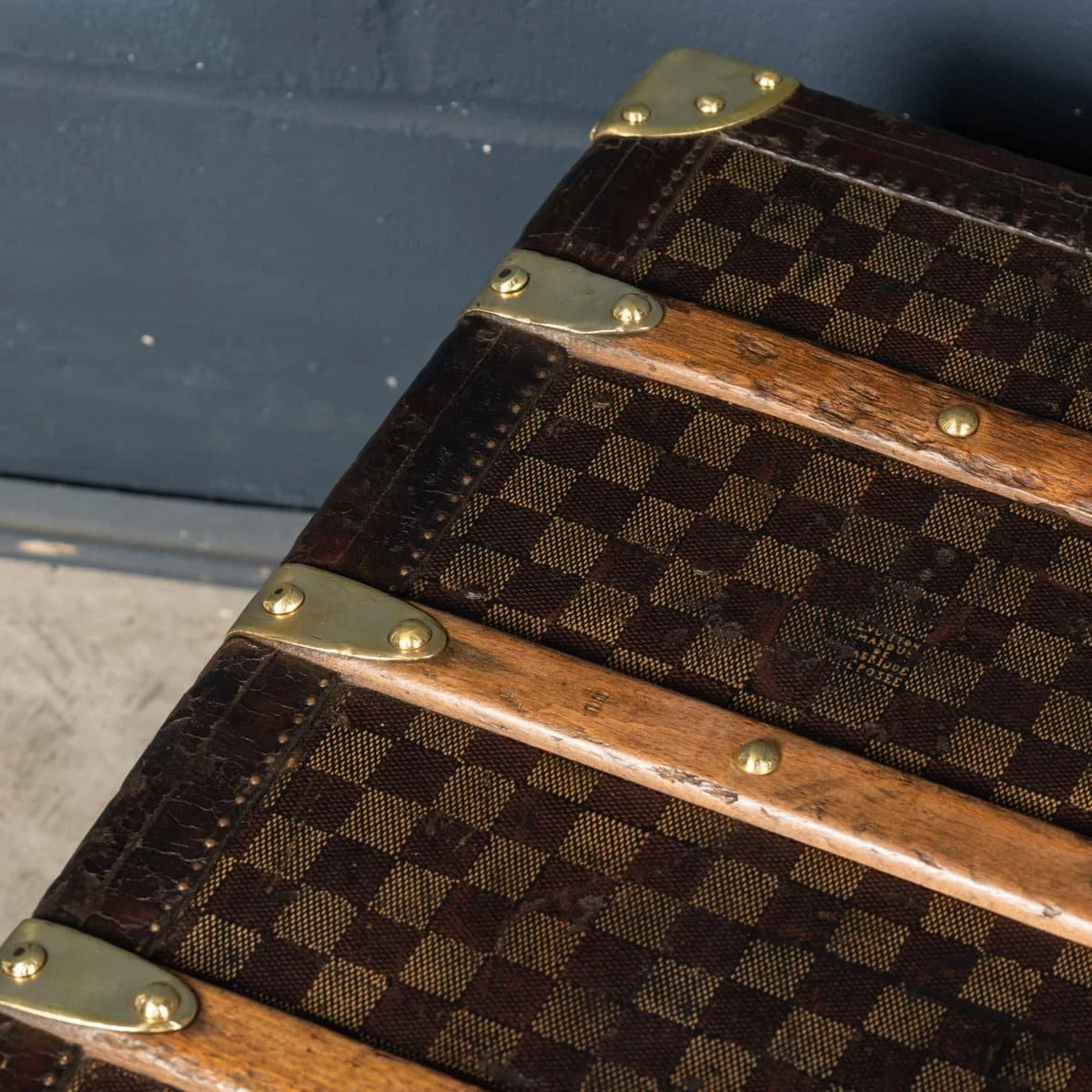
Constructed in Louis Vuitton's iconic Damier canvas with solid brass lock, catches and protective corner mounts, the trunk embodies the exceptional quality and craftsmanship that established the Maison as the foremost maker of luxury luggage during the golden age of travel. The beautifully patinated wooden laths and brass fittings contrast elegantly with the Damier canvas, while the painted monogram and coronet transform the piece from an already desirable Vuitton trunk into an object of genuine historical interest and aristocratic provenance.
Special-order trunks occupy a particularly important place within the Louis Vuitton canon. Commissioned for royalty, diplomats, industrialists and members of Europe's aristocracy, such pieces were individually tailored to their owners' requirements and frequently bore painted initials, coats of arms, heraldic devices or coronets to facilitate identification during international travel. As with bespoke luggage commissioned by maharajahs, noble families and great society figures, these personalised details provide a fascinating insight into the lives and status of their original owners.
The present trunk's crowned initials LCL are especially intriguing when considered alongside the accompanying inscribed leather case. The Chasseloup-Laubat family was one of France's most eminent aristocratic dynasties, producing statesmen, military figures and prominent members of Belle Époque society. The references to Paris, the London Jockey Club and the French Embassy evoke the cosmopolitan world of grand hotels, diplomatic circles and cross-Channel travel that characterised the European aristocracy during the late nineteenth and early twentieth centuries.
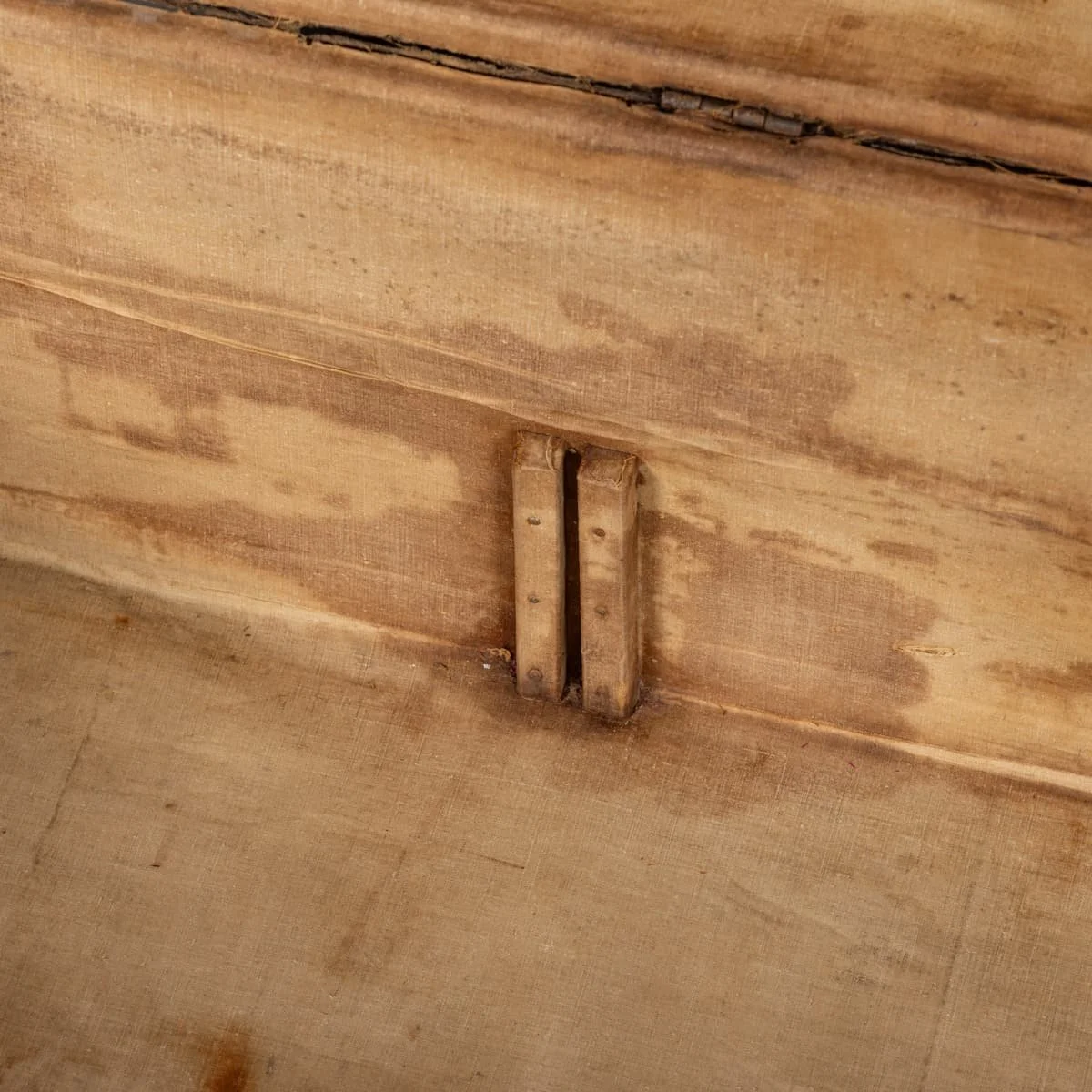
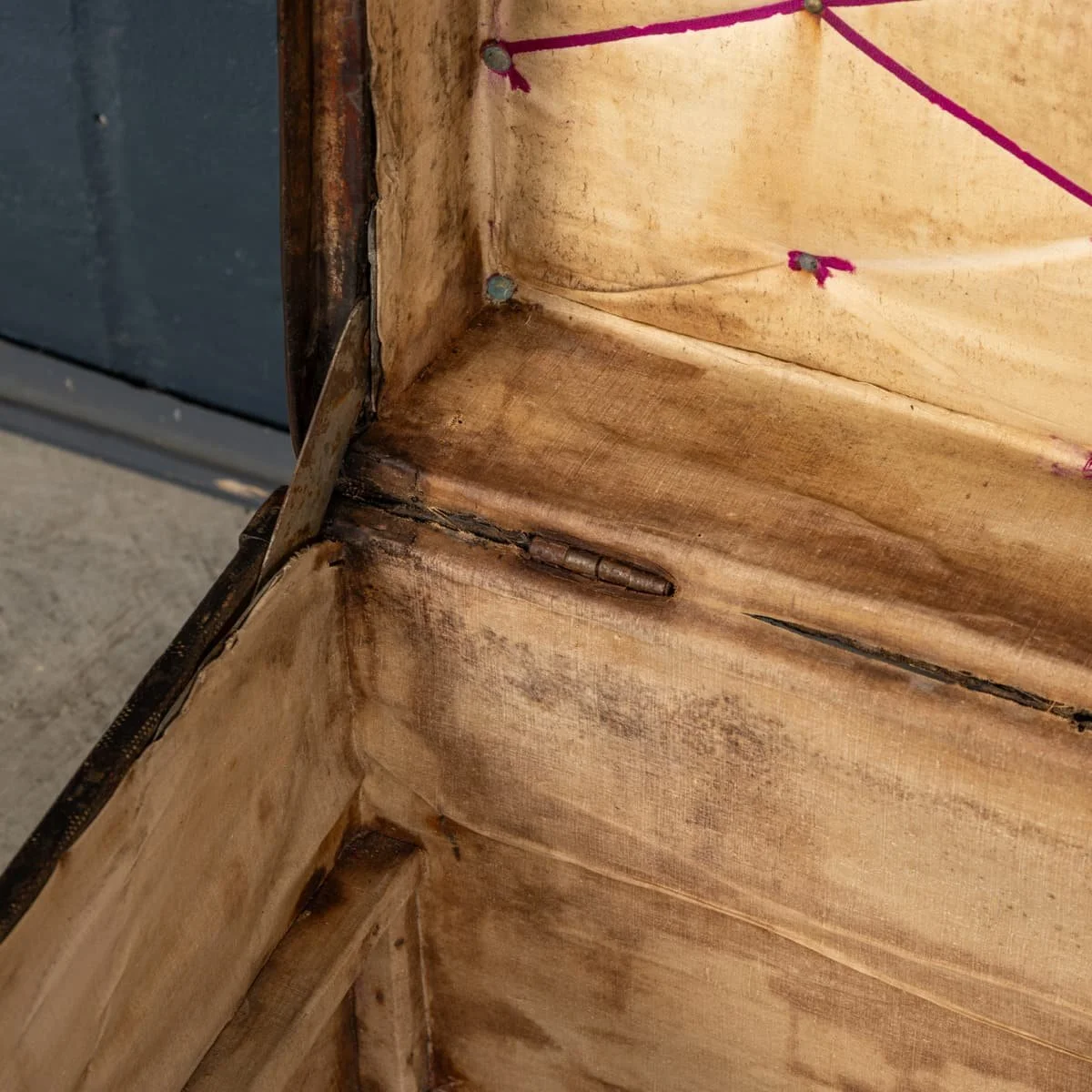
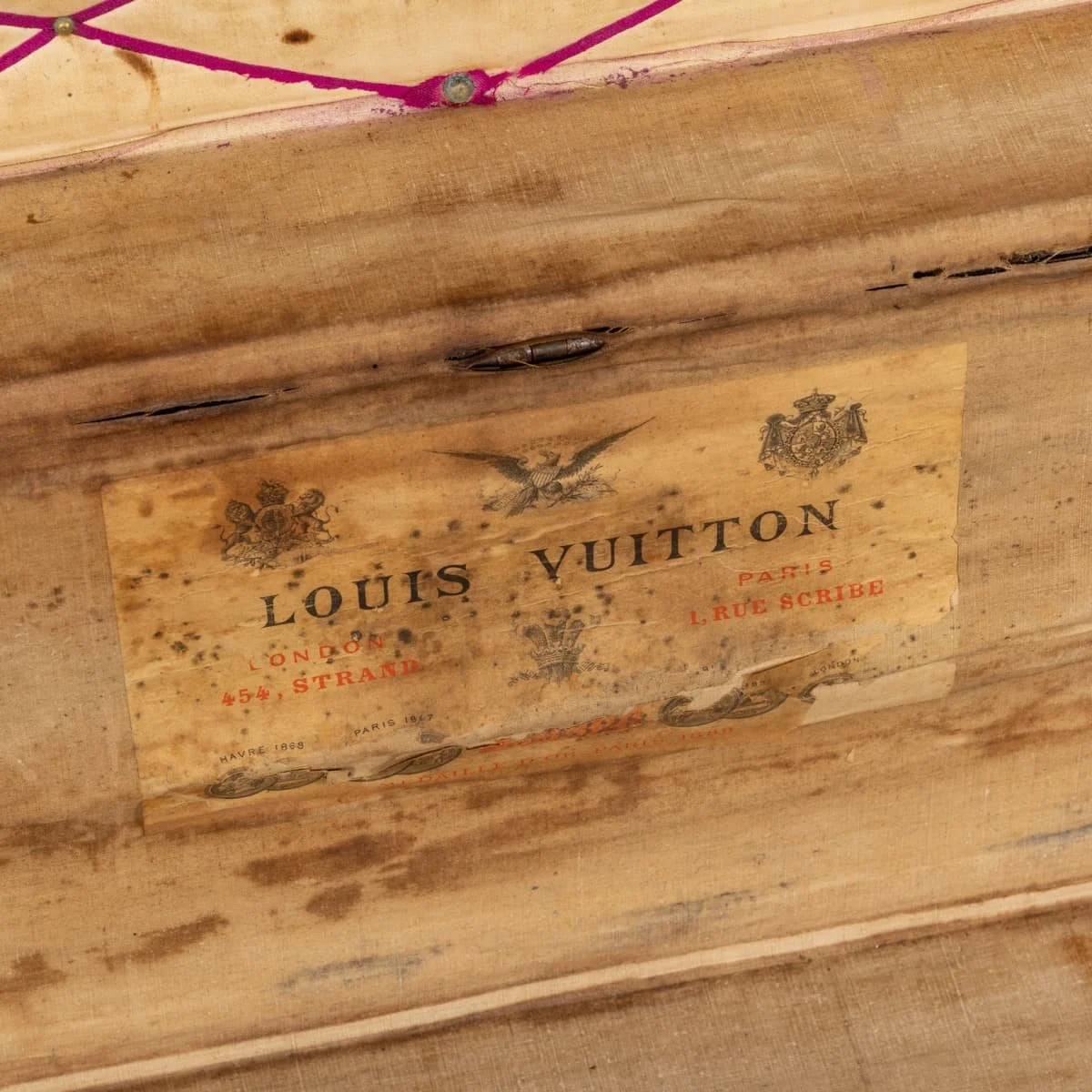
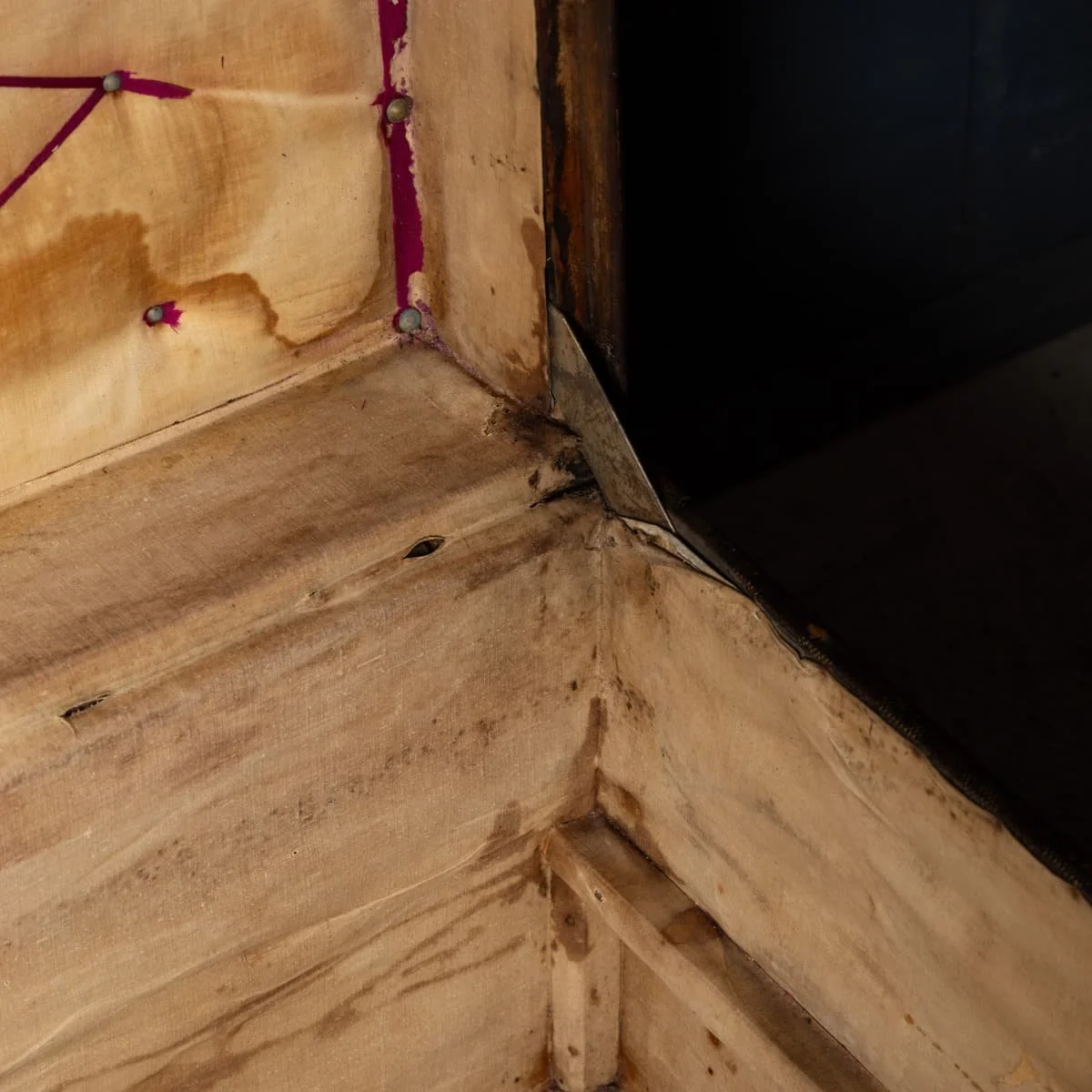
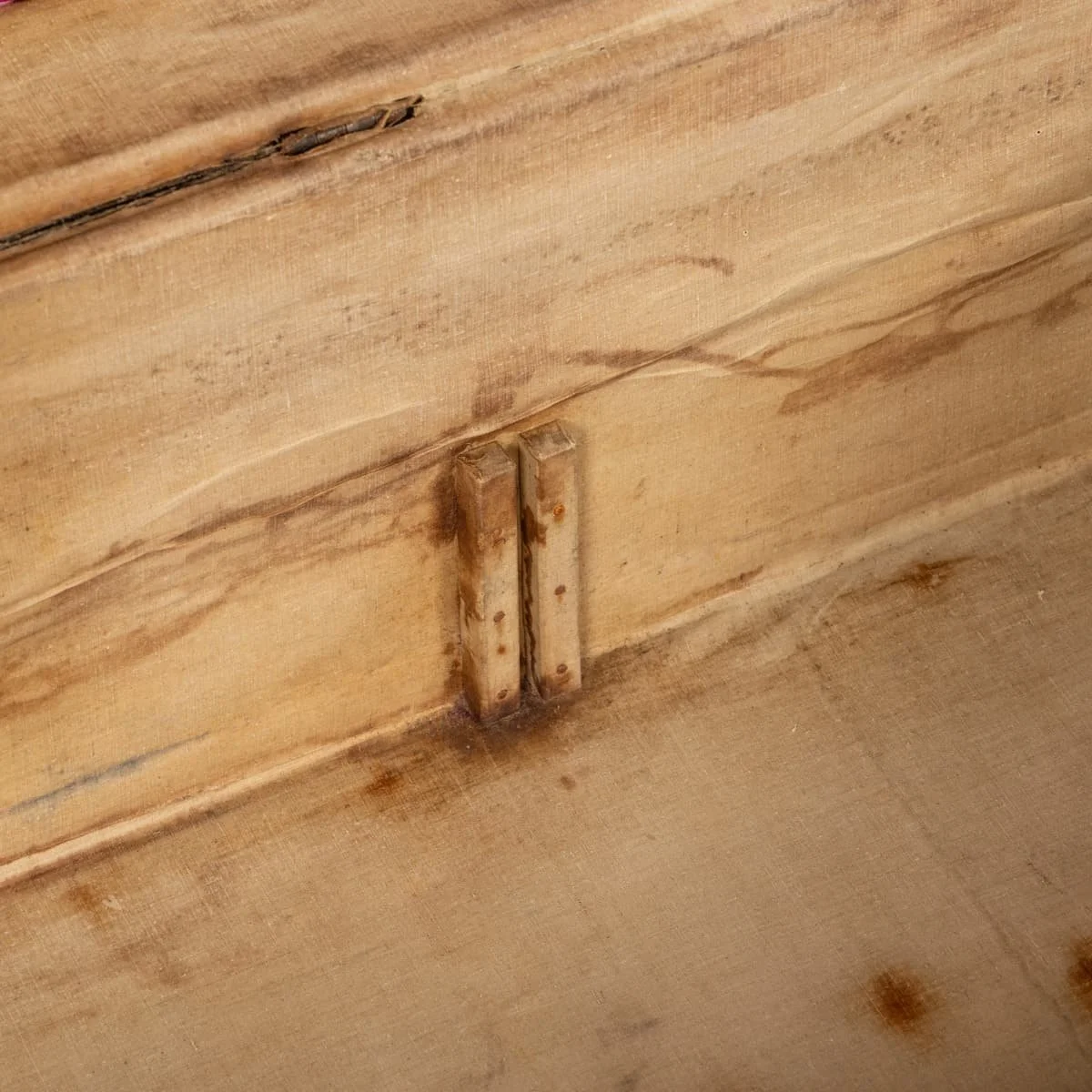
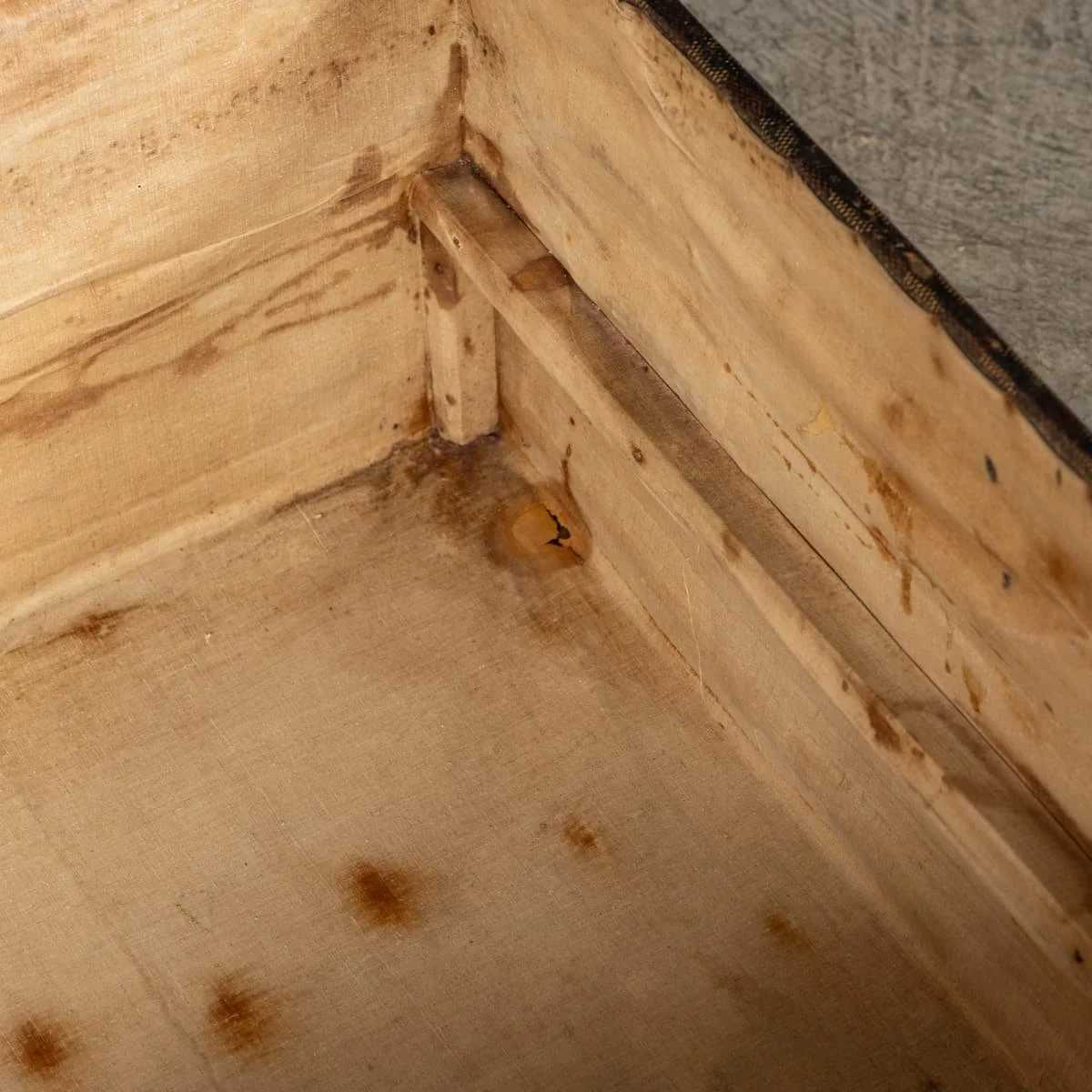
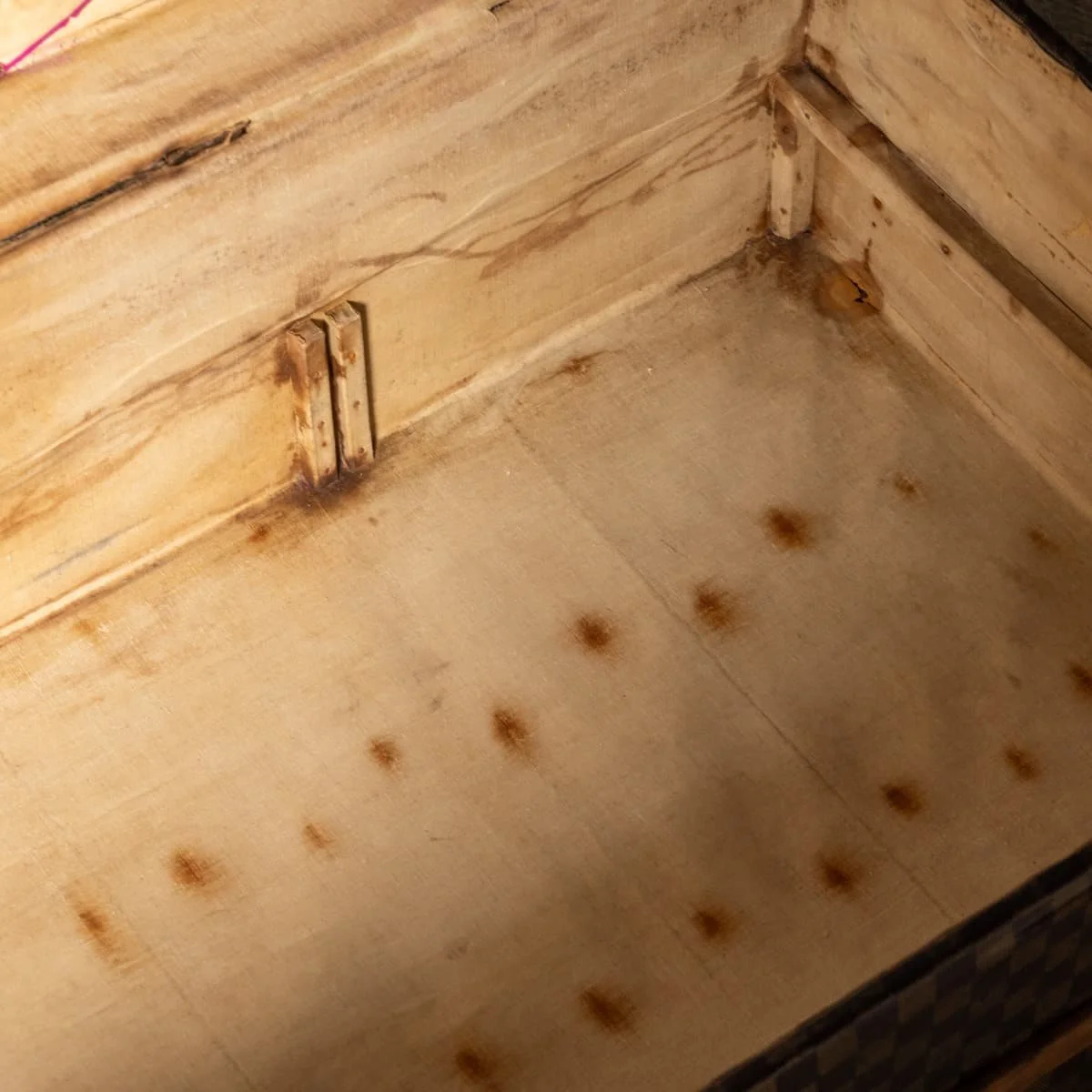
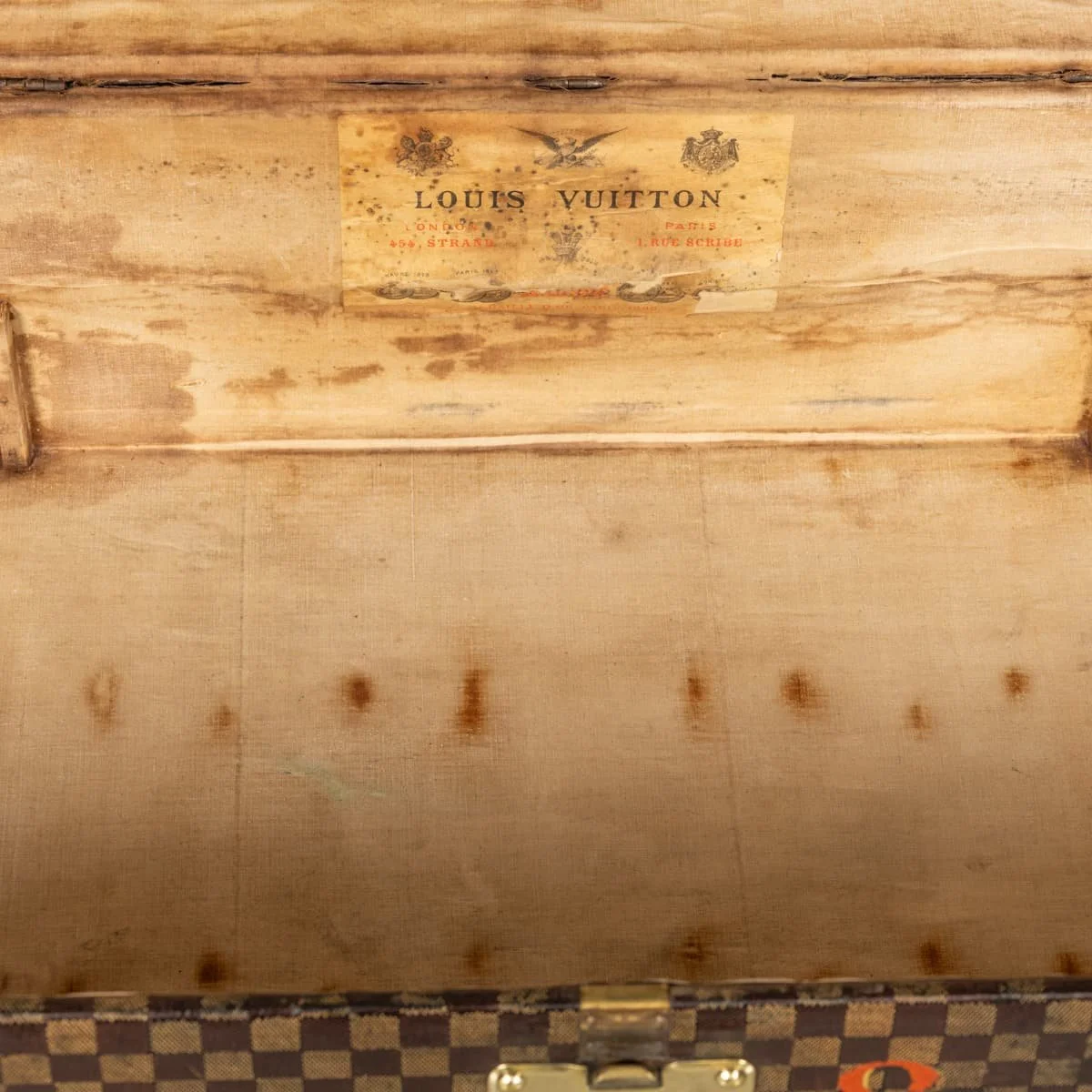
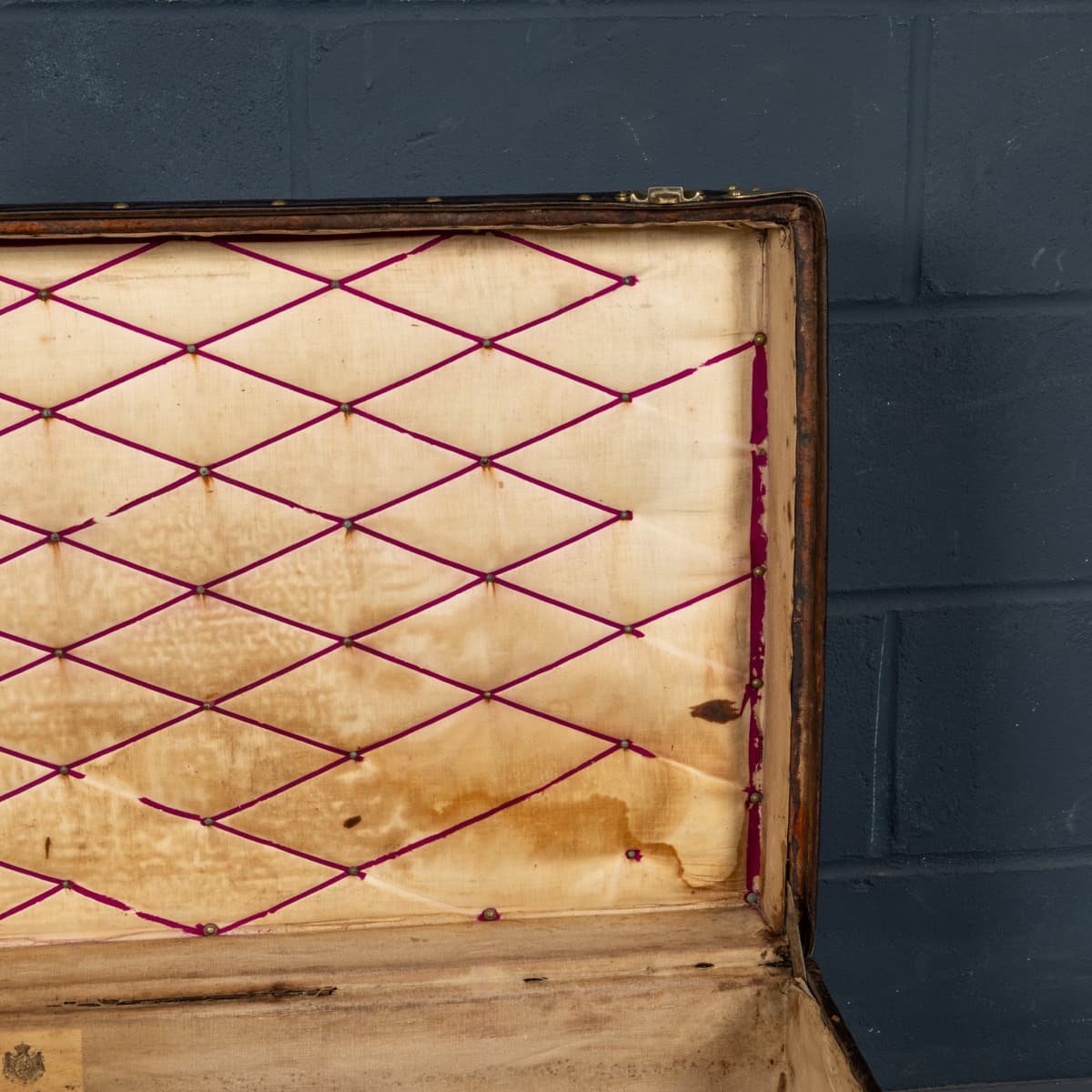
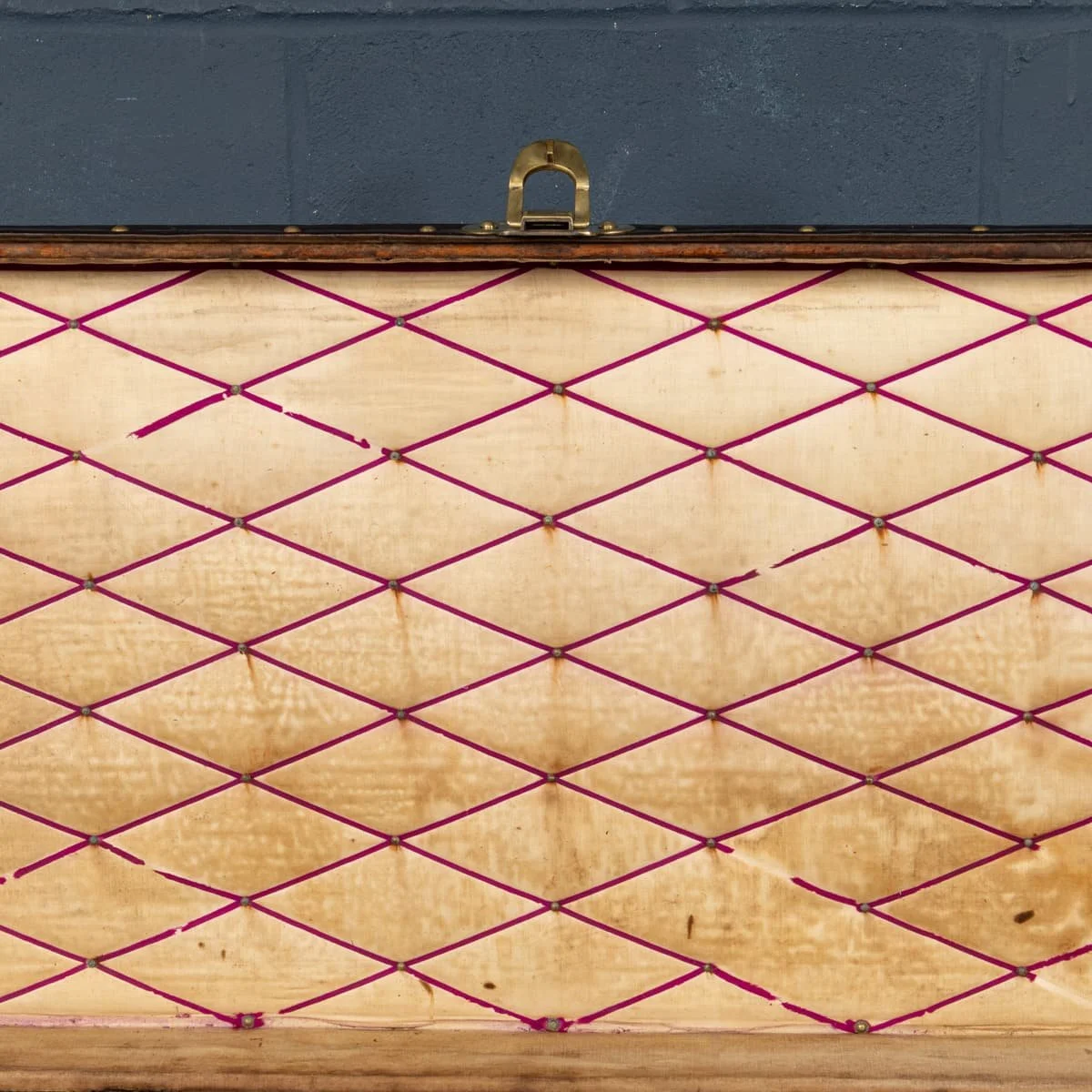
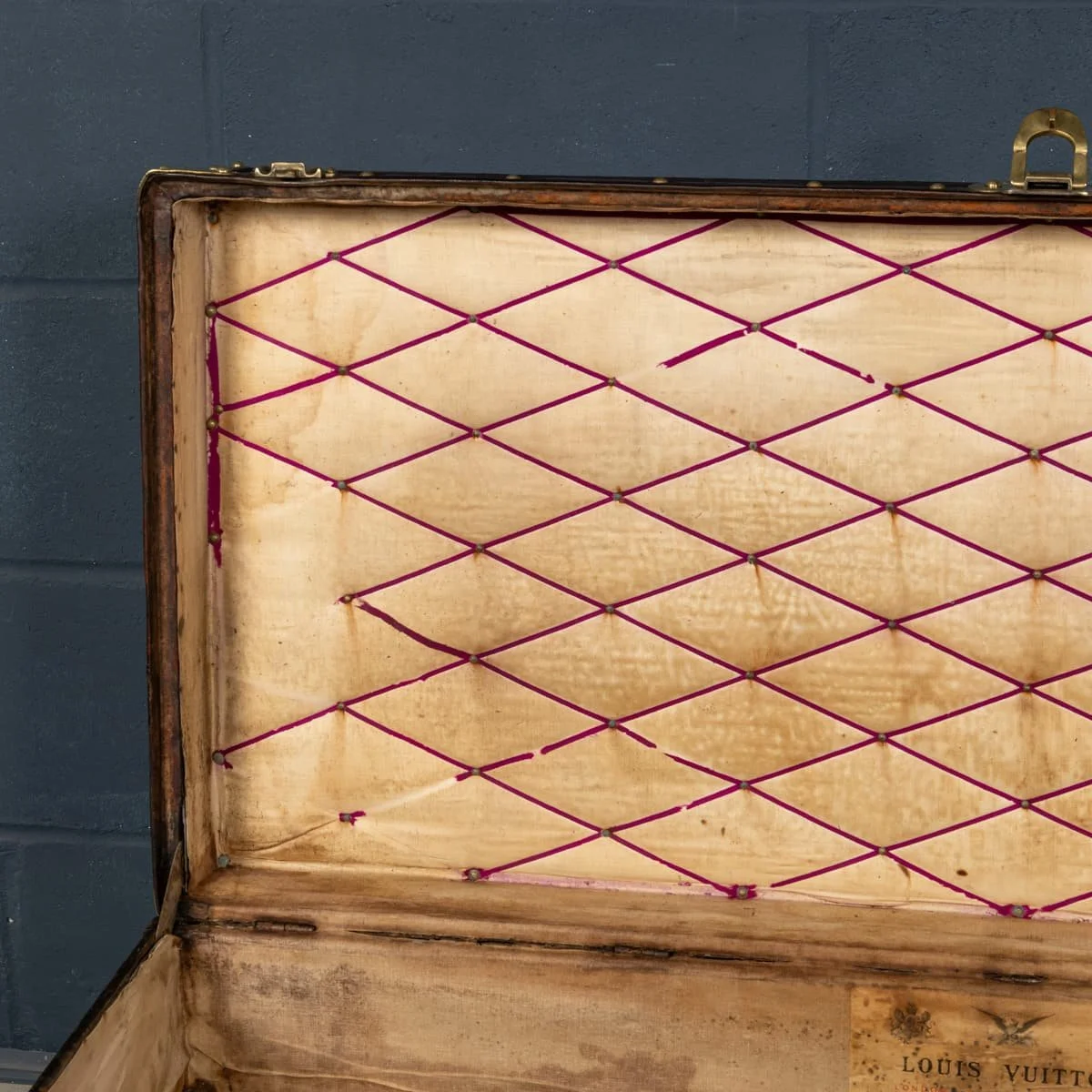
The interior survives in remarkably well-preserved condition, a testament to the quality of Vuitton's construction and the care with which the trunk has been preserved. Such condition is increasingly uncommon, particularly in conjunction with original personalised decoration and compelling provenance.
More than simply a piece of luggage, this trunk is an evocative survival from the great era of luxury travel, recalling the age of railway saloons, ocean liners and the refined itineraries of Europe's elite. Combining the enduring appeal of Louis Vuitton's Damier canvas with aristocratic ownership and a fascinating historical narrative, it represents an exceptional opportunity to acquire a special-order Vuitton trunk of considerable rarity, character and collector appeal.
Provenance: Reputedly from the luggage suite of the Marquis de Chasseloup-Laubat family and accompanied by a related Louis Vuitton leather travelling case engraved "Marquis de Chasseloup-Laubat – Paris – London – Jockey Club – To French Embassy".
A brief history about Louis Vuitton trunks: Louis Vuitton was born in 1821 to a farmer and milliner and came from a long-established working-class family in eastern France. Vuitton grew up understanding the effects of perseverance and a strong work ethic from watching his family. At the age of 16, he made the decision to walk 292 miles from his hometown to Paris to try and make a new life for himself. When he arrived the city was in the midst of industrialisation with current modes of transportation evolving quickly allowing for longer journeys. With this came the need for sturdy travel pieces. Vuitton was taken as an apprentice for a successful box maker and packer named Monsieur Marechal. He learned to craft durable containers and how to pack them properly – a well-respected profession at the time.
In 1854, years after he had mastered his craft and became well respected for it, Vuitton ventured out on his own to open a shop on Rue Neuve des Capucines. It was here that he began to establish himself as a luggage maker. Then, in 1858, Vuitton designed the first Louis Vuitton steamer trunk. At the time trunks had rounded tops to allow for water to run off but this did not allow for convenient stowage. Vuitton introduced a flat, yet waterproof, trunk that was easily stackable. The first of his trunks were outfitted with a grey canvas referred to as Trianon – it wouldn’t be until several decades later that the signature monogram would be introduced. With a burgeoning business, Vuitton moved his family and workplace to Asniere, where he employed twenty workers to craft his trunks.
By 1900 he would have 100 employees, and in 1914 the company would more than double in size. After years of success, Vuitton began to experiment with the design of his luggage by introducing a new striped canvas pattern (1876) and later the still well-known Damier print (1888). The hand-painted patterns were developed to prevent counterfeits. Even in the late 1800s, Louis Vuitton was enough of a status symbol to warrant counterfeiting. In 1886, his son George invented and patented an ingenious locking system that made it impossible to pick the lock of their trunks. This lock is still used today. 1892 would prove to be a time of mourning for the family as Louis Vuitton passed away at the age of 70.
His son, Georges Vuitton, became the new head of the luxury house. Louis Vuitton’s passing would prompt his son to once again change the print of their luggage, and in 1896, to honour his father, the signature LV monogram was introduced and patterned with LVs, quatrefoils, and flowers. Under his direction success followed and the iconic monogram rose to fame among elite clientele.
Condition:
Dimensions: 36cm high, 121cm wide, 54cm deep
For additional information please contact us:
Email: info@alessiolorenzi.com
Phone: +44 7701 088 288
REFERENCE: F2610w